
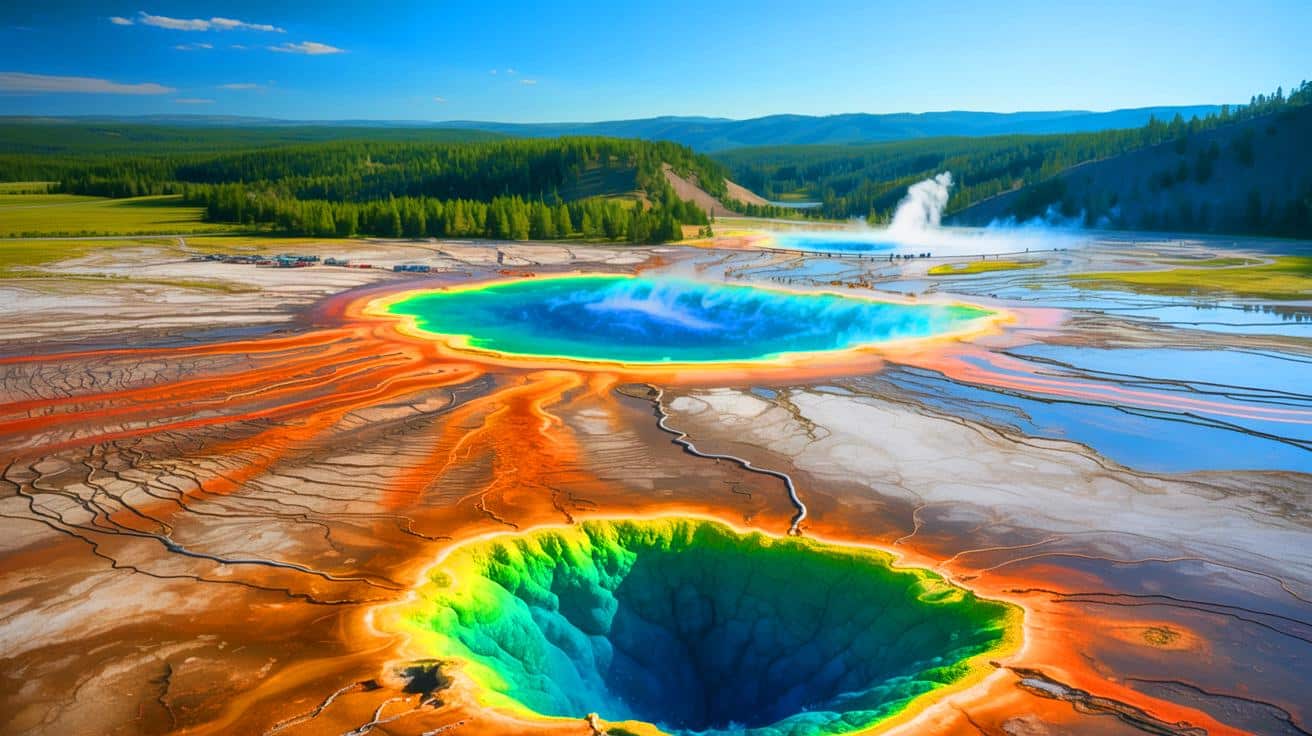
New Imaging Reveals Explosive reservoirs Beneath Yellowstone as Scientists Monitor Volcanic Activity
Yellowstone National Park, a globally renowned geological hotspot, continues to be the subject of intense scientific scrutiny. Recent advancements in imaging technology are providing geologists with unprecedented insights into the vast magma reservoirs beneath the park, while ongoing monitoring aims to better understand the potential for future volcanic activity and it’s impact on global climate.
Geophysical models indicate that a large-scale Yellowstone eruption would likely begin with a series of smaller, escalating explosive events. These initial events could trigger a connection between existing magma chambers, leading to a sudden and significant release of pressure. The result could be a massive eruption, propelling ash plumes into the stratosphere within minutes, accompanied by devastating pyroclastic flows and widespread ashfall.
The impact of such an eruption would extend far beyond the immediate Yellowstone region. Cities like Chicago and San Francisco, as well as portions of eastern Canada, could experience meaningful ash accumulation. This would likely cause widespread disruption to critical infrastructure, including power grids, agricultural production, and air travel networks. Moreover, the eruption would have significant atmospheric consequences, potentially altering global weather patterns and climate.
Historical precedent demonstrates the potential for long-term climate disruption. The 1815 eruption of Mount Tambora,for example,released sulfur dioxide into the atmosphere,forming sulfate aerosols that blocked sunlight and caused a period of global cooling. A Yellowstone-scale eruption could similarly inject substantial amounts of sulfur dioxide, potentially lowering global temperatures by as much as 7.2°F,with more pronounced effects across North America. This cooling period could persist for decades, impacting agriculture, monsoon patterns, and ecosystems worldwide.
Despite the potential for significant impact, scientists emphasize that Yellowstone is not currently “overdue” for an eruption. The concept of regular eruption cycles is a misconception, as the average interval between past eruptions is based on limited data and does not offer a reliable prediction of future events.
Ongoing research utilizes advanced tools such as Interferometric Synthetic Aperture Radar (InSAR), multi-gas sensors, and magnetotelluric imaging to provide a more detailed understanding of the subsurface activity at Yellowstone. While pinpointing the exact timing of an eruption remains a challenge, these technologies are helping scientists identify potential areas where an eruption might initiate.
The continued study of Yellowstone’s volcanic activity highlights the importance of sustained monitoring and preparedness efforts. While the probability of an imminent eruption remains low, the dynamic geological forces at play beneath the Earth’s surface necessitate ongoing vigilance and research. Further inquiry promises to refine our understanding of these processes and potentially mitigate the risks associated with future volcanic events.
This article is based on verified sources and supported by editorial technologies.
Did you like it? ⭐️⭐️⭐️⭐️½ (4.5/5 (22))
