
Arctic Diatoms Push Boundaries of Life, Thrive in Sub-Zero Temperatures
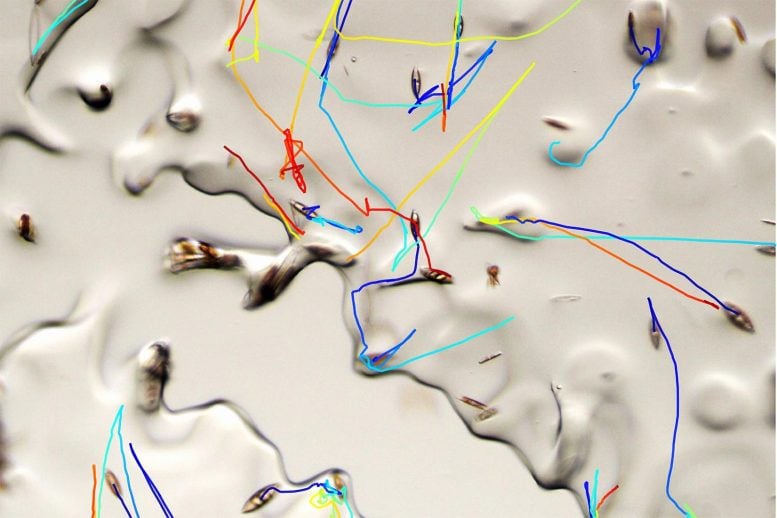
STANFORD, CA – September 9, 2025 – In a finding challenging conventional understanding of biological limits, researchers at Stanford University have found diatoms – single-celled algae – actively moving and functioning at temperatures previously thought unfeasible for eukaryotic cells. The findings, published today in the Proceedings of the National Academy of Sciences, reveal these microscopic organisms are not only surviving but thriving in waters reaching below -2 degrees celsius (28.4 degrees Fahrenheit) beneath Arctic sea ice.
The research,led by Manu Prakash of the Stanford Prakash Lab,details how these diatoms exhibit a unique gliding motility,propelled by mucus secretions,even at these extreme temperatures. This challenges the established belief that cellular processes significantly slow or halt near freezing.
“The Arctic is white on top but underneath, it’s green – absolute pitch green as of the presence of algae,” said Prakash. ”in some sense, it makes you realize this is not just a tiny little thing, this is a notable portion of the food chain and controls what’s happening under ice.”
the diatoms were collected during an expedition aboard the research vessel Sikuliaq, where researchers visited a dozen stations and observed several polar bears. The team also captured drone footage revealing the extent of algal life beneath the ice.
This discovery raises critical questions about the role of diatoms in the arctic ecosystem, notably as the region rapidly changes. Researchers are investigating whether these organisms are a vital link in the food web, supporting fish and even polar bears, and whether their mucus trails could contribute to new ice formation.
Prakash expressed urgency in continuing this research, citing projected severe cuts to National Science Foundation funding - potentially reducing polar research funding by 70 percent. “Many of my colleagues are telling me,in the next 25 to 30 years,there will be no Arctic. When ecosystems are lost, we lose knowledge about entire branches in our tree of life,” he stated. “I feel a sense of urgency in many of these systems, because, ultimately, the infrastructure and capacity to be able to operate is critical for discovery.”
The study was authored by Qing Zhang, Hope T.Leng,Hongquan Li,Kevin R. Arrigo, and Manu Prakash.Funding was provided by the National Science Foundation, a Stanford VPGE DARE fellowship, the Human Frontier Science Program, the Moore Foundation, the Schmidt foundation, and the Dalio Foundation.
DOI: 10.1073/pnas.2423725122
