
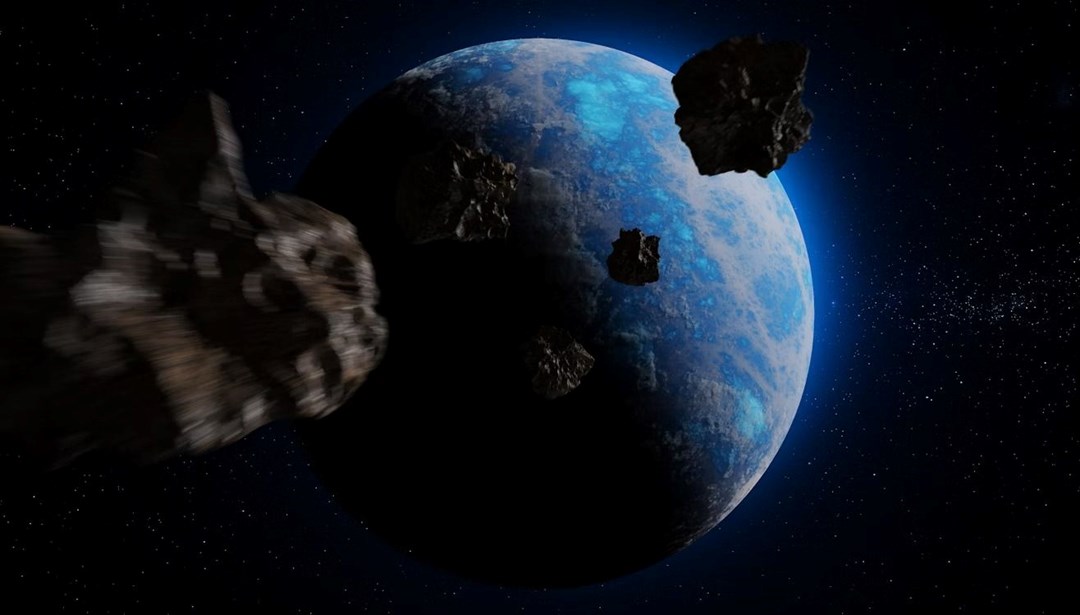
NASA Monitors Asteroid 2024 YR4, Prepares Potential Mitigation Strategies
NASA, along with collaborating researchers, is closely tracking asteroid 2024 YR4. Initially calculated with a 3% probability of impacting Earth upon its finding last year, updated models now indicate the risk to our planet is negligible.However,new evaluations suggest a roughly 4% chance of the asteroid impacting the Moon in December 2032.
As the potential impact date approaches, scientists are refining these probability calculations. Together,they are developing potential scenarios and mission plans to mitigate any potential consequences.
Potential Lunar Impact & Earthly Effects
Should 2024 YR4 collide with the Moon, the resulting debris cloud could considerably increase the flux of micrometeorites around Earth for several days, possibly increasing it a thousandfold. This surge poses a risk to astronauts and orbiting satellites.
Deflection or Disintegration: Two Potential Approaches
Researchers have identified two primary methods for addressing the threat posed by 2024 YR4: asteroid deflection - gently altering its trajectory – or disintegration. Deflection is the preferred method, as a small course correction could allow the asteroid to safely pass both Earth and the moon. Early intervention is crucial, requiring less energy to achieve the necessary orbital shift.
A key challenge in planning a deflection mission is accurately determining the asteroid’s mass. While its diameter is estimated at approximately 60 meters (± 10%), mass estimates range widely, from 51 million kilograms to 711 million kilograms. This uncertainty significantly impacts the amount of energy required for a successful deflection, and an inaccurate calculation could worsen the situation.
Tight Timeline for Action
According to reports from Universe Today, missions to refine the asteroid’s mass could be launched as early as 2028. However, the timeframe for design and launch is extremely tight. Researchers are exploring options such as repurposing existing missions like Osiris-Apex or Psyche to gather necessary data.
Nuclear Option Considered
Given the uncertainties surrounding deflection, the possibility of asteroid disintegration is also being considered. One approach involves using a kinetic impactor - similar to the successful DART mission - to break the asteroid into smaller, 10-meter fragments. A launch window for such a mission exists between April 2030 and April 2032.
A more controversial option involves using a nuclear explosion to disrupt the asteroid. Studies suggest a 1-megaton nuclear device detonated at the appropriate altitude could be sufficient to disintegrate 2024 YR4, regardless of its precise mass. Though, this option requires extensive technical and political discussion, as nuclear intervention in space has never been tested.
Ongoing monitoring & Future Planning
Currently, an impact with the Moon remains uncertain. more precise data is expected by 2028, which will inform final decisions and intervention plans.Researchers emphasize the need to be prepared for both data acquisition and potential intervention within the next few years, as launch windows will narrow and the complexity and cost of mitigation efforts will increase over time.
