
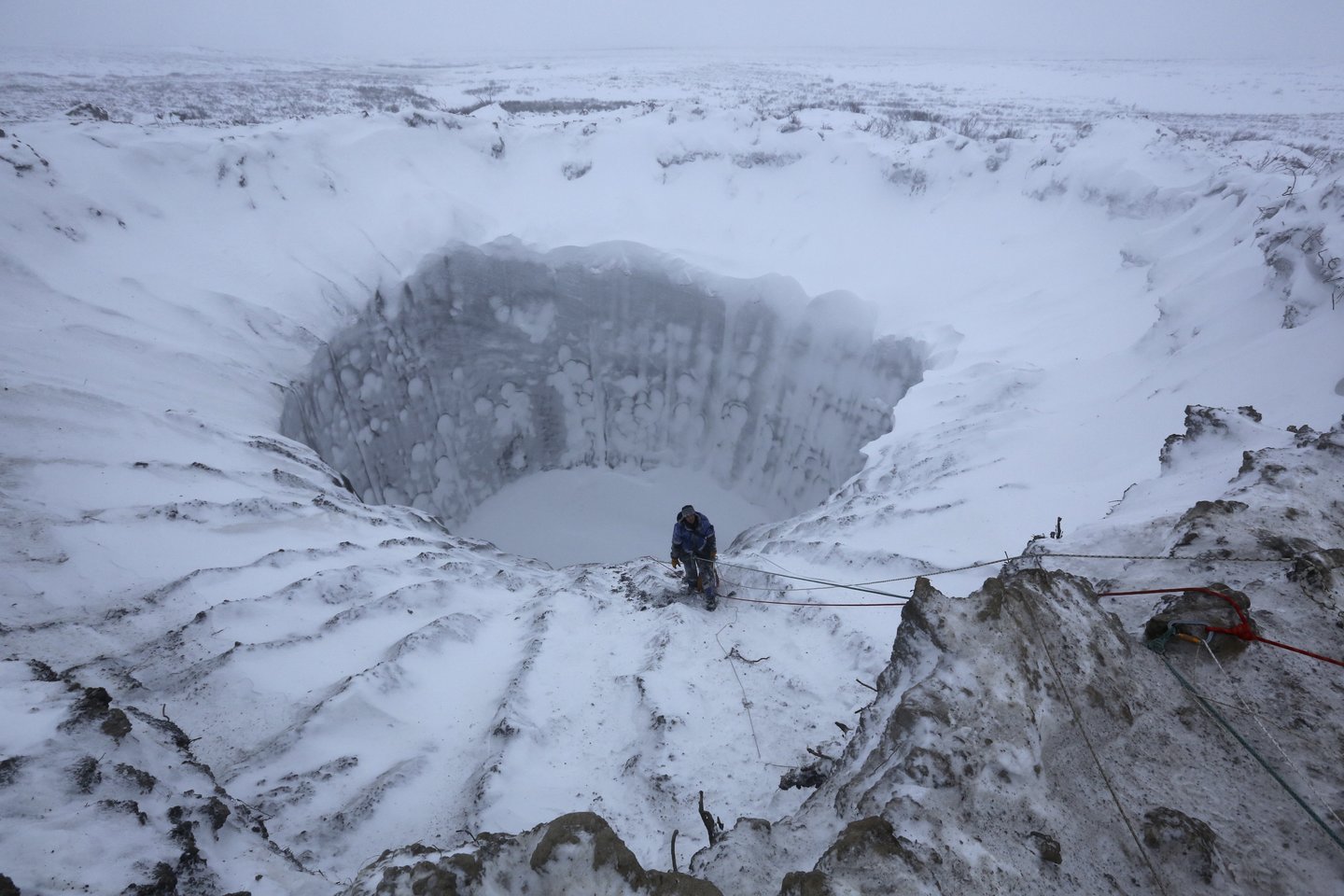
Siberian Craters‘ origins Linked to Deep Earth Heat and Accelerated Thaw
SALYARD, RUSSIA – A decade-long mystery surrounding the sudden appearance of eight massive craters in the remote Yamal and Gydan peninsulas of western Siberia may be solved, according to new research published this week. scientists now believe these “Giant Explosion Craters” (GECs) aren’t solely the result of internal soil processes, but a consequence of concentrated deep-seated heat combined with rapidly thawing permafrost driven by climate change.
The emergence of these craters-some hundreds of meters wide-has puzzled researchers since their initial discovery. While previously attributed to internal geological factors, the new study suggests a more complex interplay of subsurface conditions and a warming atmosphere is responsible. This finding has implications for understanding landscape evolution in Arctic regions and assessing potential hazards associated with thawing permafrost, which contains vast stores of greenhouse gases.
Researchers determined that the craters form when subterranean heat and gas accumulate beneath the permafrost. This heat weakens and thins the frozen ground above. As gases rise, they build pressure, and a warming climate exacerbates the permafrost thaw, ultimately triggering a sudden, explosive collapse of the soil and creating a large depression.
“This research critically evaluates existing models and concludes that concentrated deep heat and gas emanating from beneath the permafrost may be the primary factor enabling GEC formation,” the scientists wrote in their report. They further contend that atmospheric warming accelerates the process by increasing permafrost melt and the creation of new lakes and rivers.
The study focuses on the unique geological conditions of the Yamal and Gydan peninsulas,areas characterized by significant gas reserves. The researchers note that GECs have only been observed within this limited region.
Scientists anticipate further field investigations and computer modeling will validate their theory.They also suggest that more of these craters may exist undetected, potentially disguised as lakes formed by melting ice, and are actively searching for them across Siberia. As the Arctic continues to warm at a rate considerably faster than the global average, understanding the mechanisms behind these dramatic landscape changes becomes increasingly urgent.
