
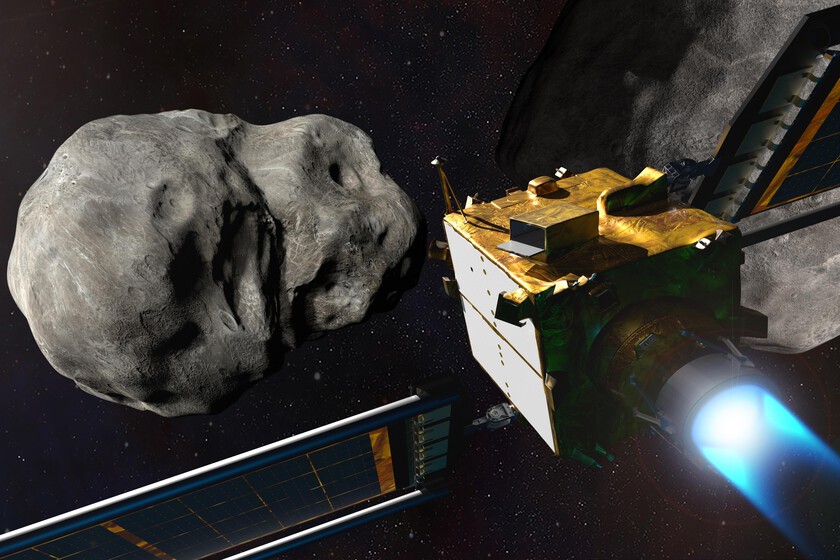
DART Impact Altered Asteroid Dimorphos‘ Physical state, New Research reveals
WASHINGTON – The NASA DART (Double Asteroid Redirection Test) mission successfully altered the trajectory of asteroid Dimorphos in September 2022, proving a viable planetary defense technique. However, new research published in the Planetary Science Journal indicates the impact did more than just nudge the asteroid off course – it fundamentally changed its physical state, causing it to become unstable and prone to chaotic rotation.
Prior to the DART impact, scientists understood little about Dimorphos’ internal structure. Now, analysis led by Dr. Richardson and his team reveals the collision released small rocks that remained in orbit around the Didymos system, subtly altering the gravitational balance. Crucially, these changes did not appear to deform the main asteroid Didymos, suggesting Dimorphos itself was rigid enough to withstand the impact’s force but not rigid enough to maintain a stable orientation afterward. The asteroid can now “stagger changing orientation, even ending up ‘tumbos’,” rotating chaotically and unpredictably, according to Richardson.
The findings offer crucial insights into asteroid formation, suggesting the ejected material contributed to orbital shifts within the system. This research builds upon the success of DART and sets the stage for the European Space Agency’s Hera mission, scheduled to arrive at the Didymos system in late 2026. Hera will gather in-situ data to provide a more exhaustive analysis of the DART impact and refine our understanding of asteroid behavior, ultimately informing future planetary defense strategies.
The details of the work were published in an article in the magazine Planetary Science Journal (https://iopscience.iop.org/article/10.3847/PSJ/ad62f5).
