
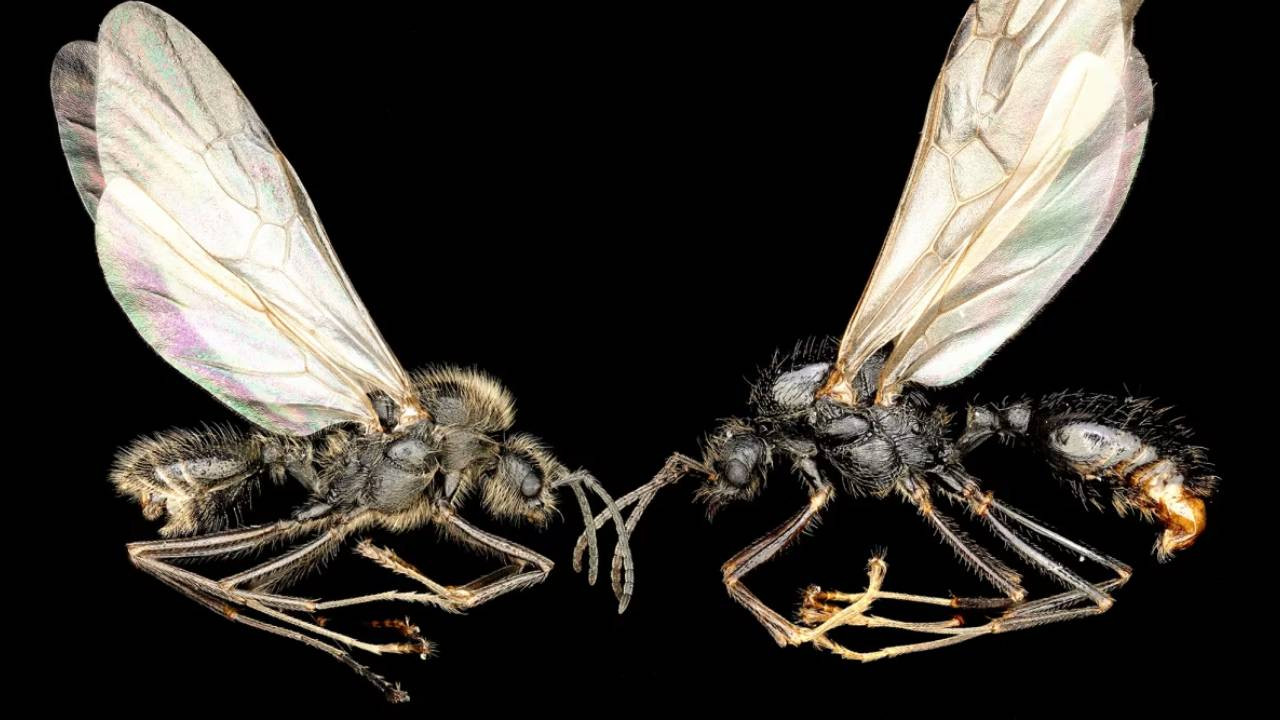
CNN International: Scientists Discover Novel reproduction Method in Iberian Ants
Montpellier, France – A groundbreaking five-year study of over 120 ant populations across Europe has revealed a previously unkown reproductive strategy in the Messor ibericus ant, dubbed “xenoparity” by researchers. The revelation, led by Jonathan Romiguier of the University of Montpellier, details how queens of this species are able to produce workers using only the sperm of a closely related species, Messor structor.
Initially,scientists hypothesized that hybrid workers resulted from mating between the two species.However, the discovery of a Messor ibericus colony in Sicily – a location 1,000 kilometers from known Messor structor populations - challenged this theory. Further investigation revealed that Messor ibericus queens had lost the ability to produce worker ants themselves and instead utilize sperm from Messor structor males, effectively “domesticating” them for a permanent labor force.
Xenoparity, derived from the Greek words “xeno” (foreign) and “parous” (birth), describes this unique process where a species reproduces using the genes of another species within its own eggs. the study found that Messor ibericus queens completely erase their own DNA in certain eggs,relying solely on the genetic material from stored Messor structor sperm to create viable worker ants. This allows colonies to thrive with pure Messor ibericus queens and Messor structor-derived hybrid workers.
The two ant species diverged approximately 5 million years ago, coexisting for an extended period. Over time, the Messor ibericus queen’s reproductive capabilities shifted, leading to this unusual adaptation.
While this strategy has enabled Messor ibericus to flourish across the Mediterranean with millions of hybrid workers, experts caution that it may come at a long-term cost. “Due to the loss of genetic diversity, it is likely that this species will disappear in a few million years. Almost all sexual species share the same fate,” stated Jacobus Boomsma,a professor at copenhagen University.
Researchers are now focused on understanding the precise mechanisms behind the queen’s ability to completely delete her own DNA during this cloning-like process. Unraveling this natural phenomenon could perhaps offer insights into artificial cloning research in other organisms.
Source: Newspaper Oxygen
