
New Study links Epigenetic Shifts to CLL Progression, Offering Potential for Personalized Prognosis
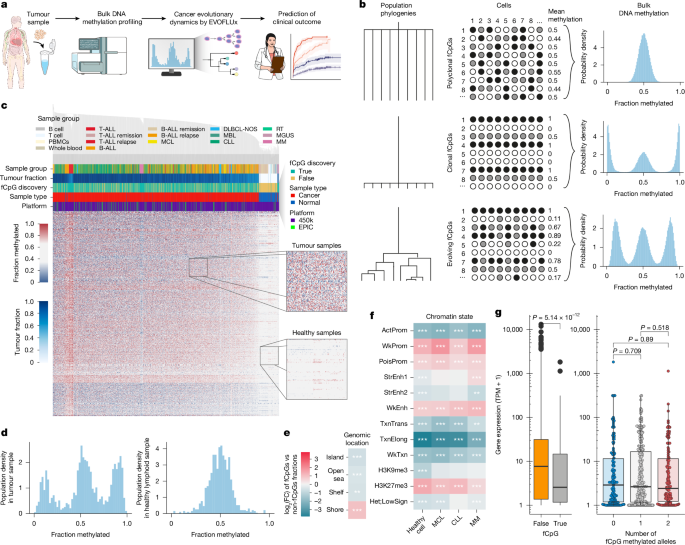
London, UK – Researchers have uncovered a strong correlation between fluctuating DNA methylation patterns and the clinical course of chronic lymphocytic leukemia (CLL), a common blood cancer. The findings, published today in Nature, suggest that tracking these epigenetic changes could refine risk assessment and potentially guide treatment strategies for patients.The study analyzed data from 231 CLL patients, tracking absolute lymphocyte counts over time – representing the number of malignant cells in the blood – and correlating these with evolutionary variables derived from a computational model called EVOFLUx. Researchers found that tumor growth rate (θ), effective population size (Ne), and epigenetic switching rates were all informative of time to frist treatment (TTFT) and overall survival.
Specifically,the growth rate was analyzed assuming exponential growth (where a θ of 1 equates to a 2.71-fold population increase per year), Ne was considered per million cells, and cancer age was analyzed in 10-year increments. While individual epigenetic switching rate parameters (μ,ν,γ,and ζ) proved largely uninformative on thier own,a combined mean epigenetic switching rate – scaled by a factor of 100 – showed prognostic value.
Multivariate analysis incorporating growth rate, effective population size, TP53 aberrations (mutations and deletions), IGHV gene mutational status, and patient age at sampling further refined the predictive power of these evolutionary variables.Kaplan-Meier curves, generated using the maxstats package (v0.7-25) and analyzed with the log-rank statistic,demonstrated notable differences in survival based on low versus high growth rates and effective population size within IGHV subtypes.Notably, the study compared growth rates estimated by EVOFLUx with those derived from fitting linear models to past lymphocyte count data, validating the computational approach. all statistical tests were two-sided, and appropriate multiple test corrections, such as the Holm-Sidak correction, were applied where necessary.The research utilized R (v4.3.1) with packages Survival (v3.5-7), survminer (v0.4.9), ggsurvfit (v0.3.1), and ggplot2 (v3.5.2) for analysis and visualization.
