
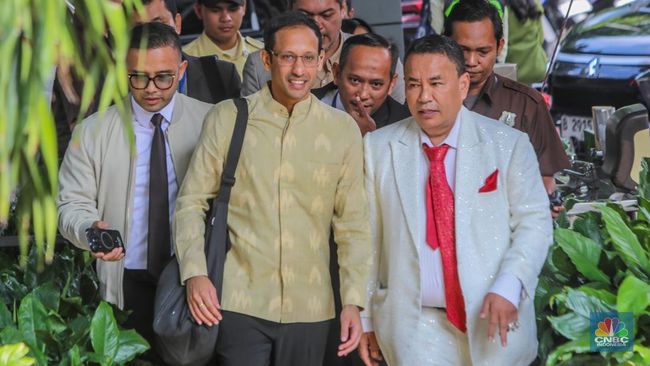
Chromebooks & Cost Savings: Nadiem Makarim defends 2019-2022 Procurement Amidst Corruption Allegations
Jakarta, Indonesia - Indonesia’s Minister of Education, Culture, Research, and Technology, Nadiem Makarim, is facing scrutiny over alleged corruption related to the procurement of Chromebooks between 2019 and 2022. However, new details are emerging regarding the rationale behind choosing Chromebooks over conventional Windows laptops, centering on significant cost differences and enhanced security features.
According to Nadiem Makarim’s attorney, Hotman Paris Hutapea, the key factor in the decision was the cost of device management. Chromebook’s Chrome Device Management system is a one-time fee of approximately $30 per laptop. This contrasts sharply with Windows,which requires recurring payments of $200-$300 every three years.
“When compared to the price of this device management with Windows, Windows is much more expensive – the price of upkeep if Windows costs $200 to $230 per 3 years,” Hutapea explained in a press conference on Monday.”While Google is onyl a one-time lifetime cost of $30.”
Chrome Device Management is a centralized system allowing IT administrators in schools and businesses to manage Chromebooks, including application installation and policy implementation. Hutapea highlighted the security benefits,stating the system allows for control over student access to inappropriate content,such as pornography.
Beyond the management system costs, the price of the laptops themselves saw reductions during the 2021-2022 procurement period, dropping from Rp 6,499,000 to Rp 5,800,000 (approximately $420 to $375 USD at current exchange rates) per unit. These findings are based on an audit conducted by the Indonesian Government’s Financial Audit Board (BPKP),which reportedly found no significant issues impacting the budget determination.
Nadiem Makarim himself previously addressed the Chromebook selection in June, stating the decision followed a thorough ministry study evaluating both price and specifications. He emphasized that Chromebooks were the more affordable option, offering easily accessible and free systems, alongside the crucial ability to monitor applications used by students.
“Beyond that, there are various functions… to remember that this is for the function of education. Where the security of our students and teachers is a priority… and one of the most important things of the study is control of applications that can be in the Chromebook,” Makarim stated.Key Takeaways:
The decision to procure Chromebooks was driven by significant cost savings in device management compared to Windows laptops.
Chromebooks offer enhanced security features, allowing schools to monitor and control application access.
An audit by the BPKP found no major budgetary concerns related to the procurement process.
The price of the Chromebooks themselves decreased during the procurement period.
[Link to original source – if available, insert here]
