
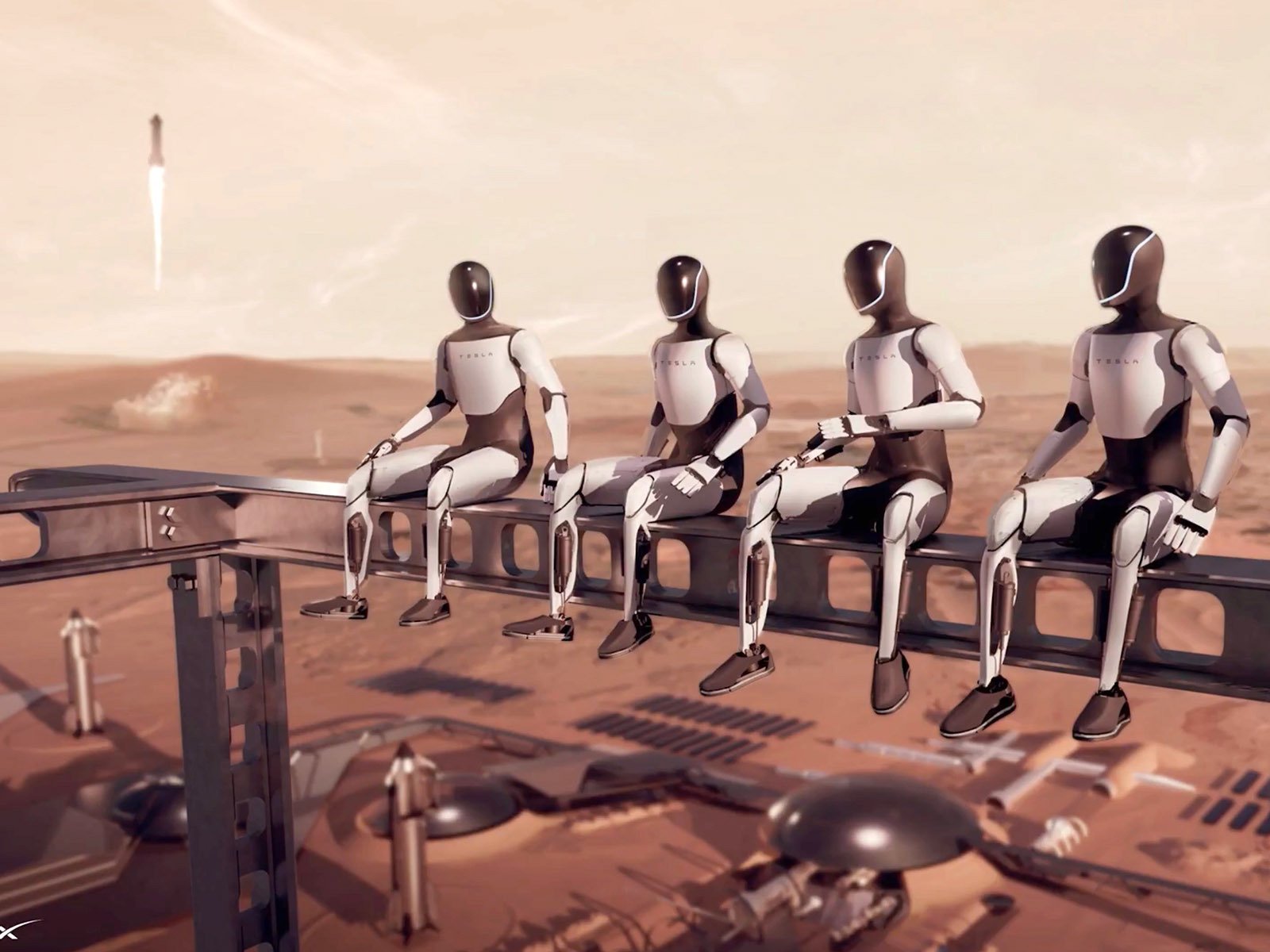
AI-Powered Robots targeted for Early Mars Exploration as SpaceX Eyes 2026 Launch
CAPE CANAVERAL, FL – Humanity’s path to becoming a multi-planetary species may increasingly rely on artificial intelligence and robotics, with SpaceX planning to send a fleet of Tesla Optimus humanoid robots to Mars as early as late 2026. This ambitious initiative signals a shift towards utilizing AI-driven “super astronauts” to prepare the Red Planet for eventual human colonization.
The deployment of robotic explorers precedes crewed missions, aiming to establish critical infrastructure and assess potential hazards. This strategy acknowledges the immense challenges and risks associated with sending humans to Mars, including radiation exposure, logistical complexities, and the sheer distance involved. Successful robotic reconnaissance will be pivotal in de-risking future human endeavors and accelerating the timeline for establishing a permanent Martian presence.
SpaceX founder Elon Musk has outlined a phased approach, stating the company intends to launch an uncrewed fleet of Starship megarockets toward Mars in late 2026, carrying the Optimus robots. “Starship departs for Mars at the end of next year, carrying Optimus. If those landings go well, then human landings may start as soon as 2029, although 2031 is more likely,” Musk wrote in a post on X.
The Optimus robots, Tesla’s foray into humanoid robotics, are designed for a wide range of tasks. On Mars, they could be instrumental in constructing habitats, extracting resources like water ice, and preparing landing sites for future Starship landings.Their ability to operate autonomously and adapt to unforeseen circumstances makes them uniquely suited for the harsh Martian environment.
Musk expressed optimism about the project,aligning with the broader vision of establishing a self-sustaining colony on Mars. The success of the initial robotic missions will directly influence the feasibility of human landings and the long-term viability of a Martian settlement.
