
Carolingian-Era Wreck Unearthed in Loire River Near Nantes Challenges Naval History
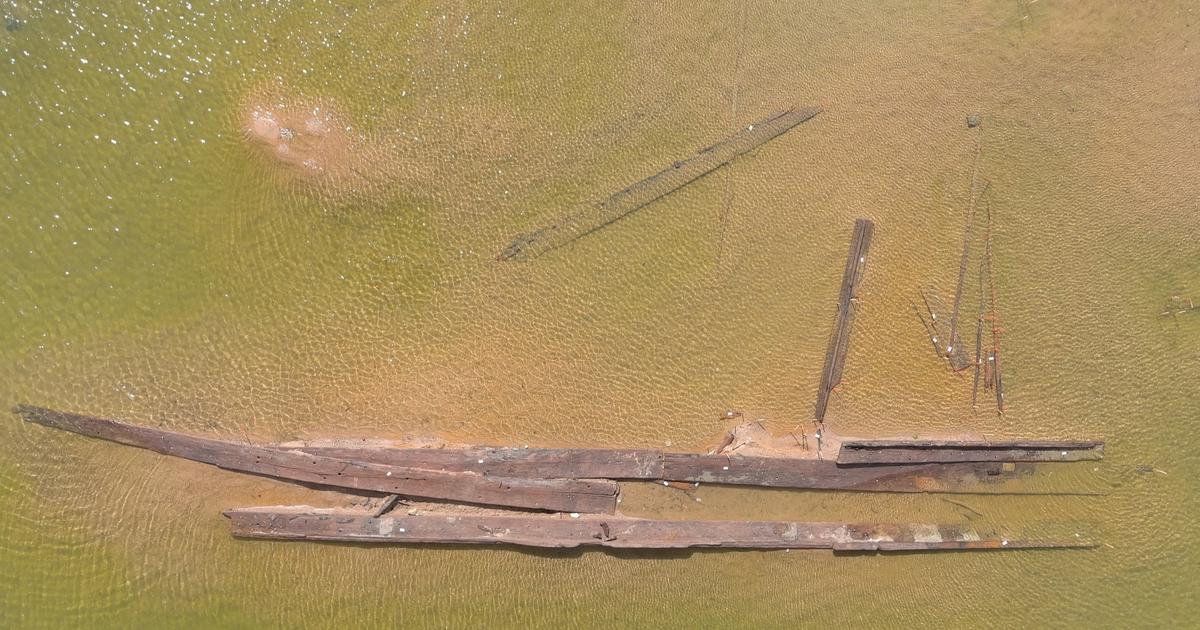
Mouchet Island, France – A remarkably preserved shipwreck dating back to the Carolingian period has been excavated from the bed of the Loire River near Nantes, baffling archaeologists with its unique construction and offering a rare glimpse into early medieval shipbuilding. the finding, made by the National Institute for Preventive Archaeological Research (Inrap), presents a naval architecture puzzle unlike any previously documented.
The wreck, measuring approximately two meters in width and canoe-like in form, is constructed from two pieces of oak hollowed from single logs – known as monoxyle - joined together with a series of plates and secured by large nails. While resembling models from the Rhine, Switzerland, and the Netherlands, those comparable vessels predate the wreck by several centuries. “We do not know, for the time being, any equivalent in the swing,” explains Yann Viau, Inrap operation manager for the Mouchet Island excavation. “Models of Rhone, Swiss and Dutch origin are getting closer, but all date from ancient era, several centuries before our wreckage.” The vessel’s purpose remains unclear, though researchers believe it was likely used for transporting cargo or goods.
The find is notable because it challenges existing understandings of shipbuilding techniques during the Carolingian dynasty (roughly 8th-10th centuries AD), a period often characterized by limited archaeological evidence of maritime activity. Further analysis, including xylological and dendrochronological studies of the wood, and traceological examinations of tool marks, are planned to determine the wreck’s precise age, origin, and construction methods.
Due to the fragility of the wood, the entire wreck cannot be removed. Most of the vessel will remain in situ, protected by constant hydration and reburial to prevent rapid degradation, while select architectural elements have been transferred to a laboratory for detailed study. Inrap archaeologists will carefully relocate and rebury the remaining wreckage to safeguard it from upcoming construction work and the shifting riverbed, ensuring its accessibility for future research. The site promises to yield further insights into the maritime capabilities and trade networks of the early medieval period.
