
Record-Breaking Wave of Cosmic Signals Reveals Black Hole Collisions, Tests Einstein‘s Theory
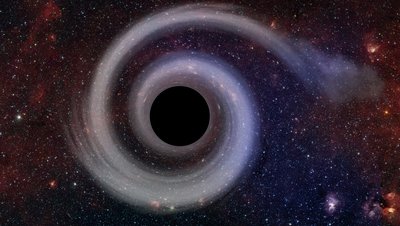
WASHINGTON – A historic surge of 128 gravitational wave signals, including the first detections of black hole mergers exceeding 40 solar masses, has reached Earth, marking the largest such collection ever observed. The signals, detailed in a newly released catalog, offer unprecedented opportunities to study black hole populations, test the limits of Einstein’s theory of relativity, and refine our understanding of the universe’s expansion rate.
This influx of data, primarily detected between July 2022 and December 2023, confirms the theory of “hierarchical fusion,” where larger black holes are formed through the successive mergers of smaller ones. Two signals - GW230814 and GW231226 – were especially strong, boasting a signal-to-noise ratio exceeding 30, allowing for exceptionally precise analysis of their waveforms and astrophysical properties. The detected black holes range in mass from 5.79 to 137 times that of our Sun.
The catalog also reveals evidence of two collisions involving a black hole and a neutron star. Scientists say this wealth of data will enable more rigorous testing of general relativity, which so far appears to hold true, though analysis remains preliminary.
Moreover, the signals will be used to investigate the Hubble constant - a key parameter in cosmology that describes the rate at which the universe is expanding – and resolve ongoing discrepancies in its measurement.Future telescopes, such as the rubin Observatory, are expected to detect both gravitational waves and light from collisions involving neutron stars, promising even deeper insights into the nature of these extreme cosmic events.
