
Ancient Skull Discovered in Greece in the 1960s Now identified as 277,000-Year-Old Homo heidelbergensis
Petralona, Greece - A skull discovered by a villager in a cave near Petralona, greece, in the 1960s has been definitively dated to at least 277,000 years old, confirming its classification as Homo heidelbergensis, an extinct human species. The groundbreaking research, published in August 2025 in the Journal of Human Evolution, resolves decades of debate surrounding the skull’s origins and offers new insights into the complex story of human evolution in europe.
for 65 years, the Petralona skull has been a subject of scientific scrutiny, with initial classifications suggesting a link to Homo heidelbergensis. The new dating, achieved through uranium-series dating of calcite formations on the skull, provides concrete evidence supporting this hypothesis. This discovery is significant because it demonstrates the continued existence of Homo heidelbergensis alongside evolving Neanderthal populations in Europe during the Middle Pleistocene epoch, reshaping our understanding of how different human lineages interacted and coexisted.
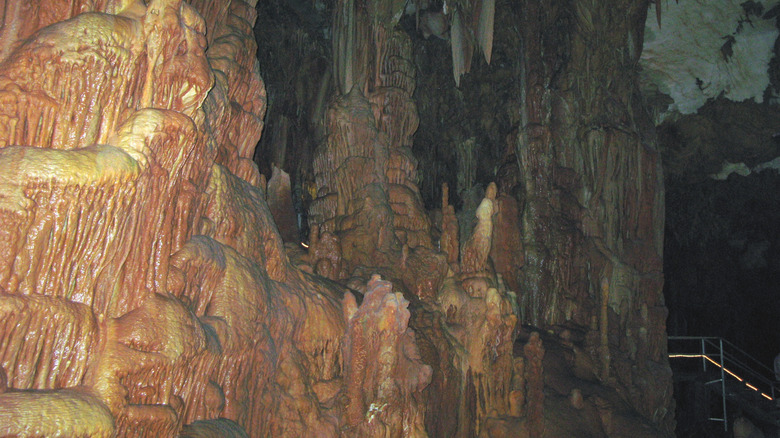
The research, led by Christophe Falguères, utilized a precise dating method to determine the minimum age of the skull based on the accumulation of calcite within the cave. “The new age estimate supports the persistence and coexistence of this population alongside the evolving Neanderthal lineage in the later Middle Pleistocene of Europe,” explained Chris Stringer, a paleoanthropologist at London’s Natural History Museum and co-author of the study, in an interview with Live Science.
The Smithsonian Institution has long classified the Petralona skull as Homo heidelbergensis, an extinct humanoid species. Homo heidelbergensis shared the planet with Neanderthals and is considered a potential ancestor to both modern humans and Neanderthals.Further research is planned to analyze the skull’s morphology and genetic material (if available) to further refine our understanding of its place in the human family tree and its relationship to other hominin species.
