
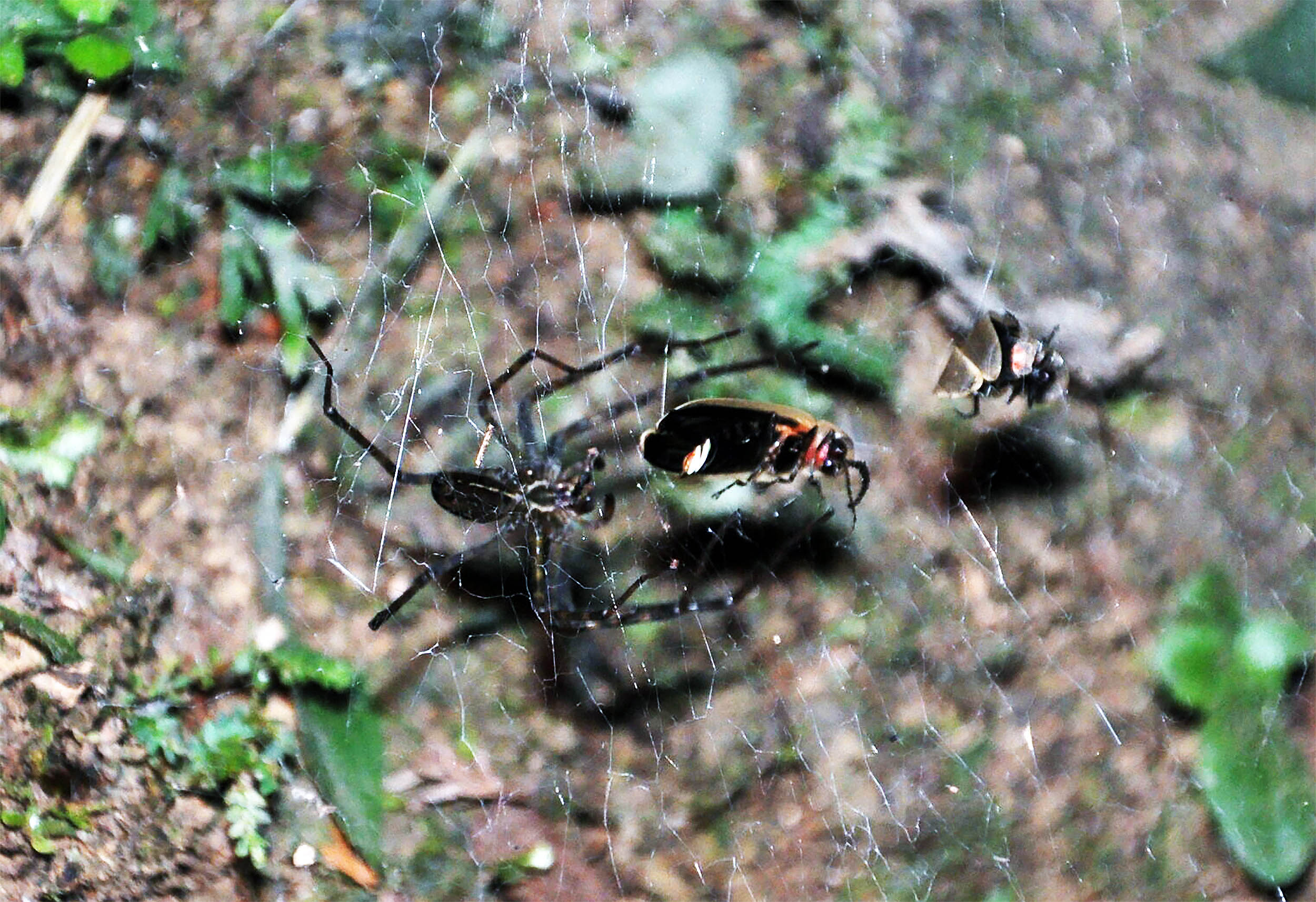
Spiders Deceive Fireflies with Artificial light, study Reveals
Researchers have discovered a novel predatory tactic employed by certain spider species: mimicking the bioluminescent signals of fireflies to lure unsuspecting prey. A recent field experiment conducted in Taiwan demonstrates that these spiders are capable of exploiting the fireflies’ mating signals,turning a beacon of romance into a fatal trap. The findings, published August 28, 2025, in the Journal of Animal Ecology, shed light on the complex and often deceptive strategies within predator-prey relationships.
This revelation underscores the intricate arms race between species, where adaptation isn’t always about brute force but clever manipulation. Understanding these interactions is crucial as artificial light pollution increasingly disrupts natural signaling systems, potentially exacerbating the vulnerability of species like fireflies.The research highlights the need for further inquiry into the ecological consequences of human-generated light and its impact on biodiversity.
The investigation unfolded within the National Taiwan University’s Xitou Nature Education Area, a conifer plantation forest frequently visited by fireflies. Scientists sought to observe spider behavior in a realistic setting, where predator-prey dynamics occur naturally. To replicate the glow of fireflies, the team engineered specialized LED lights. These lights were calibrated to precisely match the wavelength and intensity of natural firefly bioluminescence, effectively serving as artificial prey.
While the artificial lights proved effective in attracting spiders, researchers acknowledged inherent limitations. They noted that the subtle nuances of genuine firefly signals – variations in glow, rhythm, and other biological cues – could influence insect responses in ways that the artificial lights couldn’t fully capture. Consequently, the team conceded that utilizing live fireflies would offer the most authentic assessment of the spiders’ strategy.
Though, employing live fireflies presented significant logistical and ethical hurdles. Handling, controlling, and releasing glowing insects in a field habitat proved exceptionally challenging, raising concerns about potential harm to the fireflies. Despite these constraints, the study’s results are compelling. They demonstrate that predator-prey interactions are rarely simple acts of consumption,but rather involve layers of deception,adaptation,and unexpected strategies.
The research illustrates how a firefly’s intended mating signal can inadvertently lead other creatures to their demise, becoming a tool for survival in the web of a patient spider. This highlights the frequently enough-unforeseen consequences of biological signaling and the opportunistic nature of predation.
—
Like what you read? Subscribe to our newsletter for engaging articles, exclusive content, and the latest updates.
Check us out on EarthSnap, a free app brought to you by Eric Ralls and Earth.com.
—
