
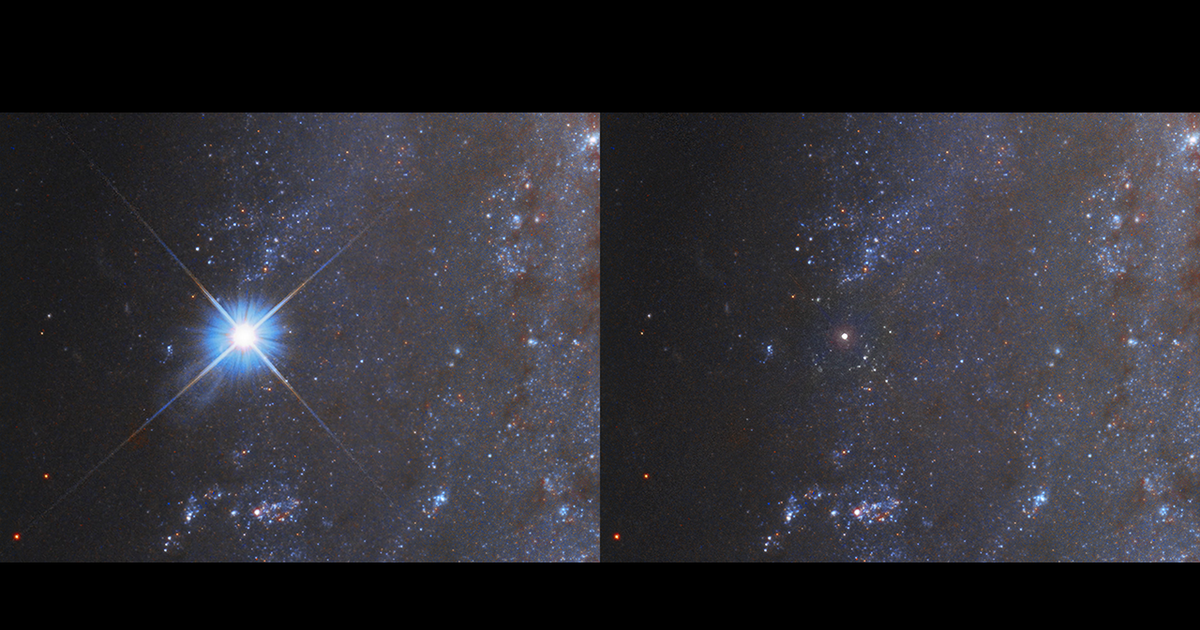
Summary of the NTDTV Article: Supernova Explosions - Stellar Deaths & Cosmic insights
This article from NTDTV details the fascinating phenomenon of supernova explosions, focusing on SN 2018gv as a prime example. Here’s a breakdown of the key takeaways:
What is a Supernova?
A violent explosion marking the end of a star’s life.
Occurs when a massive star (at least 8x the mass of our sun) runs out of fuel and its core collapses.
Releases an immense amount of energy - equivalent to the sun’s lifetime output – over weeks/months.
Types of Supernovae:
Type I (Ia, Ib, Ic): Typically occur in binary systems where a white dwarf accumulates matter from a companion star until it explodes. Type Ia are particularly vital as “Standard Candles” - their consistent brightness allows astronomers to accurately measure distances in the universe.
Type II: Result from the core collapse of massive stars, often leaving behind neutron stars or black holes. They exhibit hydrogen lines in their spectrum.
New Variants: AI is helping scientists discover new types, like SN 2023zkd (triggered by a black hole) and supernovae wiht “onion layer” structures revealing internal stellar evolution.
Significance of Supernovae:
Nebula Formation: The remnants of supernovae create lovely nebulae (like the Crab Nebula). Element Distribution: They spread heavy elements (iron, gold) throughout the universe, providing the building blocks for new stars and planets.
“Double Explosions”: Recent discoveries show some stars can undergo two detonations.
Cosmic Measurement Tools: Type Ia supernovae, due to their consistent brightness, are used to calculate distances to galaxies and study the universe’s expansion rate, confirming the existence of dark energy.
SN 2018gv – A Case Study:
A Type Ia supernova in the galaxy NGC 2525, 70 million light-years away.
Hubble captured its evolution from peak brightness (5 billion suns!) to fading.
Discovered by amateur astronomer Koichi Itagaki.
Data from SN 2018gv is currently being used to study the universe’s expansion.
Future Research:
* NASA’s Roman Space Telescope (launching 2027) will observe more supernovae to study the early universe.
In essence, the article highlights supernovae not just as stunning cosmic events, but as crucial tools for understanding the universe’s history, composition, and future.
