
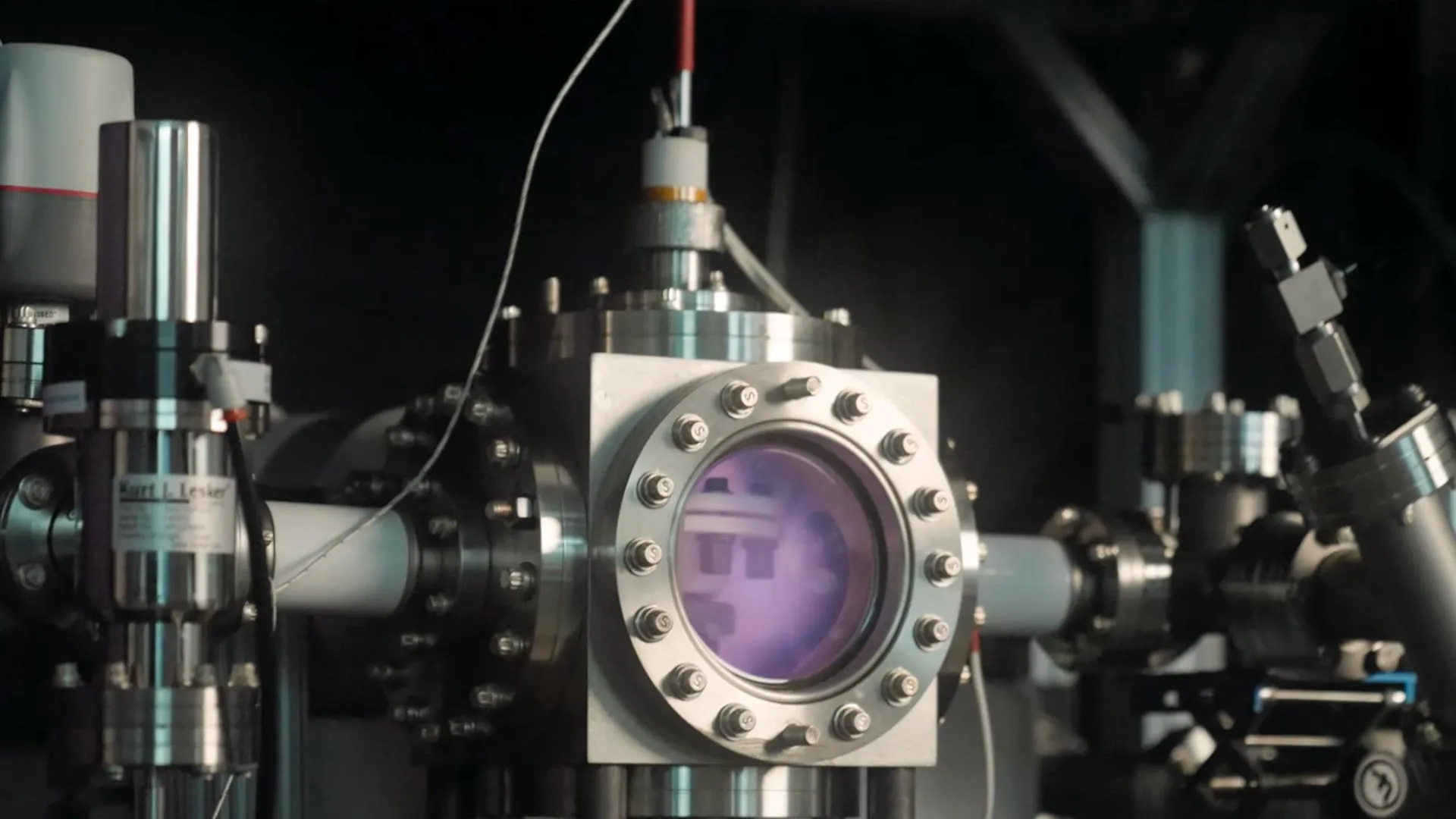
Breakthrough at UBC: Electrochemical Method Boosts Nuclear Fusion rates, Offering New Path to Clean Energy
Vancouver, BC - In a development that could reshape the future of fusion energy research, scientists at the University of British Columbia (UBC) have demonstrated a meaningful increase in nuclear fusion rates using a novel electrochemical method. Published August 20th in Nature, the research offers a potentially more accessible and cost-effective approach to harnessing the power of the stars.For decades, the pursuit of fusion energy – the same process that powers the sun – has focused on massive, complex facilities utilizing extreme temperatures and pressures to confine plasma. The UBC team, though, has taken a radically different tack, achieving measurable fusion using a compact, bench-top reactor dubbed the “Thunderbird Reactor.”
Squeezing Fuel into a Sponge
The key to the breakthrough lies in electrochemically loading a palladium metal target with deuterium, a heavier isotope of hydrogen. Researchers found they could dramatically increase the concentration of deuterium within the palladium – effectively “squeezing fuel into a sponge,” as described by lead author Professor curtis P. Berlinguette.
“Using electrochemistry,we loaded much more deuterium into the metal – one volt of electricity achieved what normally requires 800 atmospheres of pressure,” explains Professor berlinguette,a Distinguished University Scholar at UBC. ”While we didn’t achieve net energy gain, the approach boosted fusion rates in a way other researchers can reproduce and build on.”
15% Increase in Fusion Rates
The experiment compared two methods of loading the palladium target with deuterium: a plasma field and an electrochemical cell. The electrochemical method resulted in an average 15% increase in deuterium-deuterium fusion rates compared to the plasma field alone. Crucially, the team didn’t rely on measuring heat – a contentious point in past fusion claims – but instead directly detected hard nuclear signatures like neutrons, providing definitive evidence of fusion events.
A New Era for Fusion Research?
This isn’t the first time researchers have explored low-energy nuclear reactions.The infamous “cold fusion” claims of 1989 were ultimately discredited due to a lack of independent verification.though, this new work builds upon a 2015 Google-funded re-evaluation of cold fusion, published in Nature in 2019, and represents a significant departure from those earlier, flawed experiments.
“We hope this work helps bring fusion science out of the giant national labs and onto the lab bench,” says Professor Berlinguette. “Our approach brings together nuclear fusion, materials science, and electrochemistry to create a platform where both fuel-loading methods and target materials can be systematically tuned. We see this as a starting point - one that invites the community to iterate, refine, and build upon in the spirit of open and rigorous inquiry.”
Why Fusion Matters
Nuclear fusion holds immense promise as a clean energy source. Unlike nuclear fission,it produces significantly less dangerous radioactive waste and offers a far more abundant fuel supply. While significant hurdles remain before fusion becomes a practical energy source,the UBC team’s work represents a vital step forward,opening up new avenues for research and potentially accelerating the timeline for realizing this transformative technology.
Key Takeaways:
UBC researchers achieved a 15% increase in deuterium-deuterium fusion rates using an electrochemical method.
The experiment utilized a compact, bench-top reactor, offering a more accessible approach to fusion research.
The team directly measured neutrons, providing definitive evidence of fusion.
This work builds upon previous research and offers a platform for further innovation in fusion energy.
