
Table of Contents
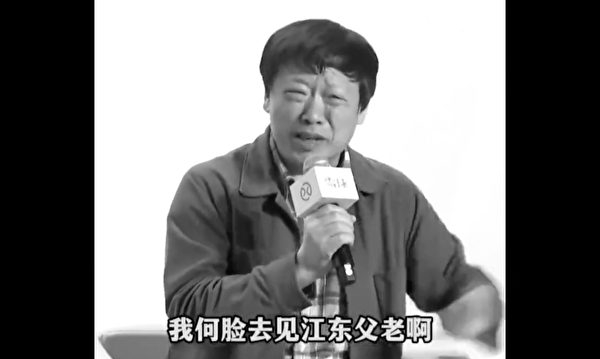
Beijing is set to enforce new regulations regarding social security contributions in September, triggering widespread public discontent. The debate intensified after Hu Xijin, former editor-in-chief of the state-affiliated Global Times, defended the new rules and later faced accusations regarding the size of his retirement benefits.
Backlash and Accusations
On August 1st, Beijing announced a ban on “voluntary waivers” of social security contributions, a move that quickly drew criticism online. Concerns center around the significant disparity between the pensions received by individuals within the Chinese Communist Party (CCP) system and those of average citizens. Hu Xijin initially addressed the issue on Weibo on August 10th, defending the official policy and criticizing those who used the low pensions of rural residents-sometimes as low as 100 or 200 yuan per month-as examples of systemic failure. He later deleted the post following a surge of negative reactions.
The controversy escalated when a Weibo user shared a screenshot alleging Hu Xijin receives a monthly pension of 33,000 yuan (approximately $4,500 USD). The post questioned the fairness of a well-connected figure criticizing low pensions while benefiting from a considerable retirement income. The user likened Hu Xijin’s stance to accepting the “laws of the jungle,” suggesting that even if a farmer were to damage his property, he would be powerless to seek redress due to financial constraints.
Did You Know? The Chinese social security system is a multi-tiered structure, with varying levels of benefits based on employment history, contributions, and regional factors.
Hu Xijin’s Response and Skepticism
Hu Xijin responded to the allegations on August 19th, stating he was “too damaged” by the claims and had only learned of the 33,000 yuan figure through online reports.He claimed to have transitioned to a business role and asserted that he had not encountered anyone with such a high pension. Though, he refrained from disclosing the exact amount of his retirement income.
Chinese bloggers have offered varying estimates of Hu Xijin’s pension. “Sui Pai Zai” initially doubted the 33,000 yuan figure, estimating a pension between 20,000 and 25,000 yuan for a retired bureau-level official. However,they acknowledged that hu Xijin’s long tenure as editor-in-chief of the Global Times,coupled with an annual salary system and potential occupational annuities,coudl justify a higher amount. Another blogger,”Ke,” estimated his pension could reach as high as 40,000 yuan,citing his administrative rank and eligibility for a “Special State Council allowance” reserved for top media professionals.
Past Controversies and Allegations
Hu Xijin retired in December 2021. Throughout his career as editor-in-chief of the Global Times, he faced scrutiny over several controversial issues. In 2012,the Global Times published an editorial suggesting “moderate corruption” was permissible following the expulsion of former Railway Minister Liu zhijun from the CCP. Hu Xijin himself was reprimanded in 2013 for using public funds for travel and required to reimburse the expenses.
Further allegations surfaced in 2020, with former Phoenix Network reporter Zhang Zhenyu claiming Hu Xijin owned multiple properties, including a luxury home in Beijing, and that his son had immigrated to North america. Hu Xijin denied these claims. He also refuted accusations of receiving an annual income of 12 million yuan and having only one daughter residing in Beijing.
In December 2020, Hu Xijin was the subject of a formal complaint to the Central Commission for Discipline Inspection by his deputy editor-in-chief, Duan Jingtao, who accused him of having extramarital affairs and fathering illegitimate children. Hu Xijin denied these allegations, and an official inquiry reportedly found no evidence to support them.Some observers suggest the complaint may have been linked to internal power struggles within the CCP.
Pro Tip: Understanding the hierarchical structure of the CCP and its associated benefits is crucial for interpreting these types of controversies.
| Event | Date | Details |
|---|---|---|
| Beijing Announces Social Security Rule Change | August 1, 2025 | Ban on voluntary waivers of social security contributions. |
| Hu Xijin Defends New Rules | August 10, 2025 | Posts on Weibo defending the policy, later deleted. |
| Pension Allegations Surface | August 18, 2025 | Claims of Hu Xijin receiving a 33,000 yuan monthly pension. |
| hu Xijin Responds to Claims | August 19, 2025 | Denies the 33,000 yuan figure but does not disclose actual amount. |
| hu Xijin Retires | December 2021 | Steps down as editor-in-chief of the Global Times. |
The Broader Context of Pension Inequality
This incident highlights the ongoing issue of pension inequality in China. The gap between the retirement benefits of CCP officials and ordinary citizens remains a sensitive topic, fueling public resentment and concerns about fairness.The Chinese government has acknowledged the need to address these disparities, but progress has been slow. According to a 2023 report by the Ministry of Human Resources and Social Security, the average urban pension was 3,600 yuan per month, while rural pensions averaged around 1,800 yuan. China Daily
The enforcement of stricter social security rules is intended to broaden the base of contributors and ensure the long-term sustainability of the system. Though,without addressing the underlying inequalities,these measures risk exacerbating public dissatisfaction. The debate surrounding Hu Xijin’s pension serves as a potent symbol of these systemic issues. What steps can the Chinese government take to bridge the pension gap and restore public trust in the social security system? How will these new regulations impact the financial security of China’s aging population?
China’s social security system has undergone significant reforms in recent decades, evolving from a primarily state-funded model to a more diversified system incorporating individual contributions and private pensions. Though, challenges remain, including coverage gaps, regional disparities, and the sustainability of funding in the face of an aging population. The system is particularly complex due to the large rural population and the varying levels of economic development across different provinces. the current reforms aim to address these issues by expanding coverage, increasing contribution rates, and promoting the development of private pension schemes. World Bank – China Overview
Frequently Asked Questions
- What is the main issue surrounding Hu Xijin’s pension? The controversy centers on allegations that his pension is significantly higher than that of average Chinese citizens, raising questions about fairness and equity.
- What are the new social security rules being implemented in China? Beijing is banning “voluntary waivers” of social security contributions, aiming to broaden the contributor base.
- What is the average pension in China? According to recent reports, the average urban pension is around 3,600 yuan per month, while rural pensions average approximately 1,800 yuan.
- Why is pension inequality a concern in China? The large gap between the pensions of CCP officials and ordinary citizens fuels public resentment and concerns about social justice.
- What was Hu Xijin’s role at the Global times? He served as the editor-in-chief of the Global Times, a state-affiliated media outlet, for many years.
We encourage you to share this article with your network and join the conversation in the comments below. subscribe to World Today News for more insightful coverage of global events and breaking news.
