
Kiruna Church Relocated in Historic Move to Accommodate Iron Ore Mining
Table of Contents
Kiruna, Sweden – In a feat of engineering and cultural preservation, the historic Kiruna Church completed its relocation to a new site on Wednesday. The move, spanning two days, was required due to the continued expansion of iron ore mining operations beneath the city center.
The Challenge of Urban Relocation
Kiruna, located 145 kilometers north of the Arctic Circle, faces a unique challenge. The city sits atop vast deposits of iron ore, and the state-owned mining company LKAB is expanding its operations. This expansion necessitates the relocation of numerous buildings, including the iconic Kiruna Church, built over a century ago. The entire relocation process is estimated to cost approximately ten billion Swedish krona (€900 million), fully funded by LKAB.
The process isn’t simply lifting and moving structures. Most buildings are disassembled and rebuilt, but the Kiruna Church, a symbol of the community, was moved intact. This presented meaningful logistical hurdles, requiring meticulous planning and execution.
Did You Know? The Kiruna Church was originally considered one of Sweden’s most beautiful buildings constructed before 1950.
A Monumental Undertaking
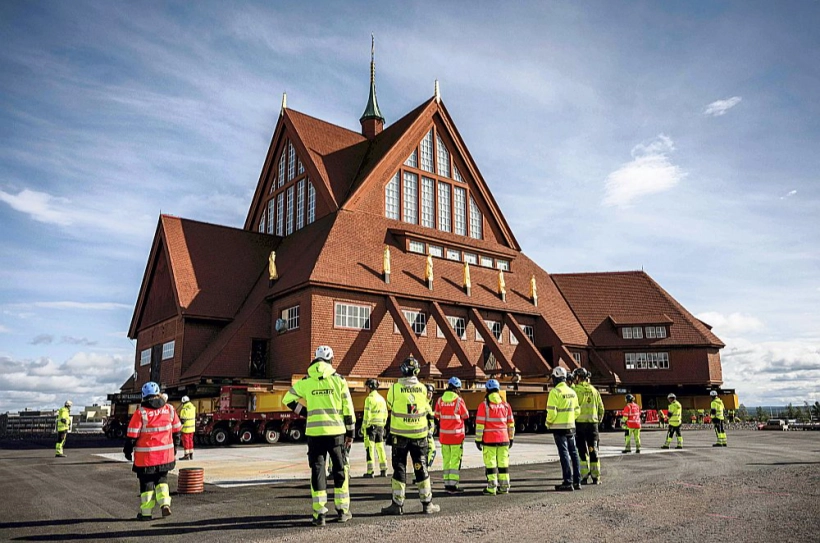
The kiruna Church, weighing 672 tons, measuring 35 meters high and 40 meters wide, required extensive planning for its journey. Project manager Stefan Holmblad Juhanson emphasized the complexity of the operation, stating, “This is a historic event, a very large and complex operation where there is no room for mistakes.” The path for the church was widened to 24 meters, necessitating the removal of lighting poles, traffic signals, and even a bridge.
Special care was taken to protect the church’s interior, including an altar painting by Prince Eugen of Sweden and the church organ. The relocation, planned over eight years, involved reinforcing the church with steel beams and placing it on specialized trailer platforms.
| Milestone | Date |
|---|---|
| Relocation Begins | tuesday, August 19, 2025 |
| Church Fully Relocated | Wednesday, August 20, 2025 |
| New City Center Opens | September 2022 |
| Estimated Total Relocation Cost | 10 Billion SEK (€900 Million) |
community and Cultural Impact
The relocation garnered significant public interest, with Swedish public broadcaster SVT providing extensive coverage. King Carl XVI Gustav and thousands of citizens traveled to witness the event. One Gothenburg resident,Edkvist,expressed the church’s importance,stating,”I’m not a deeply religious person…However,it is part of my tradition,history and culture.”
The church was moved at a rate of approximately 500 meters per hour, though the initial hour saw only 30 meters of progress.It is expected to reopen at its new location by the end of next year, having been closed in preparation for the move.
Pro Tip: The relocation of Kiruna highlights the growing tension between economic development and the preservation of cultural heritage, a challenge faced by communities worldwide.
While LKAB’s mining operations drive the local economy, the expansion also raises concerns for the Sami people, whose traditional reindeer migration routes are threatened. This underscores the need for sustainable development practices that balance economic interests with cultural and environmental considerations.
Looking Ahead
The relocation of the Kiruna Church represents a significant milestone in the ongoing transformation of the city. As LKAB continues to expand its mining operations, further relocations are anticipated. The challenge lies in ensuring that this development benefits the community while preserving its cultural identity and respecting the rights of the Sami people. what long-term impacts will the mine expansion have on the Sami community and their traditional way of life? How will Kiruna balance economic growth with cultural preservation in the years to come?
The Kiruna relocation is part of a broader trend of communities adapting to the impacts of resource extraction. Similar challenges are faced in regions around the world where mining, oil drilling, or other industrial activities necessitate the displacement of populations and the alteration of landscapes. The case of Kiruna offers valuable lessons in urban planning, cultural heritage management, and stakeholder engagement.
Frequently Asked Questions about the Kiruna Church Relocation
- Why was the Kiruna Church moved? The church was moved due to the expansion of iron ore mining operations beneath the city.
- How much did the church relocation cost? The relocation is part of a larger project costing approximately 10 billion Swedish krona (€900 million).
- How long did the church relocation take? The actual move took two days, but the overall project is planned for eight years.
- What is LKAB’s role in the relocation? LKAB, the state-owned mining company, is financing the entire relocation project.
- What impact does the mining have on the Sami people? The mining expansion threatens traditional reindeer migration routes and the livelihoods of the Sami people.
We hope you found this article insightful. Please share it with your network, leave a comment below, or subscribe to our newsletter for more in-depth coverage of global news and events.
