
Asteroid 2024 YR4: Lunar Collision Could Threaten Earth Satellites
Table of Contents
JAKARTA – Astronomers detected asteroid 2024 YR4 on December 27, 2024, and initial assessments indicate it does not pose a direct threat to Earth. However, new research reveals a significant possibility-around 4 percent-that the asteroid will impact the moon in 2032, possibly creating a cascade of debris that could endanger satellites in Earth orbit.
What is Asteroid 2024 YR4?
Asteroid 2024 YR4 is estimated to be between 53 and 67 meters in diameter (174 to 220 feet), comparable in size to the object that caused the 1908 Tunguska event in Siberia [[1]]. This makes it a substantial near-Earth object, warranting careful monitoring.
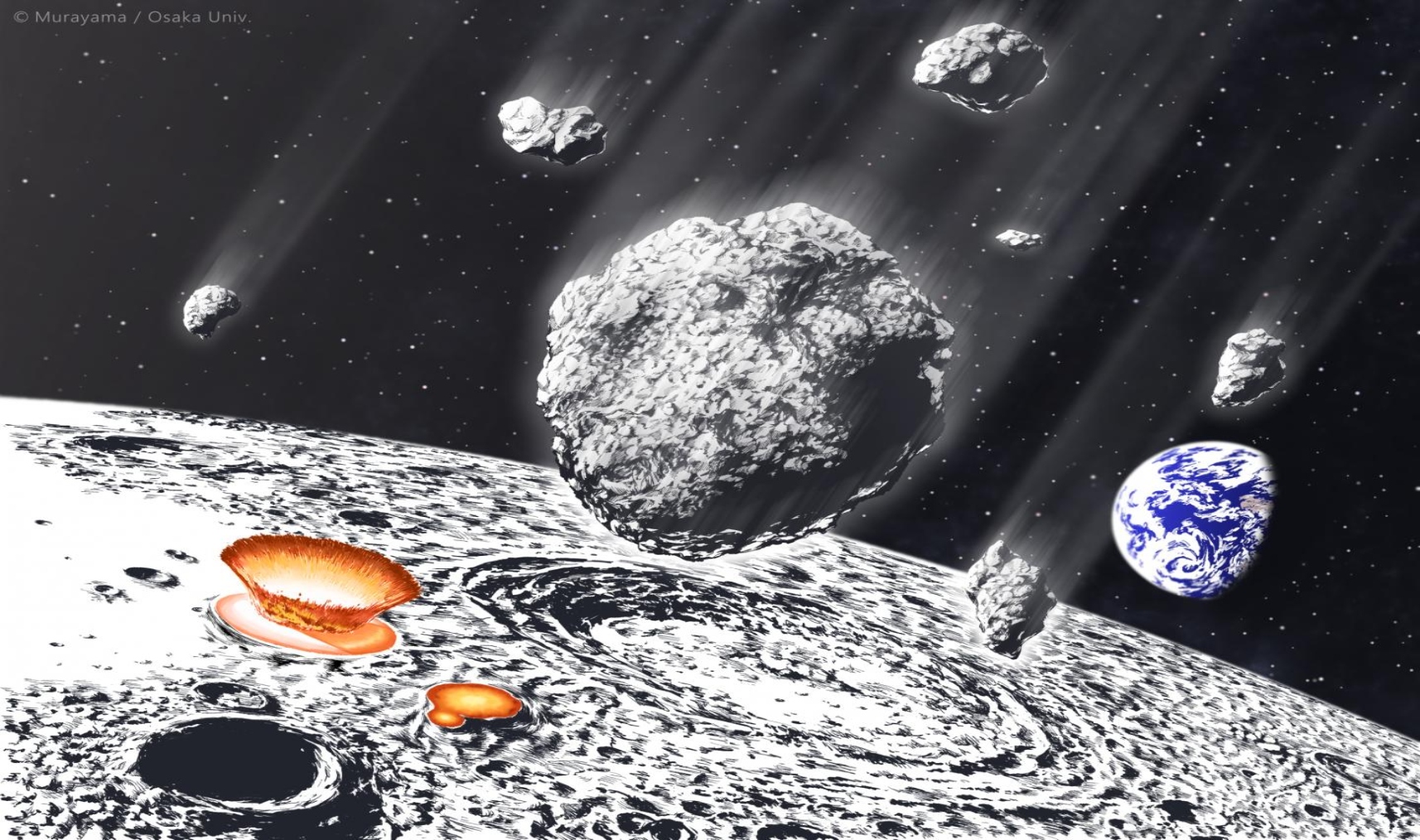
A lunar impact would generate a crater approximately one kilometer in diameter.The resulting explosion would release energy equivalent to 65 megatons of TNT, ejecting roughly 100,000 tons (10⁵ kg) of debris into space.
Did You Know? The 1908 Tunguska event flattened an estimated 80 million trees over an area of 2,000 square kilometers, demonstrating the destructive potential of even relatively small asteroids.
The Threat to Satellites
The primary concern isn’t a direct impact on Earth, but rather the debris field created by a lunar collision. A study, “Potential Dangers to Satellites Due to Ejekta from the impact of 2032 by Asteroid 2024 YR4,” authored by Paul Wiegert of the University of Western Ontario, details the potential risks to satellites [[2]].
Researchers estimate that up to 10 percent of the ejected material could reach EarthS vicinity within days of the impact. This influx of debris would dramatically increase the risk of collisions with operational satellites, exposing them to a meteoroid flux equivalent to a decade’s worth of background impacts.
Pro Tip: understanding the orbital mechanics of asteroids and their potential impact trajectories is crucial for planetary defense. Organizations like NASA’s Center for Near Earth Object Studies (CNEOS) play a vital role in this effort.
Modeling the Impact and Debris Field
Wiegert and his team used simulations based on 10,000 “clones” of the asteroid’s trajectory, finding that 410 would result in a lunar impact, primarily in the southern hemisphere of the moon’s near side. Analysis of four specific impact scenarios revealed that a significant portion of the debris could quickly reach near-Earth space.
The simulations considered five key factors: crater size, the amount of material ejected, the distribution of debris, the impact location on the moon, and the efficiency of debris transfer to near-Earth space. The moon’s orbital speed of approximately 1 kilometer per second means that material ejected from the far side of the moon can reach Earth relatively quickly.
Key Data Summary
| asteroid | Diameter (meters) | Impact Probability (2032) | Crater Diameter (km) | Ejected Debris (tons) |
|---|---|---|---|---|
| 2024 YR4 | 53-67 | 4% | 1 | 100,000 |
Increased Risk in a Crowded Orbit
The potential for damage to satellites is heightened by the increasing number of spacecraft in low Earth orbit (LEO). The influx of debris would elevate the risk of collisions, though researchers believe a total mission failure is unlikely. However, the danger extends beyond satellites.
“Material thrown from the moon can be a serious threat to spacecraft that orbits the moon (such as Lunar Gateway), and even more perilous for operations on the surface of the moon, as most of the mass of debris will be spread in a large area there,” Wiegert explained.
What steps can be taken to mitigate the risk posed by asteroid debris? Further observation and trajectory refinement are crucial for a more accurate risk assessment.
Currently, the probability of an impact remains low at around 4 percent. A close approach in 2028 will provide astronomers with another chance to refine their understanding of the asteroid’s path and potential hazards.
The study of near-Earth objects is a rapidly evolving field. Ongoing advancements in asteroid detection and tracking technologies, coupled with research into potential mitigation strategies, are essential for protecting Earth and its infrastructure from cosmic threats. The increasing commercialization of space further underscores the importance of understanding and addressing these risks.
Frequently Asked Questions about Asteroid 2024 YR4
- What is the biggest threat from asteroid 2024 YR4? The primary threat is not a direct impact on Earth, but the potential for debris from a lunar impact to damage satellites.
- How likely is 2024 YR4 to hit the moon? Current estimates place the probability of a lunar impact in 2032 at around 4 percent.
- What size crater would a 2024 YR4 impact create on the moon? The impact is predicted to form a crater approximately one kilometer in diameter.
- Could debris from the impact reach Earth? Yes, up to 10 percent of the ejected material could reach Earth’s vicinity within days of the impact.
- what is being done to monitor 2024 YR4? Astronomers are continuing to track the asteroid and will have another opportunity to refine its trajectory during a close approach in 2028.
This is a developing story. Stay tuned for updates as more data becomes available.
