
The unsolved Murder of munir Said thalib: A 21-Year Search for Justice
Table of Contents
- The unsolved Murder of munir Said thalib: A 21-Year Search for Justice
Jakarta – Twenty-one years after the poisoning death of prominent human rights activist Munir Said Thalib,the identity of those who orchestrated his murder remains shrouded in mystery. Suciwati, Munir’s widow adn a fellow human rights advocate, is urgently appealing for the case to be formally classified as a grave violation of human rights by Indonesia’s National Commission on Human Rights (Komnas HAM).
A Case Lingering for Over Two Decades
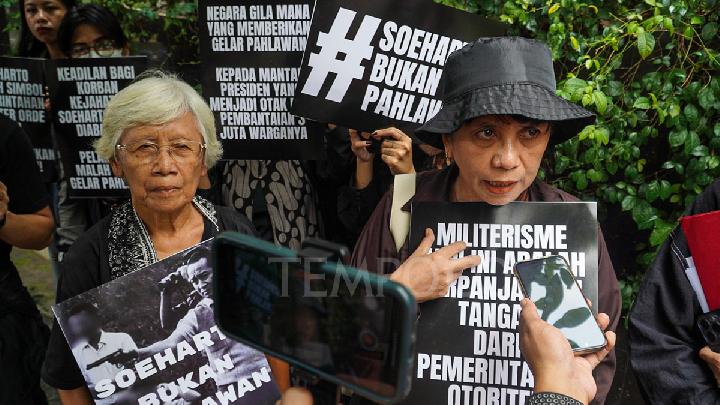
Speaking on August 15, 2025, at Taman Ismail Marzuki in Central Jakarta, Suciwati expressed her hope that Komnas HAM would swiftly designate her husband’s death as a severe human rights violation. She believes the killing was a calculated act perpetrated with the involvement of state institutions. “this September, the case will have been 21 years old. Yesterday, I WhatsApped the Chair of Komnas, who is currently processing pro-justice,” Suciwati stated.
Suciwati emphasized that the designation of a case as a severe human rights violation should not hinge on the number of victims, but rather on the systematic nature of state-sponsored violence. “It’s about how the state systematically kills its citizens,” she asserted.
Reliance on civil Society
While acknowledging the importance of Komnas HAM’s role, Suciwati voiced a stronger trust in the resilience of civil society movements. She believes these grassroots efforts maintain a critical awareness and commitment to uncovering the truth, despite facing potential repression and defamation.
Pro Tip: Supporting autonomous journalism and human rights organizations is crucial for holding power accountable.
she highlighted the consistent pressure exerted by groups like the Kamisan Action
to compel the state to address serious human rights violations. “But slander always exists. Some say that the movement is paid by A, B, C, D. But we don’t want to hear because it’s clear to us; we see how organic they are in their struggle,” she explained.
Munir’s Legacy of Advocacy
Throughout his life, munir was a tireless champion for justice, notably during the authoritarian New Order era. He dedicated himself to defending the rights of workers, students, youth, and marginalized communities.As an active member of the Legal Aid Institute (LBH), Munir consistently fought against injustice and demanded accountability.
The Poisoning on Garuda Indonesia Flight GA-974
Tragically,Munir’s advocacy ended on September 7,2004,when he was poisoned with arsenic while aboard Garuda Indonesia flight GA-974 en route from Jakarta to Amsterdam.He was traveling to continue his studies at Utrecht University. The circumstances surrounding his death have been the subject of intense scrutiny and investigation.
Key Events in the Munir Said Thalib Case
| Date | Event |
|---|---|
| september 7,2004 | Munir Said Thalib dies from arsenic poisoning on Garuda Indonesia flight GA-974. |
| 2005 | Pollycarpus Budihari Priyanto is convicted of Munir’s murder. |
| 2014 | Pollycarpus Budihari Priyanto is granted conditional release. |
| August 2018 | Pollycarpus Budihari Priyanto is fully released from prison. |
| august 15, 2025 | Suciwati calls for the case to be designated a severe human rights violation. |
Investigations, as reported by KontraS, suggest a systematic operation involving high-ranking officials, including those within Garuda Indonesia. Garuda pilot Pollycarpus Budihari Priyanto was identified as the individual who administered the arsenic, even while off-duty. Indra Setiawan, the former CEO of Garuda Indonesia, is also suspected of complicity, allegedly providing Pollycarpus with a duty letter.
Did You Know? The case highlights the vulnerability of human rights defenders and the challenges of achieving justice in cases involving state actors.
A Complex Legal history
Pollycarpus was initially sentenced to 20 years in prison,but a series of legal challenges resulted in a reduced sentence of 14 years. He was conditionally released in November 2014 and fully released in August 2018. The extent of Indra Setiawan’s involvement and the identity of the ultimate mastermind behind Munir’s murder remain largely unresolved.
What further steps must be taken to uncover the truth behind Munir’s death? And how can Indonesia ensure accountability for past human rights violations and prevent future atrocities?
The Broader Context of Human Rights in Indonesia
The Munir case is emblematic of a broader struggle for human rights and accountability in Indonesia.Throughout its history, Indonesia has faced challenges in addressing past abuses and protecting the rights of its citizens. The case underscores the importance of an independent judiciary, a free press, and a vibrant civil society in safeguarding human rights. The pursuit of justice for Munir is not merely about one individual, but about upholding the rule of law and ensuring that those responsible for human rights violations are held accountable. According to Amnesty International, Indonesia’s human rights record remains a concern, with reports of excessive force by security forces, restrictions on freedom of expression, and discrimination against marginalized groups [Amnesty International].
Frequently Asked Questions About the Munir Case
- Who was Munir Said Thalib? Munir Said Thalib was a prominent Indonesian human rights activist known for his advocacy for victims of past abuses.
- What happened to Munir Said Thalib? He died on September 7, 2004, from arsenic poisoning while traveling on a Garuda Indonesia flight.
- Has anyone been convicted in connection with Munir’s murder? Pollycarpus Budihari Priyanto was convicted, but his sentence was reduced and he has been released.
- Why is the case still unsolved? The identity of the mastermind behind the murder remains unknown, and investigations have been hampered by a lack of cooperation and potential obstruction.
- What is Suciwati’s role in seeking justice? Suciwati, Munir’s widow, continues to advocate for a thorough investigation and accountability for those responsible.
We encourage you to share this article with your network to raise awareness about this critical case. Your comments and insights are also welcome – let’s continue the conversation and work towards a future where justice prevails. Consider subscribing to our newsletter for more in-depth reporting on human rights issues around the world.
