
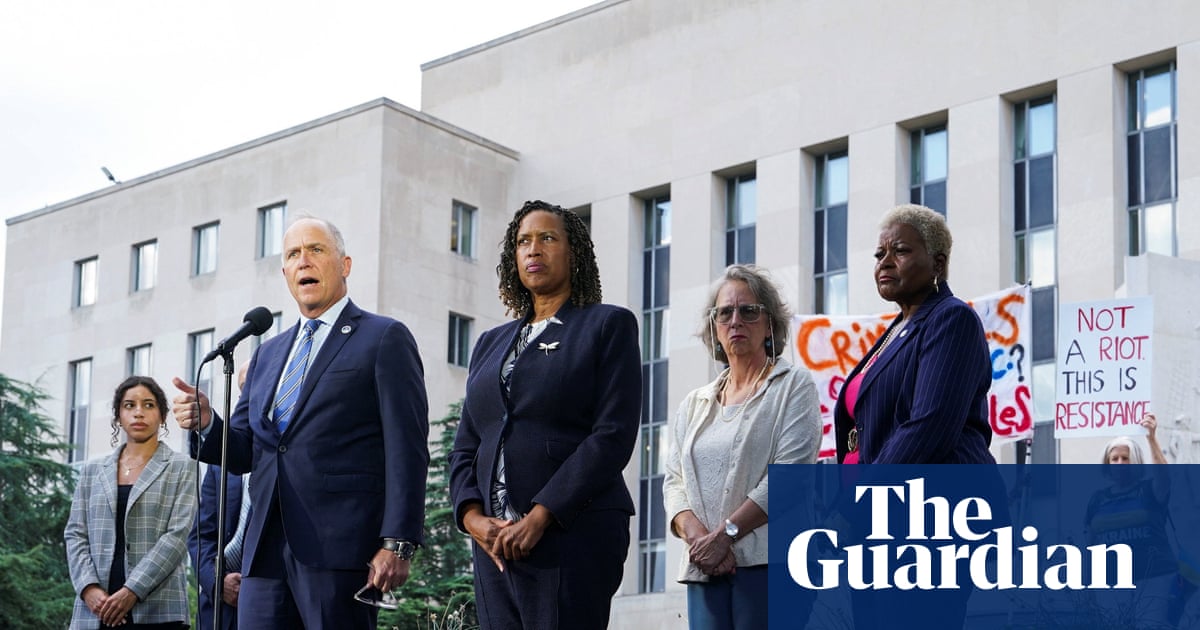
Federal Intervention in D.C. Policing De-escalates After Legal Pushback
Table of Contents
Washington, D.C.- A planned overhaul of Washington D.C.’s Metropolitan Police Department (MPD) by the Trump administration has been considerably altered following a legal challenge from District officials. The initial move, widely criticized as a federal overreach, aimed to place Terry Cole, a Drug Enforcement Administration (DEA) administrator, at the helm of the city’s police force. However, a revised agreement reached Friday evening preserves the authority of current MPD Chief Pamela Smith.
The Initial Takeover and Legal Challenge
The dispute began when U.S.Attorney General Pam Bondi issued an order late Thursday designating Cole as the ”emergency police commissioner” for Washington D.C. This action prompted an immediate lawsuit from District of Columbia Attorney general brian Schwalb, who argued the administration was exceeding its legal authority under the Home Rule Act. Schwalb asserted the move constituted a “opposed takeover” of local law enforcement By declaring a hostile takeover of MPD, the Administration is abusing its limited, temporary authority under the Home Rule Act
.
U.S. District Judge Ana C. Reyes signaled her intent to issue a temporary restraining order blocking the takeover if the administration didn’t modify its plan. During Friday’s hearing, Reyes expressed skepticism about the legal basis for federal control of the D.C. police, questioning the administration’s authority to dictate police operations. I still do not understand on what basis the president, through the attorney general, through Mr. Cole, can say: ‘You, police department, can’t do anything unless I say you can,’
Reyes stated during oral arguments.
Revised Agreement and Continued Federal Involvement
Under the revised directive, Cole will serve as Bondi’s “designee” to direct Mayor Muriel Bowser to provide MPD services as the attorney general deems necessary and appropriate
. A key component of this continued federal involvement will be assistance with federal immigration enforcement, potentially conflicting with D.C.’s “sanctuary city” policies. These policies limit the MPD’s cooperation with federal immigration authorities, preventing them from arresting individuals solely based on immigration status or sharing certain data with Immigration and Customs Enforcement (ICE).
The agreement also allows the Trump administration to utilize MPD officers for federal purposes during emergencies. This follows the deployment of federalized National Guard troops to the city earlier in the week, a move made as President Trump declared a crisis of crime and homelessness.
Did You Know?
The Home Rule act of 1973 grants the District of Columbia a degree of self-governance, but Congress retains ultimate authority over the city.
Context: Federal-Local Tensions
This situation unfolds against a backdrop of escalating tensions between the Trump administration and Democratic-led cities regarding immigration and crime.Attorney General Bondi has sent letters to 32 cities and several counties,warning of potential prosecution for leaders deemed insufficiently supportive of immigration enforcement. The administration’s characterization of a widespread crime crisis in these cities has been disputed by local officials, who point to data indicating that Washington D.C.’s homicide rate, while concerning, remains lower than in several other major U.S. cities.
Timeline of Events
| Date | event |
|---|---|
| August 11, 2025 | Federalized National Guard troops deployed to Washington D.C. |
| August 15, 2025 | Attorney General Bondi orders Terry Cole to take over MPD. |
| August 16, 2025 | D.C. Attorney General files lawsuit challenging the takeover. |
| August 16,2025 | Revised agreement reached,scaling back federal control. |
Mayor Bowser, who was out of town on family business during the initial order, swiftly condemned the attempted takeover, stating there was no legal basis for a federal official to assume authority over the D.C. police force.
Pro tip:
Understanding the nuances of the Home Rule Act is crucial to grasping the complexities of federal-local relations in Washington D.C.
The administration’s actions have sparked debate about the limits of federal power and the appropriate balance between national security concerns and local autonomy. What long-term impact will this attempted intervention have on the relationship between the federal government and Washington D.C.? And how might this situation influence similar disputes in other cities?
The ongoing tension between federal authority and local governance is a recurring theme in American history. The D.C. case highlights the complexities of the Home Rule Act and the potential for conflict when federal priorities clash with local policies. the debate over sanctuary city policies and immigration enforcement continues to be a major point of contention, with legal challenges and political maneuvering expected to persist. This situation also underscores the broader trend of increasing federal involvement in local law enforcement, raising questions about civil liberties and the balance of power.
Frequently Asked Questions
- What is the Home Rule Act? The Home Rule Act of 1973 grants the District of Columbia a degree of self-governance, allowing it to manage its own affairs while still remaining under the ultimate authority of Congress.
- What are “sanctuary city” policies? These policies limit cooperation between local law enforcement and federal immigration authorities, frequently enough preventing them from arresting individuals solely based on immigration status.
- Who is Terry Cole? Terry Cole is the administrator for the Drug Enforcement Administration (DEA) and was initially designated as the “emergency police commissioner” for Washington D.C.
- What was the initial goal of the Trump administration’s intervention? The administration stated its goal was to address a perceived crisis of crime and homelessness in Washington D.C. and to ensure cooperation with federal immigration enforcement.
- What is the current status of the MPD leadership? Pamela Smith remains the Chief of the Metropolitan Police Department, but Terry Cole will act as a designee to direct the mayor on providing MPD services as needed by the Attorney General.
This is a developing story. Check back for updates as more information becomes available.
We value your feedback! Share your thoughts in the comments below, and don’t forget to subscribe to our newsletter for the latest news and analysis.
