
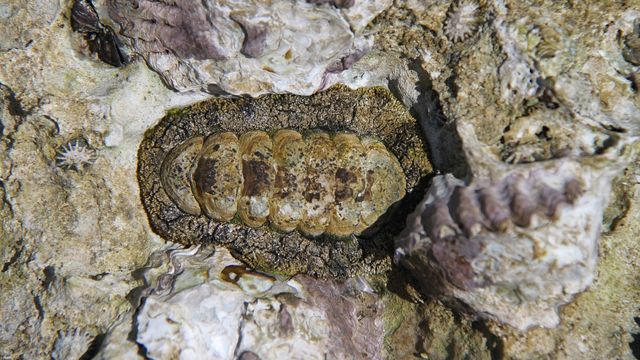
Chiton Teeth Inspire New Super-Materials
Nature’s Engineering Reveals Secrets to Unprecedented Strength
Scientists are unlocking the secrets behind the incredibly hard, wear-resistant, and magnetic teeth of marine mollusks called chitons. This groundbreaking research promises to revolutionize the creation of advanced materials for diverse applications.
Nature’s Nanotech Masterpiece
Researchers from the University of California, Irvine, alongside collaborators from Japan’s Okayama and Toho universities, have detailed the intricate process by which chitons build their formidable teeth. Published in the journal *Science*, the study reveals how specific iron-binding proteins are precisely delivered through microscopic tubules into developing teeth.
This meticulous deposition ensures the formation of a robust dental structure essential for the mollusks’ survival. Chiton teeth, which consist of both magnetite nanorods and organic material, are not only harder and stiffer than human tooth enamel, but also harder than high-carbon steels, stainless steel, and even zirconium oxide and aluminum oxide – advanced engineered ceramics made at high temperatures,
explained co-author David Kisailus, a UC Irvine professor of materials science and engineering. Chiton grow new teeth every few days that are superior to materials used in industrial cutting tools, grinding media, dental implants, surgical implants and protective coatings, yet they are made at room temperature and with nanoscale precision.
A Global Biological Design
Chitons, found in intertidal zones worldwide, exhibit remarkable consistency in their tooth-building mechanisms. Studies focused on species from the Pacific Northwest and Hokkaido, Japan, revealed the presence of the key protein RTMP1 across disparate global locations. This suggests a remarkable instance of convergent biological design in controlling iron oxide deposition,
according to Kisailus.
The team’s investigation employed a potent mix of advanced materials analysis and molecular biology. They discovered that RTMP1 proteins, initially located in tissues surrounding immature teeth, are channeled via nanostructured tubules. Once inside, these proteins attach to existing chitin nanofiber frameworks.
Simultaneously, iron stored in another protein, ferritin, is released and binds to RTMP1. This process precisely deposits nanoscale iron oxide. Over time, this material aligns into highly ordered magnetite nanorods, culminating in the exceptionally hard teeth. This biological pathway offers significant insights into cellular iron metabolism and the synthesis of next-generation advanced materials.
Paving the Way for Sustainable Innovation
The ability of chitons to regenerate teeth rapidly provides a unique window into nanoscale mineral formation. The fact that these organisms form new sets of teeth every few days not only enables us to study the mechanisms of precise, nanoscale mineral formation within the teeth, but also presents us with new opportunities toward the spatially and temporally controlled synthesis of other materials for a broad range of applications, such as batteries, fuel cell catalysts and semiconductors,
Kisailus noted. This could lead to more environmentally friendly and sustainable manufacturing methods, including advances in 3D printing.
This pioneering research utilized ultra-high-resolution electron microscopy, X-ray analysis, and spectroscopy, alongside biological techniques like immunofluorescence and gene expression tracking. This interdisciplinary approach, a fusion of materials science and biology, was crucial in deciphering the complex molecular orchestration of chiton tooth formation.
By combining biological and materials science approaches through wonderful, global efforts, we’ve uncovered how one of the hardest and strongest biological materials on Earth is built from the ground up,
Kisailus concluded.
Collaborators included Michiko Nemoto, Koki Okada, Haruka Akamine, Yuki Odagaki, Yuka Narahara, Kiori Obuse, Hisao Moriya, and Akira Satoh from Okayama University, and Kenji Okoshi from Toho University.
The study is detailed in *Science*. This research highlights how nature’s designs can inform advancements in material science, mirroring successes in biomimicry, such as the development of strong, lightweight materials inspired by bone structure, which are now used in aerospace and automotive industries (NASA, 2024).
