
New Vaccine Strategy Shows Promise Against MERS-cov Infection in Preclinical Study
In a significant preclinical growth, a novel vaccine approach targeting MERS-CoV has demonstrated a notable reduction in viral load within teh lungs of infected mice. the study,which investigated different immunization schedules and vaccine formulations,suggests that a multi-dose strategy and the inclusion of multiple viral antigens might potentially be key to achieving broad protection against Merbecovirus infections.
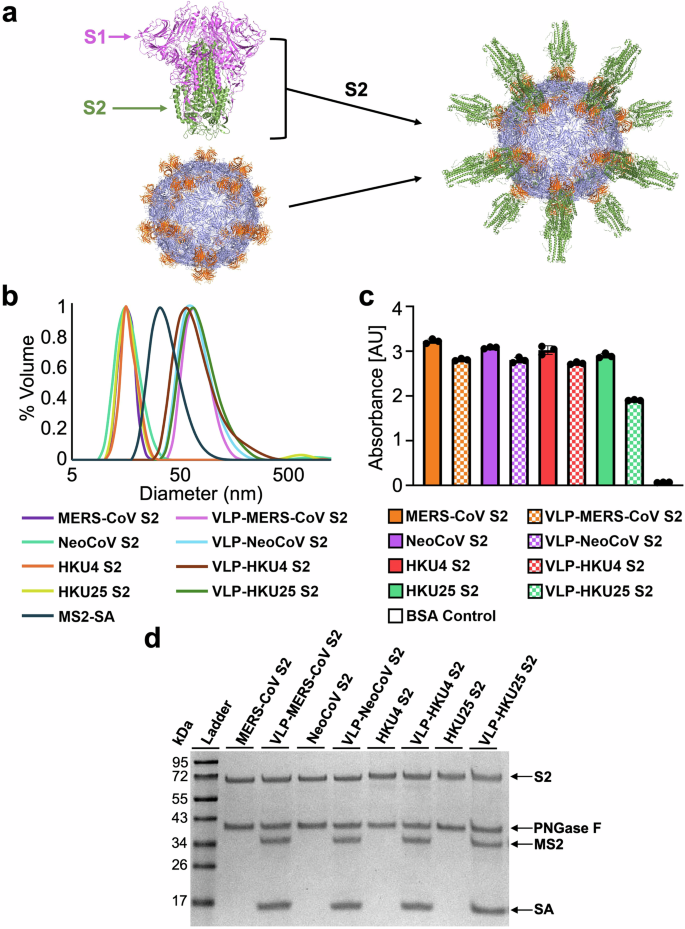
The research, detailed in a recent publication, evaluated the efficacy of virus-like particle (VLP) vaccines expressing the S2 subunit of the MERS-CoV spike protein. Mice were subjected to either a single-dose (prime-only) or a two-dose (prime-boost) immunization regimen. Following infection with MERS-CoV, lung viral titers were assessed to measure vaccine effectiveness.
In the single-dose group, only mice vaccinated with VLP-MERS-CoV showed a statistically significant reduction in lung viral titers. While other VLP-S2 formulations, including a mixture of VLP-MERS-S2 and VLP-HKU4-S2, appeared to offer some benefit, these reductions did not reach statistical significance compared to control groups. This indicates that a single dose may not be sufficient for robust protection across all tested formulations.
The prime-boost strategy yielded more promising results. A considerable proportion of mice receiving two doses of VLP-MERS-CoV S2 exhibited no detectable viral load in their lungs. furthermore, mice immunized with VLP-NeoCoV-S2 also demonstrated a significant decrease in lung viral titers.However, booster doses of VLP-HKU4-S2 or VLP-HKU25-S2 did not result in significant differences compared to controls, suggesting that the specific antigen choice for boosting is critical.
Interestingly, the mixture vaccine, when administered in a prime-boost schedule, led to a considerable 3.7-log reduction in lung viral titers. The researchers hypothesize that the inclusion of the HKU4 S2 antigen might influence the immune response, potentially directing it towards a more intermediate position between MERS-CoV and HKU4, as suggested by previous antigenic mapping data. this observation underscores the complexity of developing broad-spectrum vaccines and the need for careful antigen selection to maximize efficacy while minimizing the number of components.
The findings suggest that a multi-antigen approach, administered over multiple doses, might potentially be necessary to achieve extensive protection against Merbecovirus infections. Future research will focus on optimizing antigen combinations to enhance broad-spectrum immunity.
