
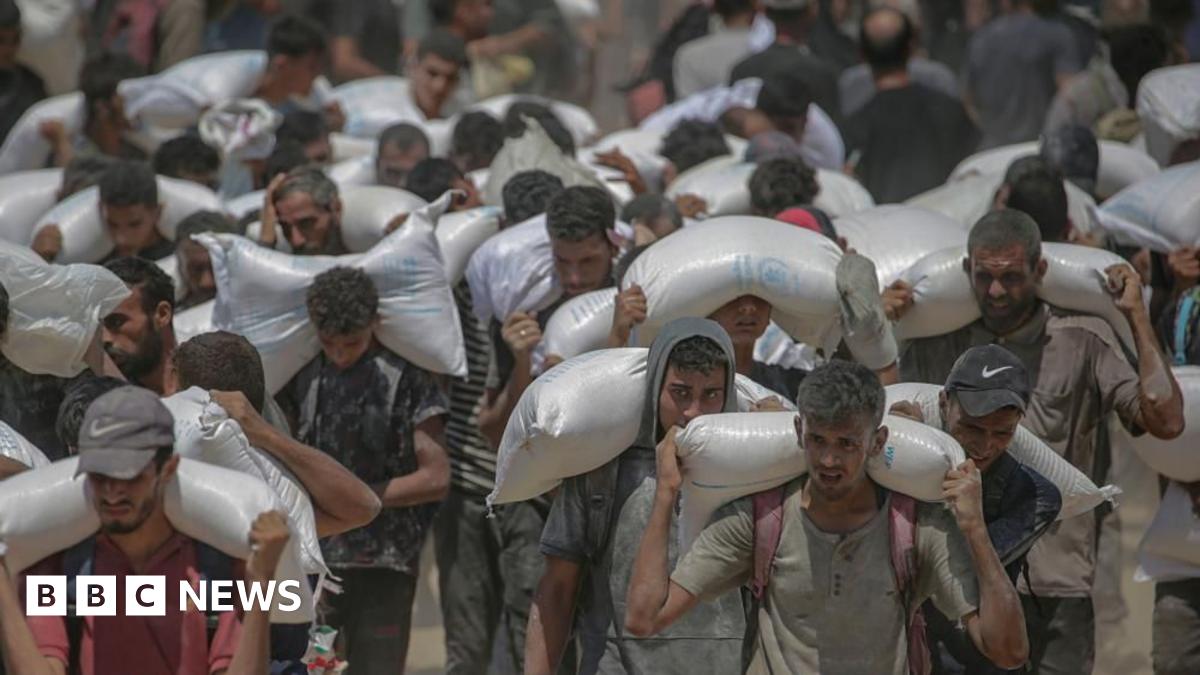
Israel’s Aid Drops Signal Unease Amid Global Starvation Accusations
Gaza aid deliveries by air spark scrutiny as allies and UN condemn humanitarian crisis.
New Israeli measures to deliver aid into Gaza appear to be a strategic response to international pressure. Allies and the United Nations have voiced grave concerns over widespread starvation in the besieged territory, questioning Israel’s assertion that it bears no responsibility for the humanitarian catastrophe.
Aerial Aid Amidst Criticism
Israel has released footage showing a transport plane dropping aid packages containing essential supplies like flour and sugar. However, relief professionals view aerial drops as a desperate last resort, typically employed only when other access routes are entirely blocked. This method is questioned in Gaza, where alternative, more efficient land routes exist.
Logistical Realities of Gaza Aid
Gaza, a densely populated strip roughly the size of Philadelphia, has seen Israel displace the majority of its over two million residents into a small coastal area. This concentration, covering only about 17% of Gaza’s land, often results in dropped aid pallets missing their intended recipients. Desperate individuals and opportunistic elements reportedly compete for these scattered supplies.
A Shift Driven by International Outcry
The revised aid operations may represent a tacit acknowledgment by Israel of the need to increase relief efforts. More significantly, these actions seem designed to appease key international partners who have publicly condemned the dire humanitarian situation and blamed Israeli restrictions for the growing starvation.
Global Call for Unhindered Access
The scale of the crisis has prompted widespread international condemnation. As of April 2024, the UN reported that a significant portion of Gaza’s population faced catastrophic levels of hunger, with projections warning of imminent famine (World Food Programme). The effectiveness of air drops versus established land routes, such as the port of Ashdod in Israel and the Jordanian border crossing, remains a point of contention for aid organizations.
