
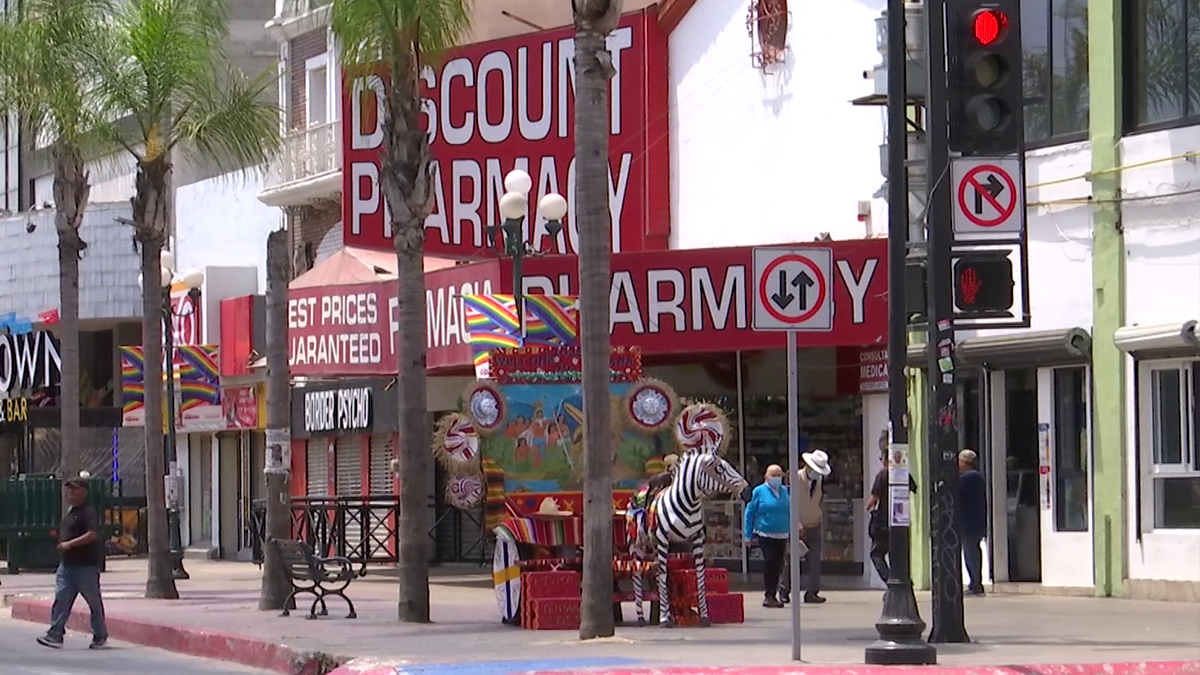
Border Pharmacies Offer Major Savings, But Risks Remain
San Diegans Seek Prescription Deals South of the Border
Many residents of San Diego are crossing into Tijuana to secure significant savings on their prescription medications. A federal study revealed that Americans traveling to Mexico can cut their drug costs by approximately 60% compared to U.S. prices.
Navigating Regulations and Safety Concerns
For first-time travelers, understanding the legal requirements and potential safety hazards involved in obtaining medications abroad can be daunting. The process requires careful attention to laws in both countries.
Rocio Cordero, a massage therapist from Spring Valley, shared her experience of filling prescriptions in Tijuana. She highlighted the substantial savings on her anxiety and high blood pressure medications. “Oh, it’s less expensive,” Cordero stated. “I’m a single mom, so I take care of my two kids by myself, and it will take a lot of my paycheck.” She noted that the primary drawback is the time spent commuting, which can sometimes take up to two hours at the San Ysidro border crossing.
Legal Framework for Cross-Border Medication Purchases
To legally bring medications back into the United States, individuals must ensure their prescriptions are for drugs approved by U.S. Customs and Border Protection (CBP). The agency publishes an annual list of permissible medications.
CBP also imposes a limit, allowing only a 30-day supply of medication to be brought back into the country. Pharmacies in Mexico are legally obligated to dispense prescription drugs only when a prescription is issued by a doctor licensed in Mexico. Many larger pharmacies employ physicians on-site to provide examinations and write prescriptions, while others require patients to schedule appointments at a Mexican clinic prior to their trip.
Álvaro González, a pharmacist in Tijuana with seven years of experience, emphasized the importance of these regulations. “We have certain rules that mean we can’t sell just any medication, because we don’t know what kind of problem people have,” González explained. “They may be allergic to a particular medication, and it could harm them.” He added that upon returning to the U.S., travelers must present written prescriptions from both their U.S. doctor and their Mexican counterpart.
Assessing Medication Safety and Counterfeit Risks
The safety of medications obtained in Tijuana can vary, according to Chelsea Shover, an Associate Professor of Epidemiology at UCLA. “I think it depends on what you’re buying and how you’re buying and what you’re concerned about and what you’re doing to minimize risk,” Shover commented.
A study co-authored by Shover two years ago found that some prescription drugs purchased in Mexico contained fentanyl and heroin. However, she clarified that the study specifically focused on prescription opioids, amphetamine salts like Adderall, and benzodiazepines like Xanax, often sold as single pills without a valid prescription, which is illegal. The research indicated that counterfeit pills laced with these substances were sold at 11 pharmacies, with several samples of drugs purported to be Adderall containing methamphetamine, and others labeled as Oxycodone containing fentanyl or heroin.
“It would be a mistake to walk away thinking that you’re going to go into a pharmacy in Mexico and come out with fentanyl unless you’re trying to buy an opioid that should not be sold to you without a prescription,” Shover stated. She commended pharmacies that refuse to sell controlled substances without a proper prescription.
González assured that his pharmacy implements safeguards against counterfeit drugs. “Normally, all the products we receive come from an established supplier, and it’s almost impossible for us to sell a counterfeit medication,” González said. Pharmacies also monitor advisories from COEPRIS, Mexico’s health regulator, regarding counterfeit medications.
Shover also warned that if a drug prescribed in the U.S. isn’t found on Mexico’s formulary, it could be a sign of a counterfeit product. For instance, Adderall, widely used in the U.S., is not typically prescribed in Mexico. Finding it in Tijuana likely means it’s a counterfeit pill, possibly made with methamphetamine, or a U.S.-purchased medication being resold.
For those unsure about the legitimacy of their medication, Shover recommends fentanyl test strips. The California Department of Public Health provides a list of organizations offering these strips at no cost or low cost, including eight in San Diego County. A recent report by the U.S. Government Accountability Office (GAO) in 2023 highlighted that while personal importation of prescription drugs from Canada is generally permitted under certain conditions, importing from Mexico for personal use has more stringent regulations and enforcement.
