
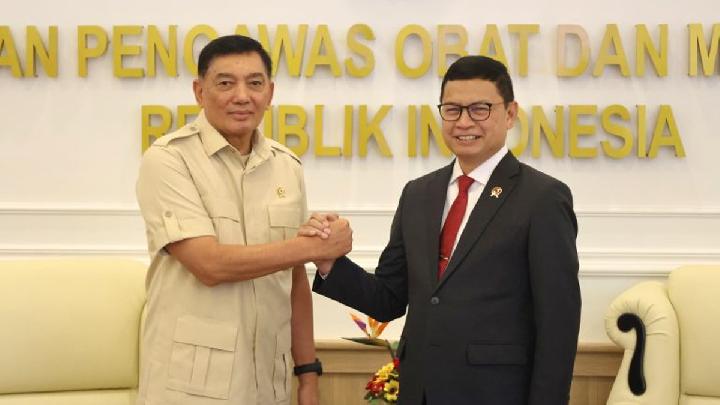
Military to Produce Subsidized Medicines for Public Access
Defense Ministry Partners with BPOM to Lower Pharmaceutical Costs
Indonesia’s Ministry of Defense is set to revolutionize public access to essential medications. A new agreement with the National Agency of Drug and Food Control (BPOM) will see the Indonesian National Armed Forces (TNI) involved in producing affordable medicines.
Cheaper Drugs for Rural Areas
Defense Minister Sjafrie Sjamsoeddin announced that pharmaceuticals manufactured by the military will be distributed to the general population. This initiative aims to combat high medication prices, with a special focus on rural communities.
“So that the medications we produce can be accessible to the people in rural areas,” Minister Sjafrie stated during a press conference in Jakarta on Tuesday, July 22, 2025. He indicated plans to offer these prioritized rural medicines at half their current market price.
Exploring Free Medication Schemes
Beyond the initial price reduction, the Ministry of Defense is exploring models to make these military-produced medications entirely free. “We are considering how the prices could be further reduced and become essential medications that are free for the public,” Sjafrie elaborated.
The production of these vital drugs has already begun, with some medications already being supplied to the Red and White Village Cooperative, a government initiative launched in July. A substantial increase in production is slated for October 5.
Industry Watchdog Raises Concerns
However, the move has sparked discussion within the defense sector. Khairul Fahmi, a military observer from the Institute for Security and Strategic Studies (ISESS), voiced apprehension regarding potential disruptions to the existing pharmaceutical industry ecosystem.
“We must ensure that the presence of military institutions in the production and distribution of medications does not suffocate legitimate businesses.”
—Khairul Fahmi, Military Observer
Fahmi emphasized the strict regulatory environment of the pharmaceutical sector and called for careful government intervention. “Government intervention should be corrective and complementary, instead of replacing the functions of legitimate structural actors,” he added.
In 2023, Indonesia’s pharmaceutical market was valued at approximately USD 7.6 billion, with projections for significant growth, underscoring the importance of a balanced approach to market participation (Statista, 2025).
