
AI Film Ignites Debate on Future of Media Production
Virtual Bombers and Non-Existent Civilians: The Dawn of “Cinematic News”
A striking visual depicts a US stealth bomber approaching Iran as a lone woman feeds stray cats amidst rubble. This scene, seemingly pulled from a recent geopolitical crisis, is actually the “rough cut” of a 12-minute film, “Midnight Drop,” created entirely by artificial intelligence, raising profound questions about the future of filmmaking and journalism.
Hollywood’s Pace Challenged by AI Speed
Directors **Samir Mallal** and **Bouha Kazmi** have crafted “Midnight Drop” to simulate recent US bombings of Iranian nuclear sites. The film draws inspiration from a news detail about a woman tending to stray cats in Tehran, demonstrating AI’s capacity to generate realistic narratives from minimal input. This rapid creation process has experts like TV producer and author **Richard Osman** proclaiming a new era in entertainment.
“So I saw this thing and I thought, ‘well, OK that’s the end of one part of entertainment history and the beginning of another’.”
—Richard Osman, TV Producer and Author
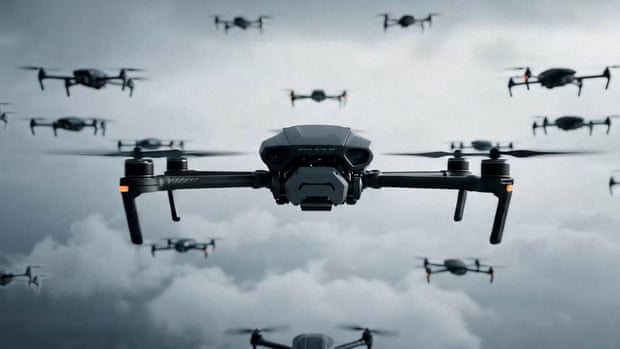
Osman predicts that by 2027, AI will dominate the creation of content for platforms like TikTok, advertisements, and trailers. This acceleration is exemplified by Mallal’s previous AI-generated film, “Spiders in the Sky,” which recreated a Ukrainian drone attack on Russian bombers. What would have cost millions and taken years to produce conventionally was completed in a mere two weeks using AI tools, including Google’s Veo3 and ChatGPT for script editing.
“Prompt Craft” and the Speed of Culture
Mallal describes his method as “prompt craft,” translating directorial skills into AI instructions. He highlights the speed at which camera angles and lighting can be adjusted with AI, a stark contrast to the slower pace of traditional Hollywood production. “I’m trying to prove a point,” Mallal stated, “Which is that you can make really good stuff at a high level – but fast, at the speed of culture.”
Google has launched a new AI video tool called Veo. This is a game changer! 🤯 Here’s a quick breakdown of what it can do: pic.twitter.com/P7Wk2LgQyS
— Zach (AI & Growth) (@Zach_AI_Growth) June 14, 2024
The implications of these AI advancements are already being felt across industries. Advertising startup Brandtech Group’s CEO, **David Jones**, projects that generative AI will soon be involved in creating nearly all brand content, a significant jump from the current less than 1% share. Even Netflix has begun integrating AI into its production process, as seen in their show “El Eternauta.”
Copyright Concerns Loom Over AI-Generated Content
Despite the creative potential, the surge in AI-generated content is shadowed by copyright issues. In the UK, proposals to allow AI models to train on copyrighted material without explicit permission have drawn criticism from the creative industries. Leading campaigner **Beeban Kidron** argues that creators must be compensated and have equity in this new system, warning that “Creators need equity in the new system or we lose something precious.”
YouTube’s terms of service permit Google to use creator content for AI model development, though the platform denies using its entire inventory. Mallal, while embracing AI’s capabilities, advocates for accessible programs that fairly compensate artists for their contributions. The rapid evolution of AI in filmmaking presents both unprecedented creative opportunities and significant ethical challenges regarding intellectual property and the future value of human artistry.
