
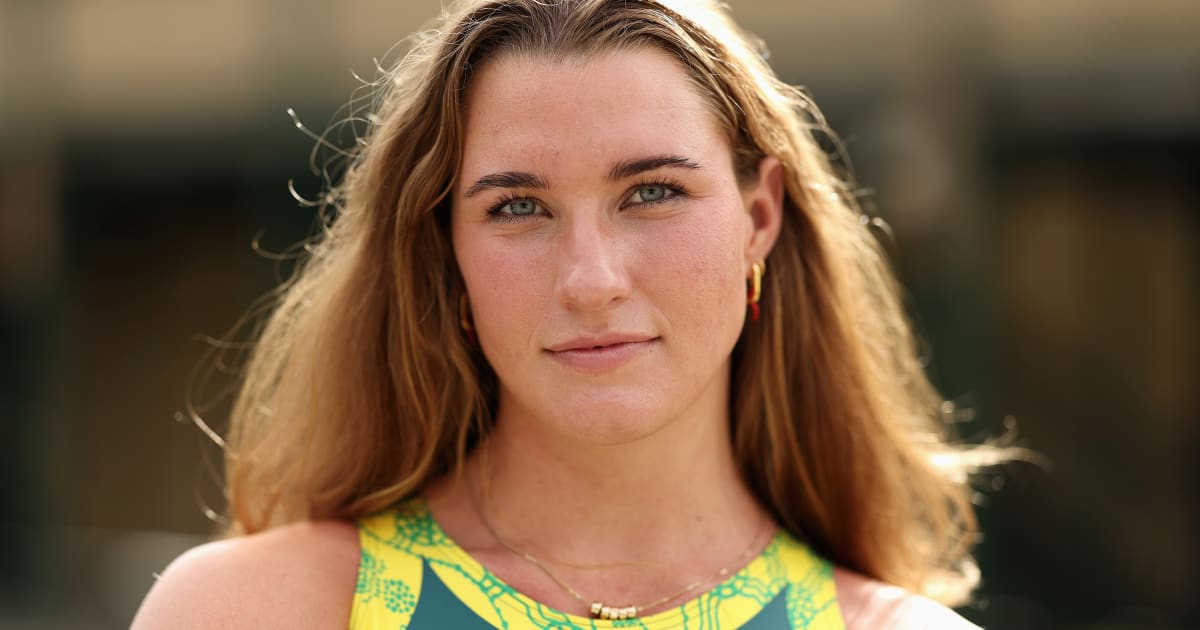
Kearns Champions Open Talk on Women’s Health in Sport
Water Polo Star Breaks Taboos Surrounding Athlete Well-being
Australian water polo sensation **Tilly Kearns** is redefining athlete narratives, leveraging her growing social media presence to foster candid discussions about crucial, often overlooked, aspects of women’s health in elite competition.
A Genuine Online Voice
With over 630,000 followers engaging with her content across platforms, **Kearns** has cultivated an authentic online persona. She believes her unvarnished approach to showcasing the realities of a water polo athlete’s life resonates deeply with her audience, moving beyond curated perfection.
“I just like to capture little moments,” **Kearns** explains of her social media strategy. “And that’s why it is really authentic and organic and nothing’s really curated too much.”
From Joke to Platform
The genesis of **Kearns**’ popular online profile was a lighthearted endeavor during high school. Initially a joke page for friends, its unexpected positive reception led **Kearns** to realize her potential for engaging content creation.
“The girls of my school convinced me to make it, but I made a page called ‘Official Tilly Kearns’ and it was just like a joke with me and my friends but it got such a good reception and I was like, ‘Hang on, maybe I actually do have a bit a knack for this!'” she recalls.
What began as a casual project evolved into a way for fans to follow her Olympic journey continuously, rather than just during the Games.
“I thought it would start and stop there at the Olympics, but it just kept going. And then I thought it was quite beautiful that I could share the whole journey from the end of the Tokyo Olympics right until Paris, and everyone who was with me from the beginning, got to share the whole journey instead of just tuning in for the two weeks of the Olympics and then tuning out and saying, see you in another four years.”
Addressing Sensitive Topics
Beyond the camaraderie and glimpses into campus life or her relationship with American Football player **Justin Dedich**, who has NFL aspirations, **Kearns** has proactively addressed sensitive health topics, notably the issue of amenorrhea—the loss of periods—among female athletes.
“To me, that is like every day, and it’s insane that other girls don’t talk about that,” **Kearns** stated, highlighting the open communication within her team. “Because me and my teammates are just so open, almost disturbingly so. We know everything about each other, we’ve seen everything, there are no boundaries between me and my teammates.”
She expressed surprise at the positive reception and further inquiries her posts generated, realizing that her team’s openness wasn’t universal.
“It wasn’t until I just posted something that I didn’t think twice about, and it got a great response. And people were asking to hear more, and I was kind of shocked that I was like, ‘Oh, does not everyone talk like this? Am I, are we the weird ones?’”
“It’s the sisterhood. They become your sisters, and everything’s so open. And the older girls in my team, when I was young and coming through, helped me grow up, and they helped me see a lot about the world and understand a lot of things that I realised that I was actually so lucky to have that, and not everyone has that.”
—Tilly Kearns
This supportive team environment, where open dialogue about health is normalized, has become a cornerstone of **Kearns**’ experience. She acknowledges the privilege of such a sisterhood.
“So I guess on the internet, if people want to turn to me to be that person, that’s great. But it is so important because it’s not taboo. It’s just the way life is, as it should be. Absolutely no shame around it.”
Research indicates that between 4% and 45% of elite female athletes experience amenorrhea, underscoring the prevalence of **Kearns**’ discussed issue in competitive sports (Journal of Clinical Endocrinology & Metabolism, 2001).
**Kearns**’ candid approach extends to her personal journey, including losing her period at 17. Initially viewing it as a positive, she later recognized the unhealthy implications through conversations with senior teammates, who guided her understanding.
By sharing these experiences, **Kearns** aims to provide a similar supportive resource for others, normalizing conversations about women’s health in sports and encouraging a culture of openness and understanding.
