
EU Deforestation Law Faces New Roadblock
Parliament rejects benchmarking system, raising concerns about further delays.
A vote by the European Parliament against a system measuring countries’ deforestation risk has thrown another potential hurdle in front of the EU Deforestation Regulation (EUDR), raising concerns that implementation may be further delayed.
Benchmarking System Rejected
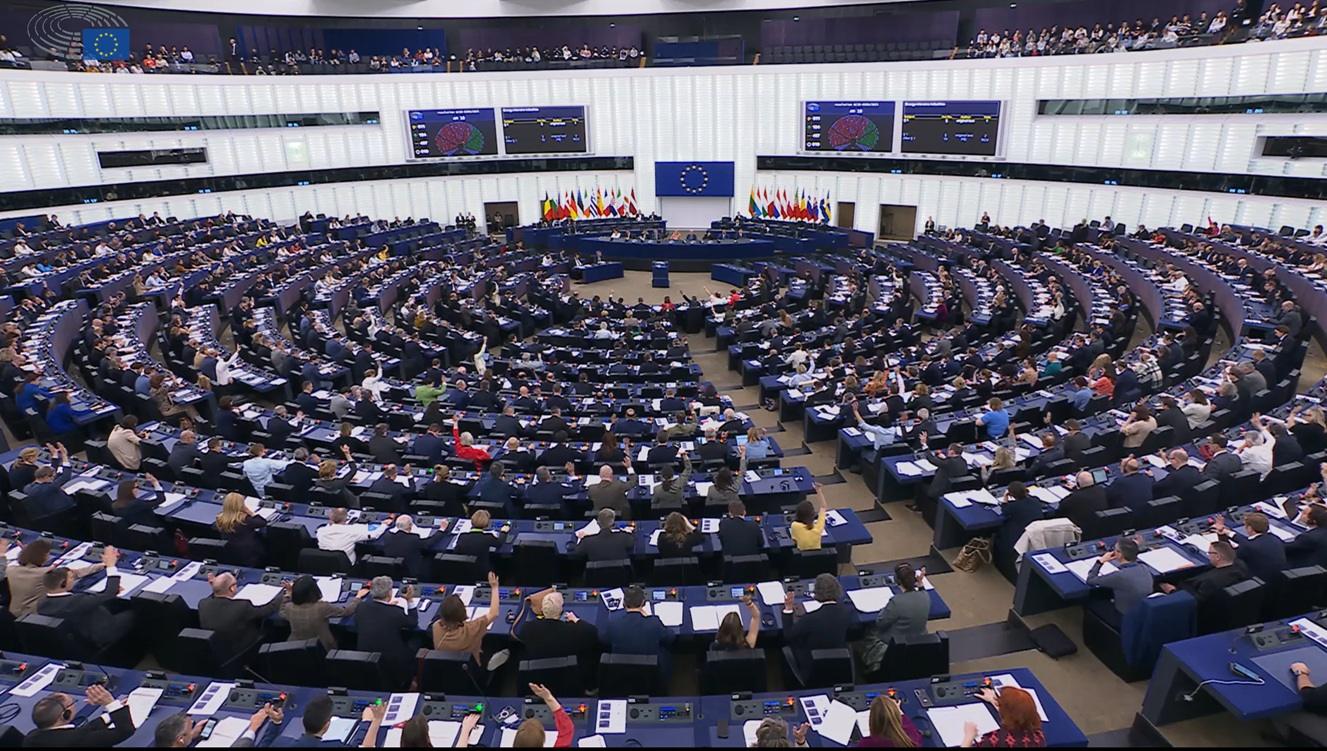
Members of the European Parliament (MEPs) voted down the benchmarking system, which would have categorized countries based on their risk of deforestation. The EUDR is intended to block products linked to deforestation from entering or leaving EU markets.
The European People’s Party (EPP) brought the motion, arguing that the system suffered from flaws, including outdated data and the failure to consider critical factors such as land-use dynamics. The EPP asserted that this would incorrectly place some member states in higher risk categories. MEPs ultimately approved the motion.
According to the EPP, the EUDR’s classification of countries into only three risk categories—low, standard, and high—was insufficient. The EPP had previously pushed for a “no-risk” category.
“The Commission’s list misrepresents the situation in many countries and creates unnecessary burdens for farmers, foresters, and industry. The EPP Group remains committed to responsible forest stewardship and to policies that combine environmental protection with workable solutions for those who care for and rely on forests. Therefore, a new ‘no risk’ category must be introduced for countries with stable or expanding forest areas. This is how we make EU rules more fair and effective.”
—Alexander Bernhuber MEP
EUDR’s Aim and Scope
Initially proposed in November 2021 by the EU Commission, the EUDR aims to ban projects linked to deforestation from the EU market. The rules place strong compliance requirements on companies dealing with commodities like palm oil, beef, timber, coffee, cocoa, rubber, and soy, along with derived products like leather, chocolate, tires, and furniture.
Companies will have to follow mandatory due diligence rules to place products on the EU market, or export them. This includes tracing products back to the land where they were produced. These products must have been produced on land that was not subject to deforestation after 2020, complying with all applicable laws in the country of origin.
The World Wildlife Fund reports that the EU is the second-largest importer of deforestation-linked products, after China, with soy, beef, and palm oil being major contributors (WWF).
Concerns About Further Delays
Environmental groups voiced worries that the vote might further delay action against deforestation. Greenpeace noted that producing a new methodology for country classification before December 30, 2025, is “virtually impossible,”
which could lead to another delay.
“We are aware that the Commission’s regulation has shortcomings, but the Commission has committed to review it in 2026. In the meantime, the EUDR must be applied by operators and enforced by competent authorities, according to the agreed schedule.”
—Sigrid Deters, Greenpeace Forests Campaigner
Implementation of the law has already been delayed by a year, with large companies now expected to comply by December 2025, and micro- and small enterprises by June 2026. The Commission cited concerns from global partners and uneven preparedness within the EU as reasons for the delay.
Following the motion’s passage, the EPP reiterated its call for a “no risk”
category in the EUDR.
