
Planned Parenthood Defunding: Supreme Court Ruling and legislative Action
Table of Contents
women rely on Planned parenthood for healthcare.">
A pair of victories for conservatives in their long-term opposition to Planned Parenthood, the nation’s largest reproductive healthcare provider, have materialized in recent weeks. These actions threaten access to crucial medical services for millions of Americans.
The first blow came on June 26, 2025, with a U.S. Supreme Court decision. The second is a provision within President Donald Trump’s multi-trillion-dollar tax-and-spending package, a key legislative priority. Both actions aim to restrict Medicaid reimbursements to Planned Parenthood and other abortion care providers, impacting a wide array of healthcare services.
With Medicaid covering approximately 80 million individuals in the U.S., these measures will cut federal support for essential healthcare services unrelated to abortion, including annual check-ups, contraception, and prenatal care. Notably, abortions constitute only 3% of Planned Parenthood’s total services.
Legal and Legislative Challenges to Planned Parenthood Funding
The recent actions are seen as the culmination of a strategy to defund Planned parenthood, gaining momentum since 2007. This strategy centers on the argument that federal and state funds are subsidizing abortion services, even when they are not.
Did You Know? Planned Parenthood has been a target of political attacks for decades, with efforts to restrict its funding dating back to the George W.Bush administration.
Supreme Court Ruling: Medina v. Planned Parenthood South Atlantic
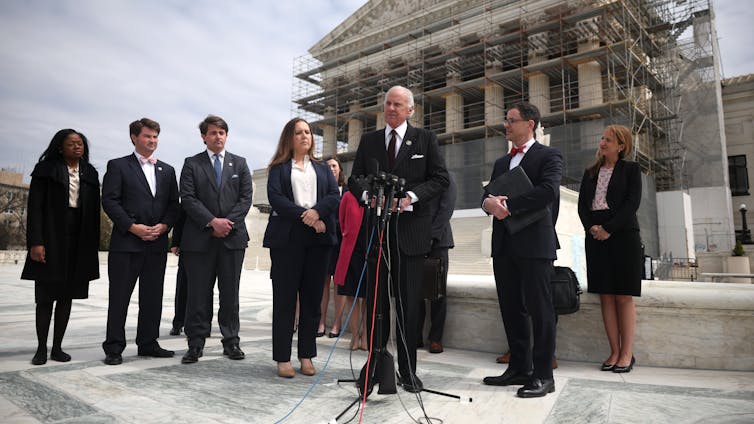
The Supreme Court case, Medina v. Planned Parenthood South Atlantic, originated from a South Carolina woman’s desire to receive gynecological care at her local Planned Parenthood clinic. Governor Henry McMaster defended the state’s policy, citing Planned Parenthood’s status as an abortion provider.
the Court’s ruling stated that states cannot be sued by patients for denying Medicaid reimbursement to Planned Parenthood clinics.
congressional Action: tax and Spending Package
President Trump’s tax and spending package, passed by narrow margins in both the House and Senate, includes a provision that restricts Medicaid patients from accessing healthcare services at clinics like planned parenthood.
this provision is set to last for one year.
the House approved the same version of the package a week after the Supreme Court’s ruling.
Potential Consequences of Defunding
Pro Tip: Understanding the full scope of services provided by Planned Parenthood is crucial in evaluating the impact of defunding efforts.
The defunding measures could significantly impact access to reproductive healthcare for low-income individuals. Planned Parenthood clinics rely on Medicaid reimbursements to provide a range of services, and loss of funding could lead to clinic closures and reduced access to care.
what impact do you think these defunding efforts will have on women’s healthcare access? How can communities ensure continued access to reproductive health services?
Historical Context and Trends
The push to defund Planned Parenthood is part of a broader, decades-long effort by conservative groups who oppose abortion. These groups often argue that any funding to organizations that provide abortions indirectly supports the procedure, regardless of whether the funds are directly used for abortion services.
This movement gained significant traction during the Obama administration and has continued under subsequent administrations, leading to various legislative and legal challenges aimed at restricting Planned Parenthood’s funding and operations.
Frequently Asked Questions
What services does Planned Parenthood provide?
Planned Parenthood offers a wide range of reproductive health services, including contraception, STD testing and treatment, cancer screenings, and prenatal care, in addition to abortion services.
How does Planned Parenthood use government funding?
Government funding, primarily through Medicaid reimbursements, helps Planned Parenthood provide affordable healthcare services to low-income individuals. Federal law prohibits the use of federal funds for abortion services, except in cases of rape, incest, or to save the life of the mother.
What are the potential consequences of defunding Planned Parenthood?
Defunding Planned Parenthood could lead to reduced access to essential healthcare services, especially for low-income individuals and those living in rural areas.This could result in increased rates of unintended pregnancies, STDs, and other health issues.
How many people rely on Planned parenthood for healthcare?
Millions of Americans rely on Planned parenthood for healthcare services each year. The organization operates hundreds of health centers across the country, providing care to a diverse population.
What is the legal basis for defunding Planned Parenthood?
The legal basis for defunding Planned Parenthood often revolves around interpretations of federal laws and regulations regarding abortion funding, and also state laws that seek to restrict abortion access. These laws are frequently challenged in court.
Disclaimer: This article provides information about recent events related to Planned Parenthood and should not be considered legal or medical advice. Consult with qualified professionals for specific guidance.
Share your thoughts on these developments and help spread awareness. What steps can be taken to ensure access to reproductive healthcare for all?
