
Logan County Tackles Youth Justice with Integrated Strategies
A Collaborative Approach to Juvenile Justice
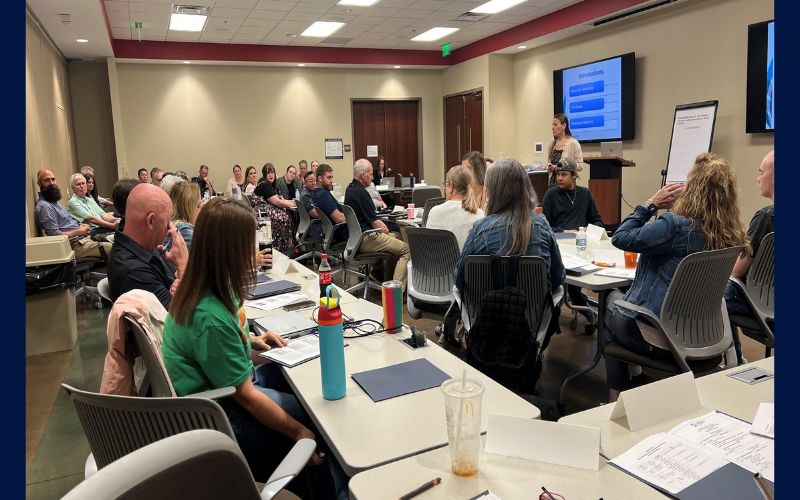
Logan County recently hosted a workshop to develop strategies to help justice-involved youth who have both mental health and substance use disorders. The 1.5-day event focused on identifying resources, addressing service gaps, and improving communication between professionals.
The workshop utilized Sequential Intercept Mapping, a tool from Ohio’s Criminal Justice Coordinating Center of Excellence (CJ CCoE). The goal was to help the community improve services for those with mental illness and co-occurring substance use disorders who come into contact with the justice system.
“Cross-Systems mapping is a strategic planning session intended to promote problem solving and foster local systemic change that enables each participating community to move forward to enhance services for adults with mental illness and co-occurring substance use disorders in contact with the justice system.”
—Dr. Mark R. Munetz, Criminal Justice CCoE
Key personnel and advocates from mental health, substance use, and juvenile justice systems participated in Cross-Systems Mapping. Their work focused on collaborative planning, reducing system barriers, and creating a local action plan. A conference call on May 1, 2025, with facilitators discussed current practices and possible obstacles to change. The Logan County Planning Committee included Sarah Ferguson, India Slayback, Jason Moyer, Sarah Lewis, Doug Steiner, Sarah Crumm, Ceci Yelton, Erica James, Aidan Comstock, Joe Freyhof, Emily Alexander, LJ Henderson, Cassie Branan, Magistrate Sarah Warren, and the Honorable Natasha Kennedy.
Mapping the Juvenile Justice System
During the workshop, participants created a map showing the path of juvenile justice contact. This included arrest, incarceration, referral to services, and opportunities for diversion. The team considered strategies used in other communities across the United States.
More than 600,000 youths are placed in juvenile detention centers annually. The National Institute of Mental Health reports that approximately 70,000 youth are incarcerated daily. Studies show youth involved in the justice system have mental health disorders at three times the rate of the general population. (National Institute of Mental Health 2024).
Addressing Mental Health and Substance Use
A significant portion of justice-involved youth face mental health challenges. Effective community service linkage and access for those with mental illness and substance use disorders are critical to reduce repeated involvement in the system.
