
Glastonbury Festival Wraps Up, Leaving Behind a Sea of Rubbish
Thousands of music enthusiasts are heading home after the Glastonbury Festival, marking the end of another year of music and memories. The event concluded with a performance by the US pop star, Olivia Rodrigo, on the iconic Pyramid Stage.
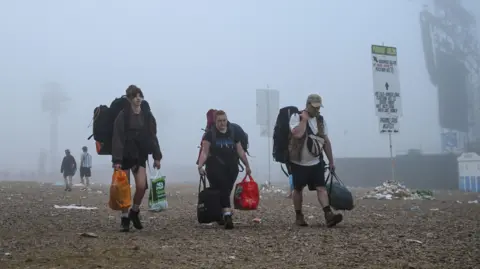
The Exodus Begins
As the festival concludes, attendees are departing Worthy Farm in Somerset. Festival organizers had encouraged early departures between midnight and 6:00 AM BST to avoid congestion and the expected heat, which could reach 31°C (88°F).
Those leaving later were advised to dress in light, airy clothes, drink plenty of water, and regularly apply sunscreen. According to traffic monitoring site Inrix, there are “severe” delays on the A303 eastbound in Amesbury, near Stonehenge, due to the number of vehicles coming from Worthy Farm, with a travel time of approximately 65 minutes.
A Massive Clean-Up Operation
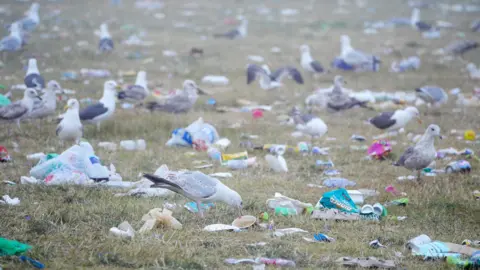
A significant clean-up effort is underway, with volunteers tackling the considerable task of removing discarded items from the site. This includes paper cups, food containers, and larger abandoned items such as camping chairs.
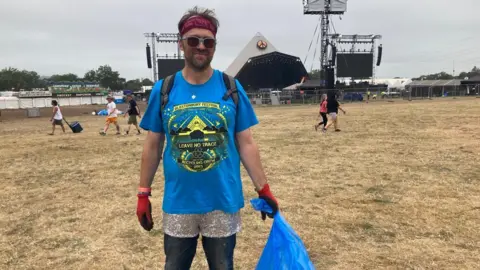
The Duck Gang and Sparkly Shorts
Lee Jones from Poole in Dorset, a seasoned litter picker, found a pair of silver sparkly shorts and decided to wear them while working. “I didn’t want to waste them, so thought ‘let’s get those on’,” he said.
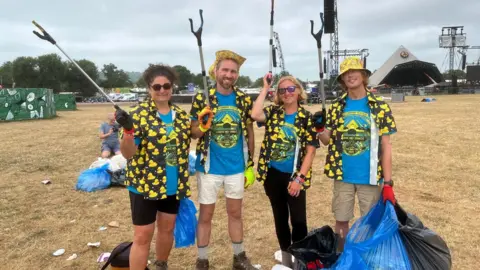
The Duck Gang—Angela Saxbee, Sarah Parker, Alastair Cullen, and Gavin Eddy—also volunteered for SOS Africa. Ms. Parker noted, “People keep quacking at us as they walk past and I think ‘what are they on about?'”
Kirstine Carr, a litter-picking team leader, is volunteering for a fifth year. She is aware of the dangers of the expected hot weather. The UK Health Security Agency extended the alert until 9:00 BST on Wednesday. A recent study found that large-scale outdoor events like Glastonbury generate an average of 2,000 tons of waste. (Statista).
Looking Ahead to 2027
Glastonbury Festival will return in 2027. Organizer Emily Eavis mentioned in the on-site newspaper, the Glastonbury Free Press, that she has a “huge list of things” to improve. “We’re always looking to make it better,” she explained. “And that’s what fallow years are for: you lay the ground to rest and you come back stronger.”
The fallow year will allow the land to recover, and organizers can implement improvements to enhance the experience for the 200,000 attendees expected at the next event.
