
U.S. Admits: Bunker Busters Unused in Iran Nuclear Site Strikes
Officials Explain Reasoning Behind Weapon Choice
Following the recent military strikes on Iran’s nuclear facilities, the U.S. has revealed why it opted against using bunker-buster bombs at a key site. According to officials, the weapon’s potential effectiveness was a primary consideration in this decision.
During a closed-door briefing, Gen. Dan Caine, Chairman of the Joint Chiefs of Staff, informed senators about the rationale. The primary reason cited was the depth of the Isfahan site, which made the use of the Massive Ordnance Penetrator bomb impractical. Furthermore, U.S. officials estimate that the facility houses nearly 60% of Iran’s enriched uranium.
U.S. forces did utilize bunker-buster bombs at the Fordow and Natanz nuclear sites. However, only Tomahawk missiles launched from a U.S. submarine were used against Isfahan.
“There is enriched uranium in the facilities that moves around, but that was not the intent or the mission,”
—Rep. Michael McCaul, Republican
The U.S. military operation’s aim did not encompass the complete removal of Iran’s nuclear material, according to Republican lawmakers who attended the classified briefings. Some officials believe the strikes only delayed Iran’s program by months.
A recent report by the International Atomic Energy Agency (IAEA) indicates that Iran’s stockpile of enriched uranium is currently at an all-time high, increasing the risk of nuclear proliferation. (IAEA Report)
What Happened During the Strikes?
Lawmakers were briefed by Gen. Caine, Secretary of Defense Pete Hegseth, Secretary of State Marco Rubio, and CIA Director John Ratcliffe. During the briefing, Ratcliffe shared the U.S. intelligence community’s assessment that Iran’s enriched nuclear material is largely located at Isfahan and Fordow.
Sen. Chris Murphy stated that Iran’s ability to safeguard its capabilities within deeply buried locations remains a challenge. He explained that the sites allow them to move stockpiles to evade bombing.
What’s Next?
Commercial satellite imagery shows that Iran has accessed the tunnels at Isfahan, according to Jeffrey Lewis, a weapons expert. He noted that tunnel entrances were cleared of obstructions. This has led to speculation about the current location of Iran’s enriched uranium.
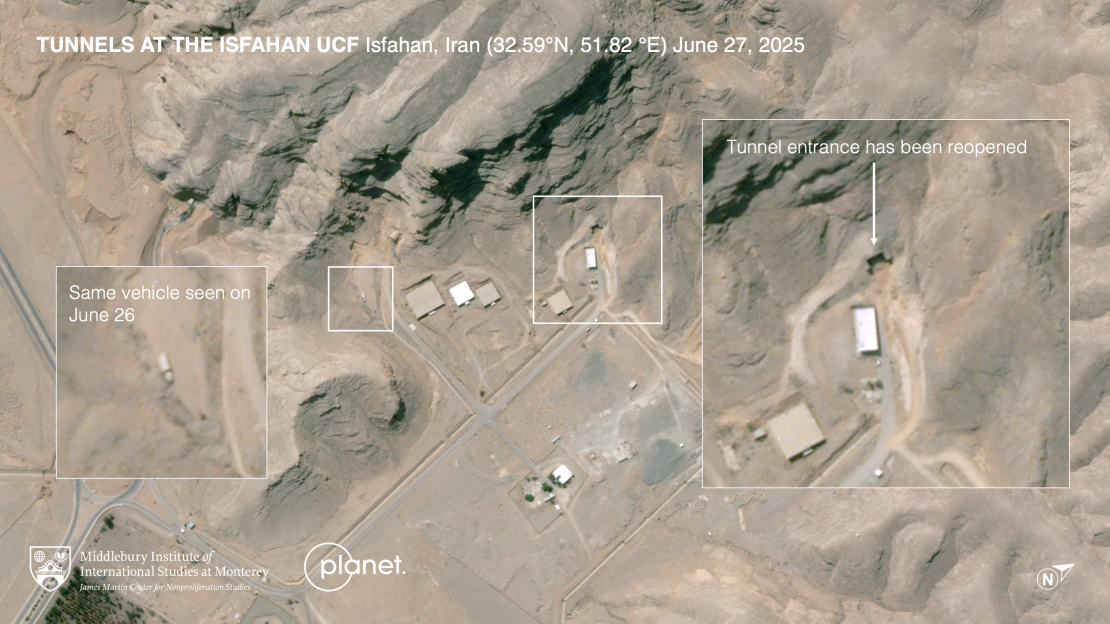
The DIA’s initial assessment revealed that the nuclear sites’ above-ground structures sustained moderate to severe damage. This damage could complicate Iran’s access to remaining enriched uranium.
Sen. Lindsey Graham stated the sites were effectively destroyed, but he was unsure of the location of the highly enriched uranium, which he said was not targeted. Rep. Greg Murphy pointed out that the mission’s primary goal was to eliminate specific elements of the nuclear program.
