
“`html
Muhammadiyah’s Global Hijri Calendar Aims to Unify Islamic World
Table of Contents
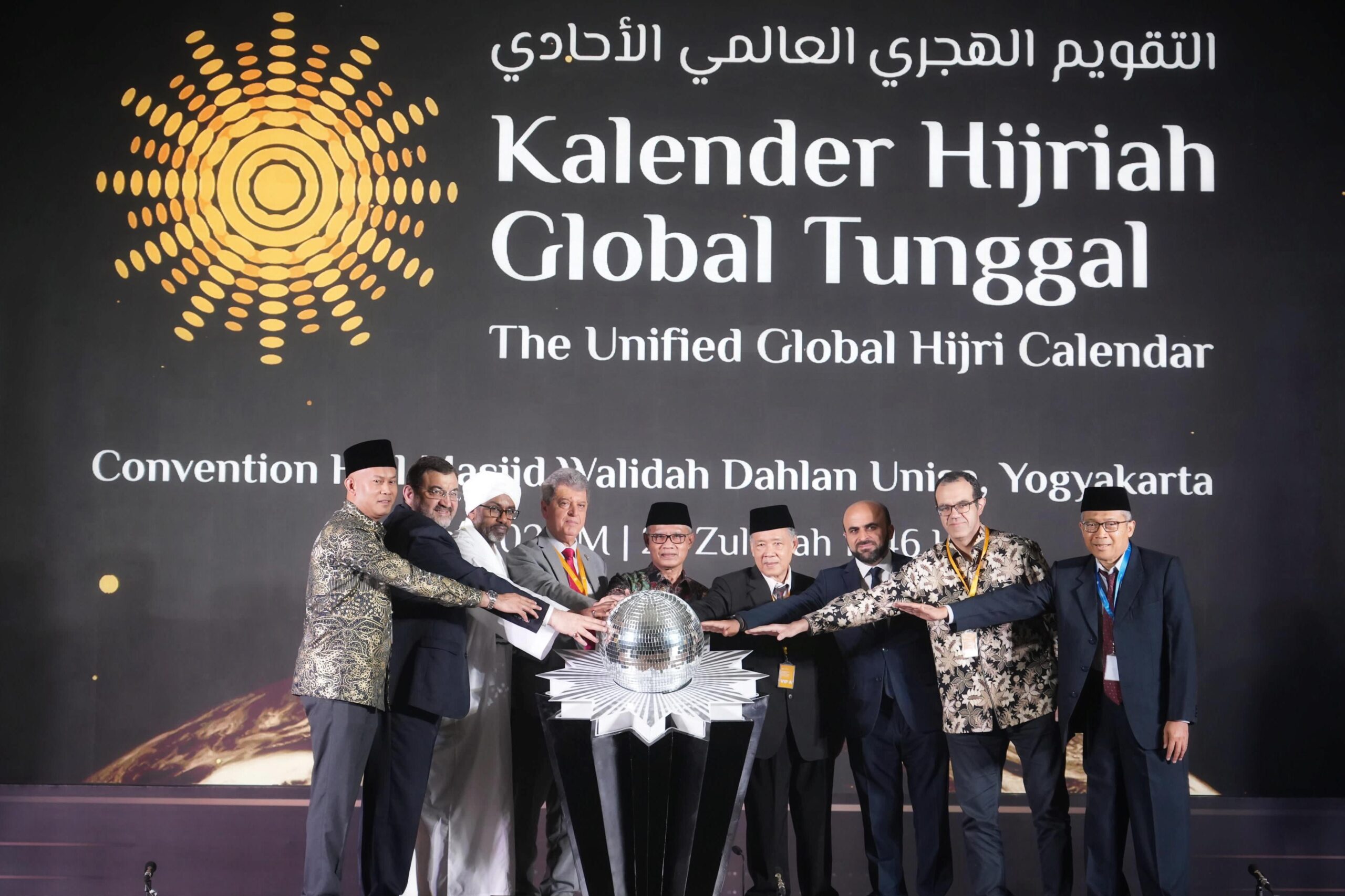
Yogyakarta, Indonesia – In a move aimed at fostering unity within the Islamic world, Muhammadiyah officially launched its Global hijri calendar (KHGT) on Wednesday, June 25, 2025.The KHGT proposes a single,worldwide Islamic calendar based on astronomical calculations,striving for a unified system of religious observance across the globe.
Key Principles of the Global Hijri Calendar
The KHGT operates on three essential principles. First, it establishes a
Uniformity of the day and date
worldwide to mark the start of each new month. Second, it employs
Hisab
(astronomical calculation) as a method of determining time, enabling the forecasting of long-term calendar schedules. Third, it adopts the
, wich assumes the entire surface of the Earth is a single time zone for the Islamic calendar. These principles are designed to create a consistent and predictable calendar for Muslims worldwide.
Muhammadiyah’s role in Promoting islamic Unity
Haedar Nashir, Chairperson of the Muhammadiyah Central Leadership, emphasized the meaning of the KHGT in the context of globalization. “Today is a historic day,” Nashir stated during the inauguration at the University of ‘Aisyiyah (Unisa) Yogyakarta. “Muhammadiyah presents KHGT to emphasize its role and position in the midst of certain globalization… KHGT is an absolute necessity to realize the unity of the Islamic world.” He further articulated that the KHGT represents Islam’s worldwide values and its capacity to transcend geographical boundaries.
Nashir urged Muslims to move beyond sectoral interests and embrace a collective approach to timekeeping. He expressed hope that the KHGT would serve as a catalyst for collective ijtihad (independent reasoning) and be widely adopted by Muslims in Indonesia and across the world.
Technical Infrastructure Supporting the KHGT
to facilitate the implementation of the KHGT, the Tarjih and Tajdid Muhammadiyah Council has developed three cutting-edge Falak Science Software applications:
- HISAB MUHAMMADIYAH: A desktop application for computers and laptops.
- Web Application: Accessible through the official website khgt.muhammadiyah.or.id.
- Time: An Android application for smartphone users.
these applications are available in Indonesian, Arabic, and English, ensuring global accessibility.Equipped with interactive maps, they provide accurate and user-amiable visualizations of KHGT parameters.
International Reception and Support
The launch of the KHGT has been met with positive responses from international figures and institutions. Dr.Mehmet Ekim,an expert in Islamic astronomy from the High Council of the Directorate of Religious Affairs,Republic of Türkiye,lauded the initiative as a moral and symbolic message about the future of Muslims. He conveyed greetings from Turkish religious leaders who fully support the KHGT.
Tarig Ali Bakheet, Secretary General of the Islamic Cooperation Organization (OIC) for humanitarian, social, cultural, and family affairs, praised Muhammadiyah’s role in guiding the reform of the Islamic world through this integrated calendar initiative. He highlighted Muhammadiyah’s extensive network of institutions, including over 170 universities and thousands of schools, as a unique strength for influencing and implementing such reforms.
Pro Tip: The KHGT aims to resolve inconsistencies in Islamic calendar dates,which can vary by a day or two depending on moon sighting interpretations in different regions.
The Broader context of Islamic Calendar Unification
The push for a unified Islamic calendar is not new. Historically, variations in lunar calendar interpretations have led to discrepancies in the timing of notable religious events, such as Eid al-Fitr and Eid al-Adha. These differences can sometimes create confusion and division within Muslim communities. The KHGT represents a modern effort to address these challenges through the application of astronomical science and a globally unified approach.
The Islamic calendar, also known as the Hijri calendar, is a lunar calendar consisting of 12 lunar months in a year of 354 or 355 days. It is used to determine the proper days of Islamic holidays and rituals, such as the annual fasting period of Ramadan and the pilgrimage to Mecca. The reliance on lunar cycles means that the Islamic year
