
Sun Unleashes ‘Sputtering Gusts’ of Plasma, New Data Reveals
NASA’s CODEX Instrument Provides Unprecedented View of Solar Wind
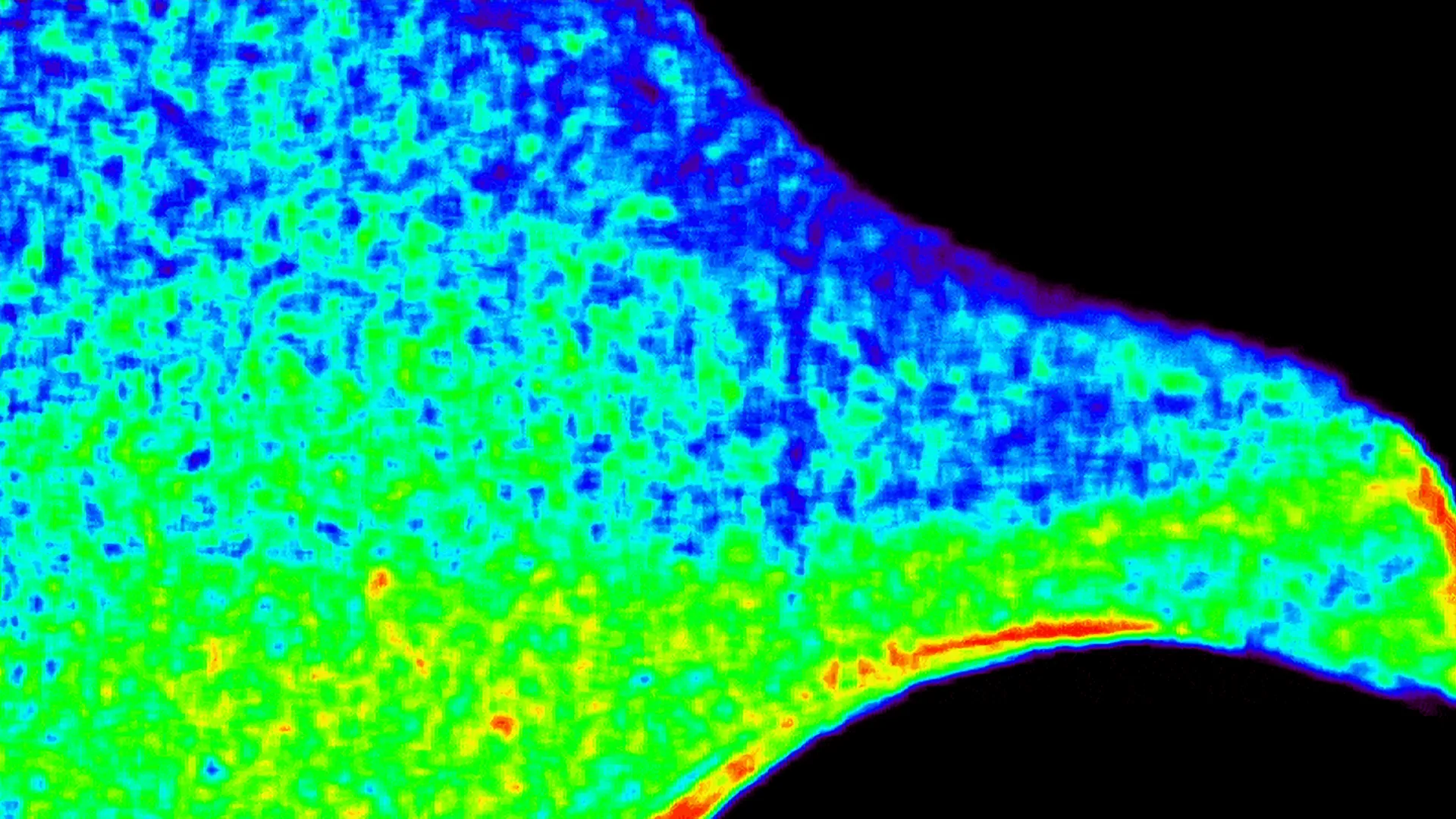
Scientists have gained a groundbreaking new understanding of the Sun’s outer atmosphere, discovering it’s not a consistent flow but rather characterized by unpredictable bursts of hot plasma. This discovery, made possible by NASA’s CODEX instrument, promises to improve predictions of space weather and its impact on Earth.
CODEX Reveals Dynamic Corona
Data from the Coronal Diagnostic Experiment (CODEX) investigation, analyzed by researchers and presented Tuesday at the American Astronomical Society meeting in Anchorage, Alaska, showcases the dynamic nature of the solar corona. The instrument measures both the temperature and velocity of material ejected from the Sun, a capability previously unavailable to scientists.
“We really never had the ability to do this kind of science before,”
—Jeffrey Newmark, Heliophysicist at NASA’s Goddard Space Flight Center
Newmark, the principal investigator for CODEX, explained that the success stems from a convergence of factors – the correct filters and appropriately sized instrumentation. These are entirely new observations, opening doors to significant scientific advancements.
How CODEX Works
CODEX functions as a solar coronagraph, effectively creating an artificial eclipse by blocking the Sun’s intense light with occulting disks—circular pieces of material roughly the size of a tennis ball. This allows scientists to study the faint corona and observe features like solar storms that influence space weather.
Unlike previous coronagraphs that primarily measured density, CODEX focuses on quantifying the temperature and speed of the solar wind. By analyzing the brightness of images captured through four narrow-band filters—two for temperature and two for speed—researchers can determine these crucial parameters.
A recent report by the Space Weather Prediction Center indicates that a moderate geomagnetic storm watch is in effect for November 17-18, 2023, potentially impacting high-frequency radio communications and GPS navigation. (NOAA Space Weather Prediction Center)
Impact on Space Weather Forecasting
These new measurements are vital for accurately characterizing the energy driving the solar wind. Understanding the speed and temperature of this outflow is essential for building more precise models of the Sun’s behavior and predicting its effects on Earth and our technological infrastructure.
“The CODEX instrument will impact space weather modeling by providing constraints for modelers to use in the future,”
—Newmark, Principal Investigator for CODEX
The CODEX project is a collaborative effort between NASA Goddard Space Flight Center, the Korea Astronomy and Space Science Institute (KASI), and Italy’s National Institute for Astrophysics (INAF). Researchers are optimistic about the future discoveries this innovative instrument will enable.
