
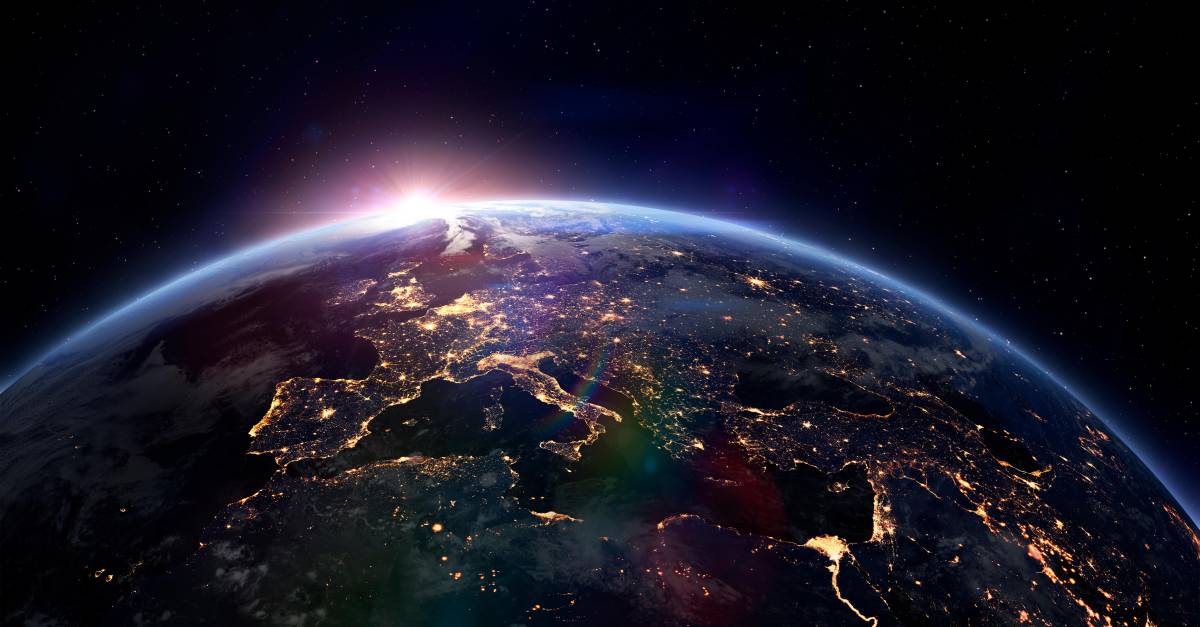
Earth’s Expiration Date: Habitable Conditions May Vanish
Bucharest — May 8, 2025 —
A recent, authoritative study reveals that Earth’s ability to sustain life is finite.Scientists predict that Earth’s surroundings may become uninhabitable for complex life in approximately one billion years, mainly due to decreasing oxygen levels caused by the increasing luminosity of the sun. The process is tied to the breakdown of CO₂ molecules and the eventual absence of photosynthesis. For more on the study’s projections, keep reading.
Earth’s Expiration Date: Habitable Conditions May Vanish in a Billion Years
May 8,2025
The Inevitable End of Oxygen
The earth’s atmosphere,while seemingly permanent,has an expiration date. A recent study by NASA and the University of Toho indicates that our planet will likely cease to be habitable for complex life in approximately one billion years. This grim forecast stems from the progressive depletion of oxygen in the atmosphere.
Did You Know?
The great Oxidation Event,which occurred billions of years ago,dramatically increased oxygen levels on Earth,paving the way for complex life. Now, we face a reverse process.
the Science Behind the Prediction
The gradual increase in solar luminosity is the primary driver of this transformation. This increase will disrupt the chemical stability that has been crucial for the existence of animals, humans, and vegetation.
Scientists, led by kazumi Ozaki from the University of Toho and christopher Reinhard from NASA’s Nexus for Exoplanet System Science System Institute, used climate and geochemical models to simulate the evolution of earth’s atmosphere over geological timescales. thier findings suggest that as the sun brightens, it will cause carbon dioxide (CO₂) molecules to break down, hindering photosynthesis.
The decrease in CO₂ will make photosynthesis unachievable, and without photosynthesis, oxygen will cease to be generated.
Kazumi Ozaki, University of Toho
Without photosynthesis, plants cannot produce oxygen, leading to the eventual disappearance of life as we know it.
Timeline of Collapse
- Immediate Indications: Simulations suggest the first signs of collapse could appear in as little as 10,000 years.
- Gradual Desertification: A slow process of desertification and extinction will follow.
- Total Collapse: The complete collapse of earth’s habitability is projected to occur in one billion years.
Without plants, there will be no oxygen available for animals or humans.
Christopher Reinhard, NASA
The earth will revert to a state similar to that of over two billion years ago, characterized by primitive microorganisms and an surroundings opposed to complex life.
Consequences of Oxygen Loss
The disappearance of atmospheric oxygen will also lead to the loss of the ozone layer, which depends on oxygen for its existence. Without this protective shield, the earth’s surface will be exposed to lethal levels of ultraviolet radiation.
Only anaerobic life forms, which do not require oxygen to survive, might adapt to these new conditions. Moreover, an increase in methane concentrations (CH₄), a potent greenhouse gas, is expected to exacerbate air toxicity and accelerate atmospheric deterioration.
Implications for Astrobiology
The study’s findings have meaningful implications for astrobiology and the search for life on other planets.
This reality reminds us that even the moast basic elements of our existence are transitory.
Authors of the study
The developed model offers a new outlook on the life cycles of habitable planets and compels a re-evaluation of the criteria used to assess the habitability of worlds beyond our solar system.
Offers a new perspective on the life cycles of habitable planets.
Christopher Reinhard, NASA
The Sun’s Fate and Earth’s Future
NASA and other space agencies are continuously monitoring star evolution using instruments like the James Webb Telescope. These observations help scientists understand the future of our own sun, which will eventually expand into a red giant and consume Mercury, Venus, and possibly Earth in about five billion years.
While the planet still has a long future, its habitability, like everything else in the universe, has an expiration date.
FAQ: Earth’s Habitability
- How long until Earth is uninhabitable?
- Approximately one billion years.
- What causes the end of habitability?
- The gradual increase in solar luminosity and the resulting depletion of atmospheric oxygen.
- What will happen to the ozone layer?
- It will disappear due to the loss of atmospheric oxygen, exposing the surface to lethal UV radiation.
- Can anything be done to prevent this?
- On a geological timescale, probably not.These are natural processes tied to the evolution of stars.
Pro Tip
While the long-term fate of Earth is sealed, focusing on sustainable practices and reducing our carbon footprint can help mitigate other environmental challenges and extend the planet’s habitability for the foreseeable future.
