
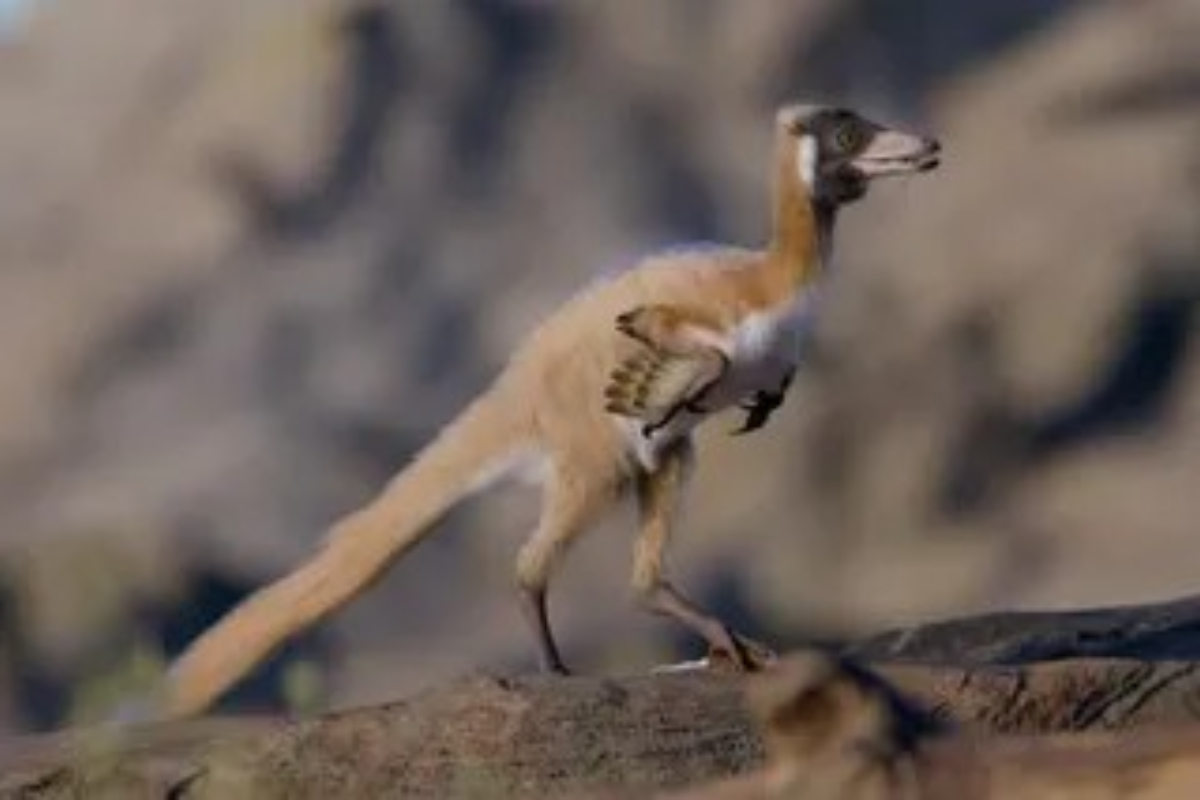
A 90-million-year-old fossil discovered in Argentina is reshaping the understanding of a mysterious group of bird-like dinosaurs known as alvarezsaurs, according to a study co-led by researchers at the University of Minnesota Twin Cities and Argentina’s Universidad Nacional de Río Negro.
The remarkably complete skeleton of Alnashetri cerropoliciensis, unearthed at the La Buitrera site in northern Patagonia, provides crucial insight into the evolution of these little theropods, which are characterized by their diminutive size, stubby arms, and a single, enlarged claw on each hand. Prior to this discovery, the alvarezsaur fossil record in South America was fragmented, hindering a clear understanding of their evolutionary path.
The fresh specimen challenges previous assumptions about the development of specialized features in alvarezsaurs. Researchers found that early members of this lineage hadn’t yet developed the extreme adaptations seen in their later relatives. Alnashetri’s arms were proportionally longer, and its teeth were more developed, suggesting it wasn’t yet fully adapted for a diet focused on digging for insects, specifically ants and termites.
“This is a ‘Rosetta Stone’ for alvarezsaurs,” said Professor Peter Makovicky of the University of Minnesota Twin Cities, a lead researcher on the project. “It allows us to finally map the group’s strange anatomy.”
The findings, published this week, indicate that alvarezsaur evolution occurred in stages. The lineage first experienced a reduction in body size, followed by the development of shortened forelimbs and the specialized claw used for excavating insect nests. This contradicts earlier hypotheses suggesting alvarezsaurs were always specialized diggers.
Phylogenetic analysis places Alnashetri among basal non-alvarezsaurids, indicating that South American alvarezsaur taxa are not a direct lineage to those found in Asia, as previously thought. The research suggests a Pangaean ancestral distribution for the Alvarezsauroidea clade, with vicariance – the separation of populations by geographic barriers – playing a dominant role in its early history.
The discovery also revises models of body size evolution within alvarezsaurs. Researchers found no evidence to support the idea of consistent miniaturization, but rather repeated evolution within a relatively narrow size range. The early branching position of Alnashetri, a larger-bodied relative, is key to this revised understanding.
The fossil was rapidly covered by an advancing sand dune, preserving it almost intact for 90 million years, according to researchers. The species had been previously named based on fragmentary remains, but the complete specimen allowed for a detailed anatomical mapping.
The team spent a decade carefully preparing and assembling the delicate bones to avoid damage. Further research is planned to explore the implications of these findings for understanding the broader evolution of theropod dinosaurs and their adaptations to specialized diets.
