
Pakistan’s Debt Soars to Record $269 Billion
Islamabad Faces Mounting Financial Crisis as Borrowing Doubles in a Decade
Pakistan is grappling with its highest-ever level of public debt, reaching 76 trillion Pakistani Rupees (approximately $269.344 billion USD), a situation that threatens long-term economic stability and raises concerns about its ability to meet financial obligations.
Debt Crisis Deepens
A recently released Economic Survey revealed the staggering figure, representing a near doubling of the country’s debt in just four years. In 2020-21, Pakistan’s public debt stood at Rs 39,860 Billion, a stark contrast to the current Rs 76,007 Billion. Ten years prior, in 2015, the debt was Rs 17,380 billion, demonstrating a nearly fivefold increase over the past decade.
The total debt comprises Rs 51,518 billion in domestic debt and Rs 24,489 billion in external debt. The Economic Survey warns that “excessive or poorly managed debt can pose serious vulnerabilities, such as rising interest burdens and can undermine long-term fiscal sustainability and economic security if left unaddressed.”
IMF Assistance and Continued Reliance on Aid
Pakistan has recently received a $1.03 billion aid package from the International Monetary Fund (IMF) under its Extended Fund Facility. However, the country continues to rely heavily on financial assistance from international organizations and “friendly countries.” Shehbaz Sharif himself has acknowledged the difficult position, stating “today, when we go to any friendly country or make a phone call, they think that we have come to them to beg for money.”
He has also lamented that “even small economies have surpassed Pakistan, and we have been wandering for the past 75 years carrying a begging bowl.”
According to the World Bank, Sri Lanka’s debt-to-GDP ratio reached 122.9% in 2022, highlighting the potential consequences of unsustainable debt levels in the region. (World Bank – Sri Lanka)
Worsening Poverty and Aid Concerns
The economic strain is reflected in rising poverty rates. Recent World Bank data indicates that nearly 45% of Pakistan’s population lives in poverty, with 16.5% experiencing extreme poverty. This follows a revision of the poverty line threshold and a finding that 1.9 million more people fell into poverty in Pakistan during 2024-25.
India has voiced concerns to the IMF and World Bank regarding the potential misuse of global aid by Pakistan, alleging that funds intended for development may be diverted to support activities detrimental to India’s security. The World Bank’s poverty data could bolster India’s arguments regarding the effective utilization of international financial assistance.
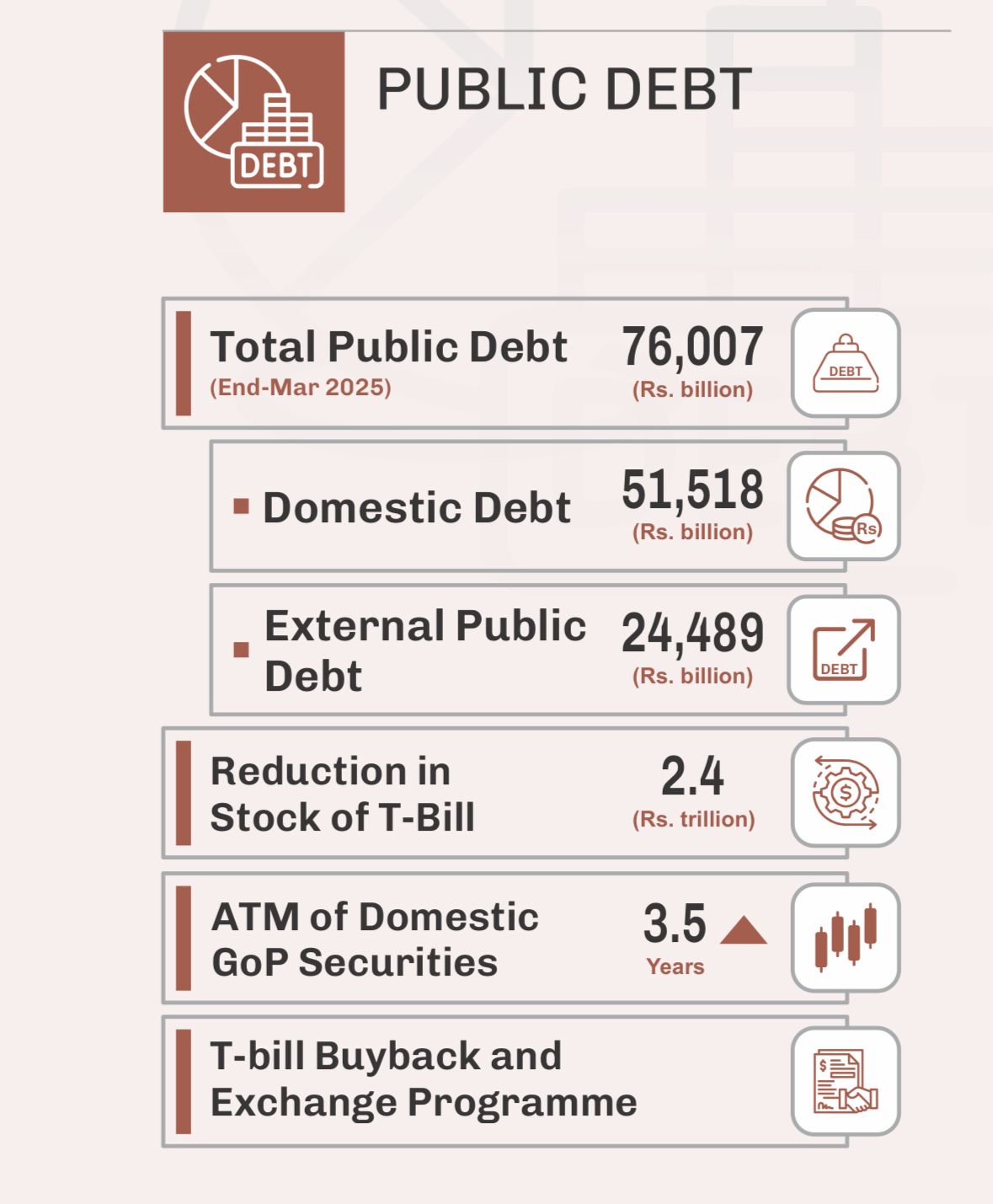
The growth in public debt during the first nine months of the fiscal year 2025 was 6.7 percent, according to the Economic Survey. The escalating debt burden presents a significant challenge for Pakistan, requiring substantial economic reforms and prudent financial management to avert a potential crisis.
