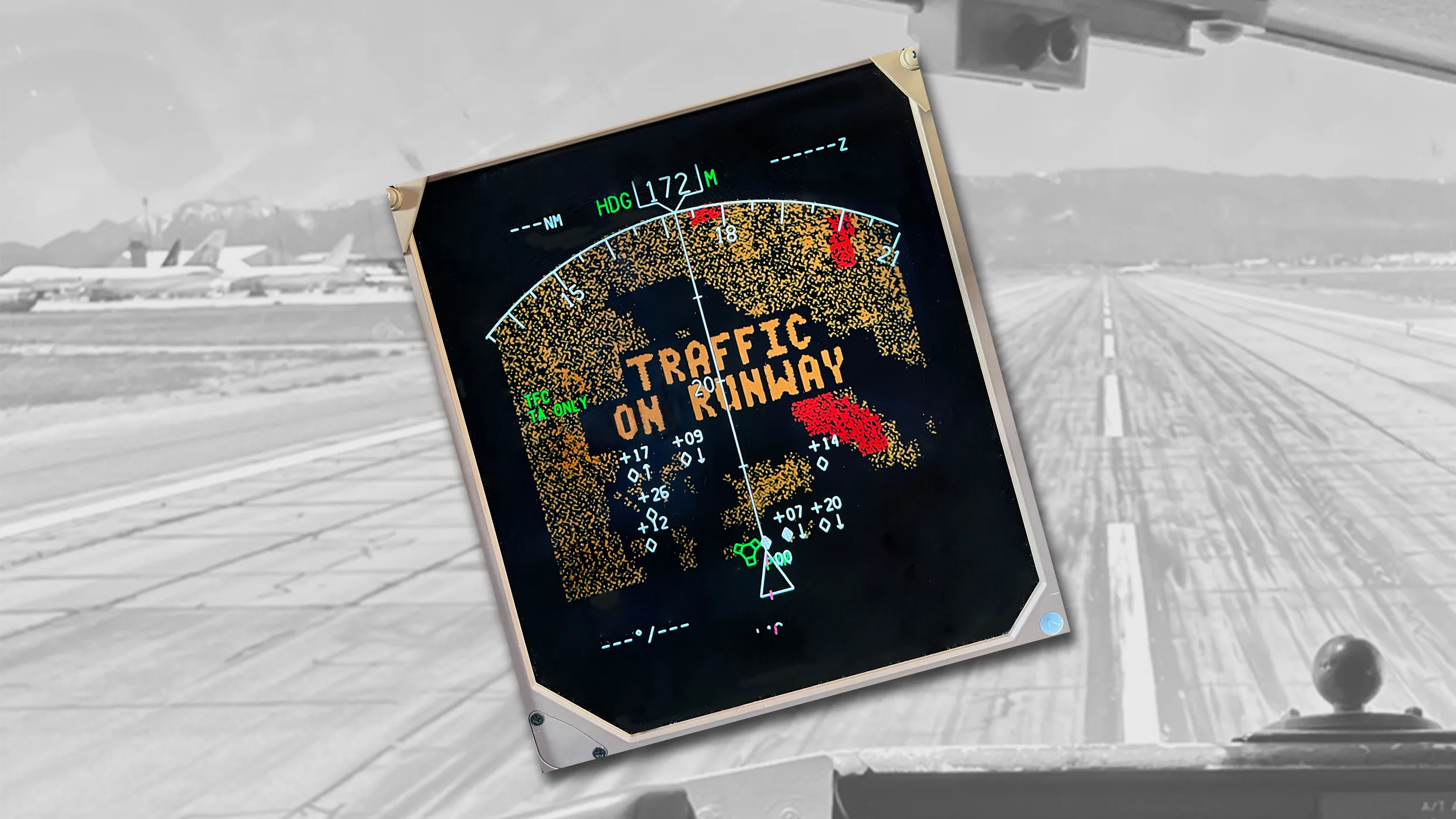
Runway Incursion Protocols: Why Honeywell’s Surf-A is a Critical Latency Patch, Not a Magic Bullet
Three years ago, a FedEx cargo jet and a Southwest airliner nearly intersected on an Austin runway because a fog bank blinded the tower. In the aviation stack, that fog wasn’t just weather; it was a sensor failure. Last week, Honeywell announced the deployment of Surf-A (Surface Awareness and Alerting), a cockpit-based collision avoidance system designed to bypass the air traffic controller bottleneck. While the PR machine is calling it a “lifesaver,” from an architectural standpoint, it’s a necessary redundancy layer for a legacy communication protocol that is finally showing its age.
- The Tech TL;DR:
- Latency Reduction: Shifts collision alerts from tower-to-pilot radio chains (avg. 15-30s delay) to direct cockpit datalinks (sub-second).
- Dependency: Relies heavily on ADS-B transponder integrity; ground vehicles without transponders remain blind spots.
- Deployment: Rolling out as a software update for existing Honeywell flight deck suites; requires no recent hardware for equipped fleets.
The Austin incident wasn’t a pilot error; it was a single point of failure in the information chain. The controller saw nothing, so the pilot heard nothing. In distributed systems, we call this a cascade failure. Honeywell’s approach treats the cockpit as an edge node, processing surface traffic data locally rather than waiting for centralized tower verification. This mirrors the shift in enterprise security from perimeter firewalls to zero-trust architectures, where verification happens at the endpoint, not the gateway.
The Human-in-the-Loop Bottleneck
Voice communication over VHF radio is effectively a half-duplex system with high contention. When a controller spots a conflict, they must key the mic, wait for the channel to clear, transmit the warning, and hope the pilot acknowledges. In high-traffic environments like LaGuardia or Heathrow, this introduces fatal latency. Thea Feyereisen, a distinguished technical fellow at Honeywell Aerospace, noted the critical nature of this delay: “If the alert is just in the tower, it takes a while for the controller to hear that alert. And how does that alert develop it to the aircraft—you have to make sure no one else is talking on the radio at the same time.”
Surf-A utilizes ADS-B (Automatic Dependent Surveillance-Broadcast) data to map surface traffic. It’s not just about seeing the plane; it’s about parsing the telemetry. The system ingests position, velocity, and heading data to calculate time-to-collision (TTC). If the TTC drops below a specific threshold, the system triggers a visual and aural alert directly in the flight deck. This removes the “radio congestion” variable from the safety equation.
However, this introduces a new attack surface. Relying on unencrypted ADS-B signals opens the door to spoofing attacks. A malicious actor could theoretically inject false transponder data to trigger nuisance alerts or mask actual threats. For aviation IT directors, this necessitates a rigorous review of cybersecurity auditors specializing in avionics to ensure that the ingestion pipeline for this surface data is hardened against injection attacks.
Why ASDE-X Failed at LaGuardia
The recent tragedy at LaGuardia, where a fire truck collided with a landing aircraft, exposes the limitations of tower-centric systems like ASDE-X (Airport Surface Detection Equipment). According to the NTSB, the system failed to activate due to “close proximity of vehicles merging.” More critically, the fire truck lacked a transponder. Surf-A inherits this blind spot. If a ground vehicle does not broadcast its position via ADS-B Out, the cockpit system remains blind to it, regardless of how sophisticated the algorithm is.
This highlights a fragmentation issue in the aviation IoT ecosystem. We have high-tech jets communicating with low-tech ground support equipment. Until the ground fleet is standardized with active transponders, Surf-A is only a partial solution. It solves the plane-to-plane incursion risk but leaves the plane-to-vehicle risk largely dependent on visual confirmation—which brings us back to the fog problem in Austin.
Architectural Comparison: Tower Relay vs. Direct Cockpit
To understand the efficiency gain, we need to appear at the data path. The traditional model relies on a centralized controller acting as the router. The new model pushes logic to the edge.

| Metric | Legacy Tower Relay (ASDE-X) | Honeywell Surf-A (Edge Processing) |
|---|---|---|
| Alert Path | Radar → Controller → Radio → Pilot | Transponder → Cockpit Receiver → EFB/Display |
| Latency | High (Dependent on radio traffic) | Low (Direct data link) |
| Single Point of Failure | Controller Attention / Radio Congestion | Transponder Signal Integrity |
| Ground Vehicle Visibility | Radar Dependent (High False Positives) | Transponder Dependent (Zero Visibility if missing) |
For airlines integrating this, the challenge isn’t just installation; it’s data governance. The sheer volume of surface traffic data can overwhelm legacy flight management systems (FMS). We are seeing a trend where airlines are offloading this processing to dedicated tablets or upgrading their avionics bus to handle higher throughput. Here’s where managed IT services for aviation logistics become critical, ensuring that the onboard network can handle the increased data load without impacting primary flight controls.
The Implementation Reality
Developers working on the integration side need to understand how this data is structured. While the proprietary Honeywell implementation is closed source, the underlying logic follows standard ARINC 429 or Ethernet AVB protocols for data transmission within the aircraft. Below is a conceptual JSON structure representing how a surface traffic alert might be ingested by an Electronic Flight Bag (EFB) application.
{ "alert_id": "SURF-A-9921", "timestamp": "2026-03-29T14:22:01Z", "severity": "CRITICAL", "threat_vector": { "type": "RUNWAY_INCURSION", "target_traffic": { "icao_address": "A1B2C3", "callsign": "SWA1492", "position": { "lat": 30.1945, "lon": -97.6699, "altitude_ft": 0 }, "velocity_kts": 12, "heading_deg": 175 }, "ttc_seconds": 8.5 }, "action_required": "HOLD_POSITION" } This structured data allows for automated decision support. However, as Dr. Aris Thorne, a senior researcher at the Institute for Aviation Safety, points out, “Automation bias is the real risk here. If pilots begin to trust the Surf-A alert as the absolute truth, they may ignore visual cues that contradict the screen. We need to ensure the HMI (Human-Machine Interface) design prioritizes situational awareness over blind obedience to the algorithm.”
The Path Forward
Surf-A is a significant step toward closing the latency gap in runway safety, effectively patching a vulnerability in the human communication stack. But it is not a silver bullet. The reliance on transponder-equipped ground vehicles remains a critical gap. Until the FAA mandates active transponders on all airport ground support equipment, the “fog problem” persists for non-aircraft obstacles.
For CTOs in the aviation sector, the directive is clear: Upgrade the cockpit software, but audit the ground infrastructure. Safety is a full-stack problem. If you are managing a fleet transition or upgrading your avionics suite, ensure your software development partners are well-versed in DO-178C safety standards to certify these new integrations. The code might be clean, but in aviation, clean code doesn’t matter if the sensor input is blind.
Disclaimer: The technical analyses and security protocols detailed in this article are for informational purposes only. Always consult with certified IT and cybersecurity professionals before altering enterprise networks or handling sensitive data.