
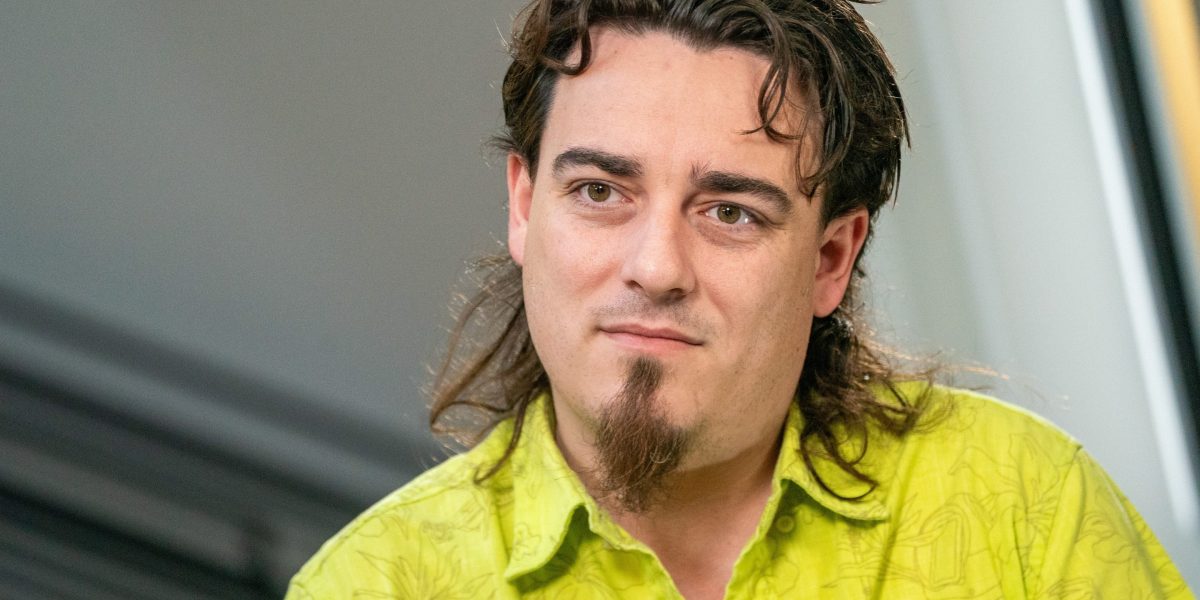
Palmer Luckey’s rigid adherence to U.S. Foreign policy directives creates a sovereign risk premium for Anduril Industries’ international partners, potentially capping the defense startup’s $60 billion valuation growth in Asian markets. While domestic revenue surges on autonomous system demand, allies like Japan and South Korea face supply chain vulnerabilities if Washington pivots, driving a urgent need for diversified defense procurement strategies and specialized geopolitical risk counsel.
The math behind Anduril’s latest funding round is aggressive, bordering on speculative. Thrive Capital and Andreessen Horowitz are leading a push to double the company’s valuation to $60 billion, a multiple that prices in perfection across global theaters. Yet, founder Palmer Luckey’s public stance—that he acts solely as an extension of U.S. Government will—introduces a variable that institutional investors typically discount heavily: political discontinuity.
Luckey told Fortune in Singapore he would sell weapons to North Korea if the U.S. Asked, but would never defy a Washington stop-order to satisfy an ally. “I’m not willing to go to prison to sell you spare parts,” he said. For a procurement officer in Tokyo or Seoul, that is not a reassurance. This proves a single point of failure.
Defense spending hit a record $2.7 trillion globally in 2024, according to SIPRI data. Capital is flooding the sector. The Global X Defense Tech ETF has outperformed the S&P 500 by over 30 percentage points in the last year. But liquidity does not solve logistics.
Anduril projects $4.3 billion in revenue for 2026 while burning over $1 billion. That loss margin is sustainable only if the Total Addressable Market (TAM) remains open. If Asian allies perceive Anduril hardware as politically fragile—subject to the whims of a volatile U.S. Administration—they will hedge. They will look for redundancy.
This creates a specific B2B opening. Nations seeking to insulate their defense industrial bases from U.S. Policy whiplash are increasingly turning to geopolitical risk consultancies to model supply chain sovereignty. The problem isn’t just buying the drone; it’s guaranteeing the software updates and spare parts five years from now when the political climate in D.C. Might have shifted entirely.
The Sovereignty Discount
Traditional defense primes like Lockheed Martin have decades of entrenched relationships that buffer them against political friction. Anduril is a startup. Its brand is built on speed and disruption, but in defense, speed often looks like instability to a foreign minister.
Luckey argues that allies should build their own weapons to avoid being “freeloaders.” He pointed to Australia’s $1.1 billion Ghost Shark submarine deal as a model of domestic production enabled by U.S. Tech. But domestic production requires technology transfer agreements that are notoriously difficult to navigate.
Export controls under ITAR (International Traffic in Arms Regulations) remain a bottleneck. When a U.S. Firm partners with a foreign entity for co-production, the legal overhead is immense. One misstep triggers sanctions. We saw Beijing sanction Anduril and Luckey personally in late 2025 over Taiwan deals. That is the cost of doing business.
For mid-market defense contractors trying to replicate Anduril’s model without the political baggage, the path forward involves complex legal structuring. They are hiring top-tier international trade law firms to ring-fence intellectual property and ensure that a change in U.S. Administration doesn’t void their export licenses overnight.
“You don’t need to build the world’s best fighter jets to be a massive threat. Two pretty good fighter jets will kick the butt of one really good fighter jet.”
Luckey’s comparison of the U.S. To Nazi Germany’s over-engineered tanks versus America’s mass-producible WWII models is apt, but the analogy cuts both ways. China has mastered manufacturability. They are pumping out hardware at a scale the U.S. Struggles to match. Anduril’s new “Arsenal-1” factory in Ohio aims to fix this, targeting mass production by mid-2026.
But scale requires capital efficiency. Anduril’s refusal to rely on cost-plus government grants is a double-edged sword. It forces innovation, yes, but it also means the company carries the balance sheet risk of R&D failures. The Wall Street Journal reported Ukrainian operators dropping Anduril drones in 2024 due to performance issues. Anduril called this “iterative development.” Investors call it churn.
The China Benchmark
The competitive landscape in Asia is no longer just about capability; it is about availability. Chinese-made J-10Cs shot down Indian Rafales in a 2025 skirmish, proving that “good enough” hardware, when available in volume, dominates exquisite, scarce platforms.

Luckey acknowledges this. “China has actually gotten its shit together,” he admitted. The threat is asymmetric. The U.S. Is trying to fight a high-tech war with a supply chain optimized for peacetime efficiency, not wartime attrition.
This attrition dynamic forces allies to reconsider their vendor mix. Relying 100% on a U.S. Vendor that defers 100% to the U.S. State Department is a strategic vulnerability. We are seeing a trend where Asian defense ministries are diversifying. They want U.S. Tech, but they want it localized.
Localization requires partners who understand the nuance of dual-use technology and cross-border compliance. This represents where the supply chain diversification experts come in. They help structure joint ventures that satisfy Washington’s security requirements while giving Tokyo or Seoul the autonomy they crave.
Valuation vs. Reality
At a $60 billion valuation, Anduril is priced like a mature software giant, not a hardware manufacturer with a $1 billion annual loss. The market is betting on the “Silicon Valley mindset” conquering the “Military Industrial Complex.” But the Military Industrial Complex has one advantage the startups don’t: patience.
Anthropic’s recent clash with the Pentagon over AI red lines shows the friction point. When a tech company’s ethical guidelines conflict with national security directives, the government wins. Luckey knows this. He positions Anduril as an “appendage of the will of the people.” It is a safe political stance, but a risky commercial one.
If the U.S. Tells Anduril to stop selling to a key ally, Anduril stops. The revenue vanishes. The valuation compresses. Institutional investors holding Anduril paper in the secondary market need to stress-test this scenario. How much of that $60 billion tag is predicated on uninterrupted access to the Indo-Pacific market?
The answer lies in the fine print of those export agreements. And until those terms are public, the “Luckey Premium” remains a gamble. For the broader market, the lesson is clear: defense tech is not just about code and drones. It is about navigating the labyrinth of global sovereignty.
As consolidation accelerates in the defense sector, companies that cannot guarantee supply chain continuity will lose out to those that can. The winners in the next fiscal quarter won’t just be the ones with the best AI. They will be the ones with the best lawyers and the most resilient logistics networks. For executives navigating this shift, vetting partners through the World Today News Directory offers a critical edge in identifying firms that solve for both capability and continuity.