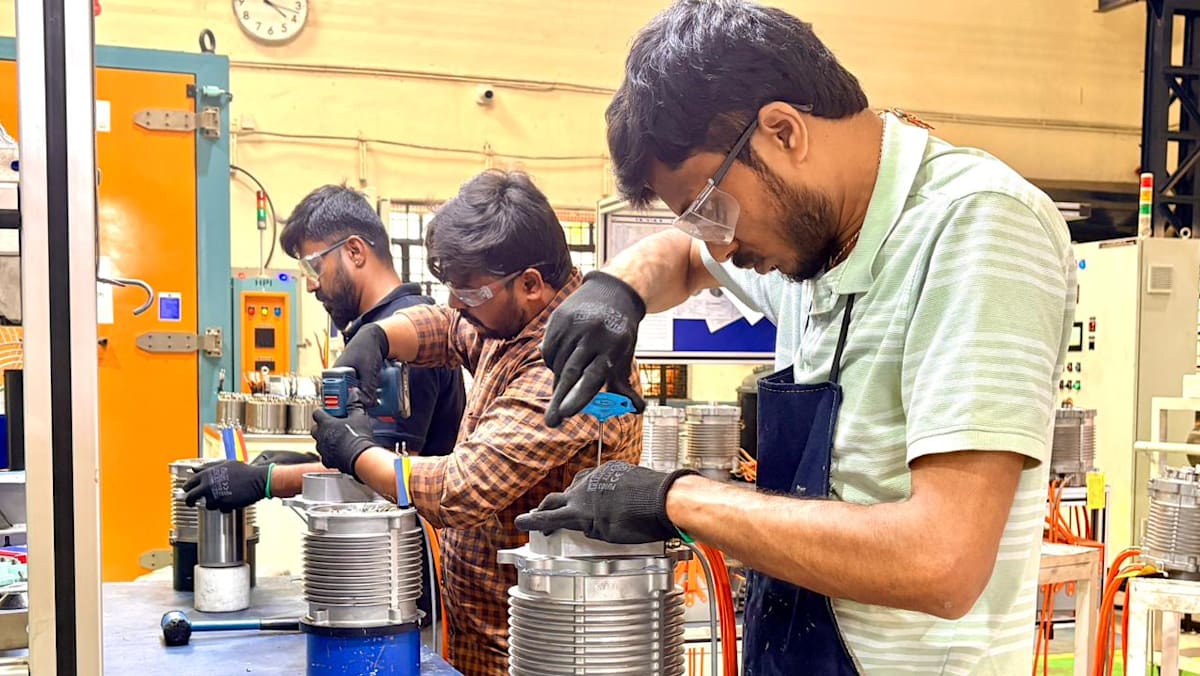
India is rapidly emerging as a key player in the electric vehicle (EV) revolution, driven by a strategic push to reduce reliance on rare-earth materials in EV motors. This shift, spurred by geopolitical concerns and supply chain vulnerabilities, presents both technical hurdles and significant opportunities for automotive manufacturers and specialized component suppliers. The Indian government’s ambition to develop into an EV export hub, announced in August 2025, is accelerating this transition, but widespread adoption remains years away.
The Rare-Earth Magnet Bottleneck & The Geopolitical Risk
The current EV landscape is heavily dependent on rare-earth magnets, specifically neodymium, praseodymium, and dysprosium, which are crucial for high-performance motors. Roughly 70 to 80 percent of EV motors currently utilize these materials, according to JMK Research & Analytics. However, China currently dominates the global supply chain for these elements, controlling approximately 60% of rare-earth mining and 90% of rare-earth processing. This concentration creates a significant geopolitical risk for automakers worldwide, as evidenced by past trade disputes and potential supply disruptions. The recent volatility in rare-earth pricing – a 25% spike in neodymium prices in late 2024 following export restrictions – underscored this vulnerability. Companies are actively seeking alternatives, and India’s potential is attracting attention.
The problem isn’t simply about cost; it’s about control. Automakers are realizing that relying on a single source for a critical component exposes them to unacceptable levels of risk. This realization is driving investment in alternative motor technologies, but the transition isn’t straightforward.
Technical Trade-offs: Efficiency vs. Alternatives
Although the desire to move away from rare-earth magnets is strong, current alternatives face performance challenges. Rare-earth motors boast an impressive 90-95% energy conversion efficiency under real driving conditions. Rare-earth-free alternatives, such as switched reluctance motors, synchronous reluctance motors, and ferrite-based motors, typically achieve efficiencies ranging from 84-92%. This difference, while seemingly small, translates to reduced range and performance for EVs. Switched reluctance motors, for example, are known for producing more vibration and noise, impacting the driving experience. Synchronous reluctance motors require more complex and expensive control systems. Ferrite-based motors, while utilizing more readily available materials, suffer from weaker magnetic fields, leading to higher heat generation.
“The industry is inherently conservative,” explains Dr. Evelyn Hayes, Head of Automotive Research at BlackRock, in a recent investor briefing. “Automakers won’t switch to a novel motor technology unless it’s demonstrably better on *every* metric – performance, cost, reliability, and manufacturability. Efficiency is paramount.”
India’s Emerging Role & Government Support
India presents a compelling alternative manufacturing base, not just for complete EVs, but too for the components that enable rare-earth-free motors. The Indian government’s plan to establish the country as an EV export hub, announced in August 2025, includes incentives for domestic manufacturing of EV components, including motors. This initiative is attracting investment from both domestic and international players. Viridian Ingni Propulsion, an Indian EV powertrain manufacturer, is actively developing and testing rare-earth-free motors, aiming for commercial production within the next two years. Bullwork Mobility, another Indian firm, is focusing on ferrite-based motors, leveraging the country’s abundant iron ore reserves.
However, scaling up production and achieving cost competitiveness will require significant investment in research and development, as well as infrastructure upgrades. According to a report by the Society of Indian Automobile Manufacturers (SIAM), investment in EV component manufacturing is projected to reach $8 billion by 2030. This growth will necessitate robust supply chain management and quality control processes. Companies navigating these complexities are increasingly turning to specialized supply chain consulting firms to optimize their operations and mitigate risks.
The Shifting Dependency: Copper & Electrical Steel
It’s crucial to understand that eliminating rare-earth magnets doesn’t eliminate material dependencies; it merely shifts them. Abhik Mukherjee, a research analyst at Counterpoint Research, notes, “Reducing reliance on rare earths reduces geopolitical supply risk, but it increases dependence on widely available inputs like copper and electrical steel.” The demand for these materials is already straining global supply chains, particularly as electrification accelerates. Copper prices, for example, have risen by 15% in the past year, driven by increased demand from the EV sector and infrastructure projects. This shift in dependency highlights the need for diversified sourcing strategies and investment in sustainable material extraction practices.
The transition also creates opportunities for companies specializing in advanced materials and manufacturing processes. Demand for high-grade electrical steel, essential for motor cores, is expected to surge in the coming years. This demand is driving innovation in steel production and processing technologies.
The Ten-Year Horizon & The Need for Confidence
Industry experts predict that widespread adoption of rare-earth-free motors is still at least a decade away. Gopal, CEO of Viridian Ingni Propulsion, estimates, “It may grab another 10 years for all companies to fully understand and start working on alternatives.” Building confidence in these technologies is paramount. Automakers need to see real-world performance data and demonstrate that rare-earth-free motors can meet the demands of modern EVs.
Raghuram, a spokesperson for Bullwork Mobility, emphasizes the importance of government support and public demonstration projects. “Once people see more vehicles with rare-earth-free motors on the road, confidence in the technology will change.” This requires collaborative efforts between government, industry, and research institutions.
The legal landscape surrounding EV component manufacturing and intellectual property is also becoming increasingly complex. Companies operating in this space need to navigate a web of regulations and protect their innovations. Specialized intellectual property law firms are playing a critical role in helping companies secure their competitive advantage.
Looking Ahead: A Long-Term Investment
The move towards rare-earth-free EV motors is not a short-term fix; it’s a long-term strategic investment. It requires sustained commitment to research and development, infrastructure development, and supply chain diversification. The companies that embrace this challenge and invest in innovative solutions will be well-positioned to capitalize on the growing EV market.
For businesses seeking to navigate this evolving landscape, the World Today News Directory offers a comprehensive resource for identifying and vetting qualified B2B partners. From engineering consulting firms specializing in motor design to materials suppliers and legal experts, our directory provides the connections you need to succeed in the age of electric mobility. The next fiscal quarters will be pivotal in determining which companies lead this transformation, and proactive engagement with the right partners is essential.