
Ancient Ape fossil Reveals Potential Earliest Evidence of Human Ancestry
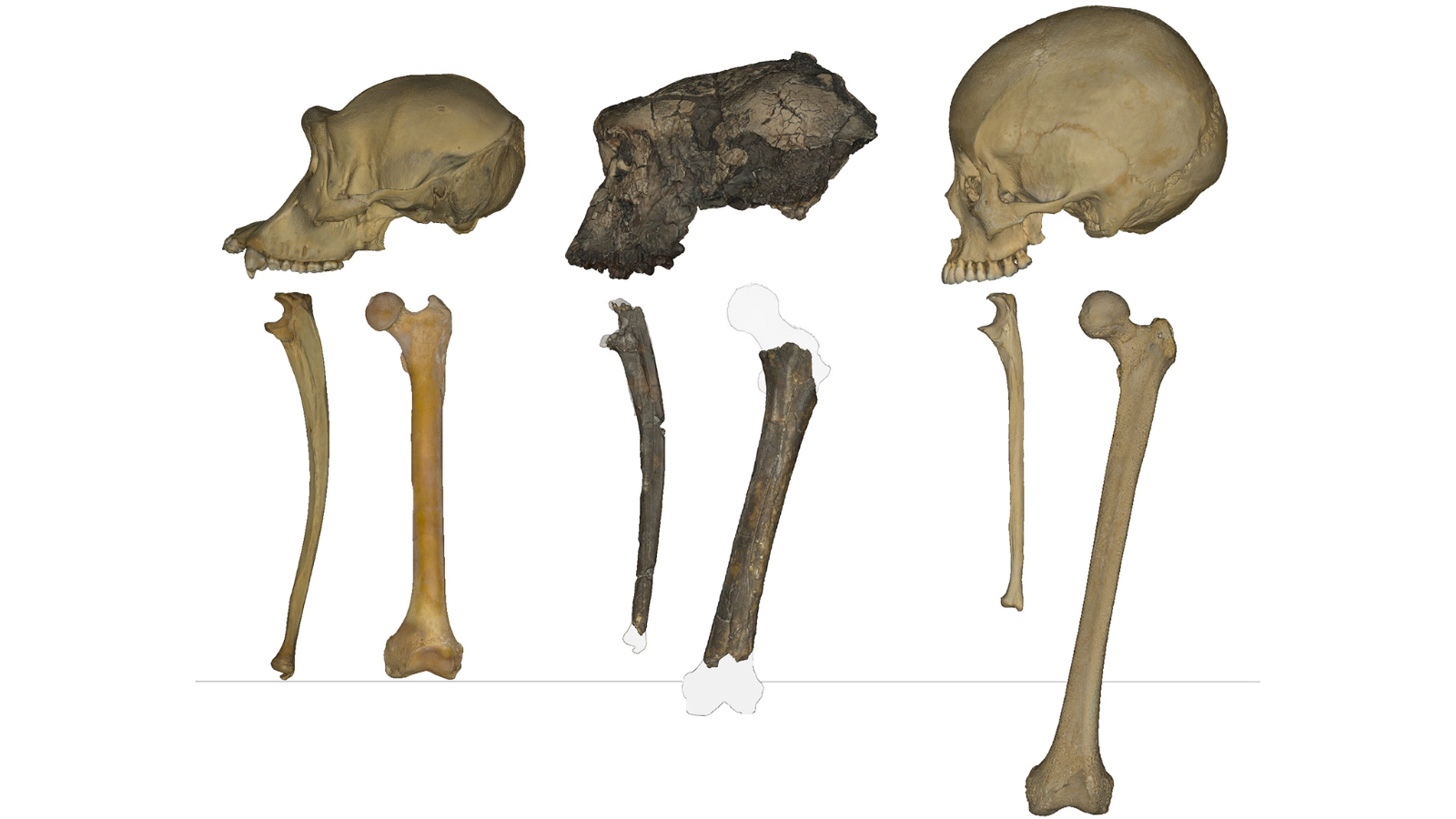
January 14,2026 – A groundbreaking revelation is rewriting the story of human evolution. scientists have identified a unique anatomical feature on the 7-million-year-old fossil of sahelanthropus tchadensis – a small bump on the femur – that strongly suggests this ancient ape walked upright on two legs. This finding, published in the journal Science Advances [[1]], potentially pushes back the origins of the hominin lineage – the group including humans and our extinct ancestors – by nearly a million years.
For decades, the question of when our ancestors first began walking upright has captivated paleoanthropologists. Bipedalism is considered a defining characteristic of the hominin lineage, separating us from our primate relatives.While previous evidence suggested bipedalism emerged around 6 million years ago, this new research indicates it may have begun even earlier.
The Discovery: A Tiny Bump with Huge Implications
The key to this revelation lies in a subtle yet meaningful feature: the femoral tubercle. this small bump on the femur, or thigh bone, is a crucial attachment point for a major muscle involved in hip extension and stabilization during walking. Crucially, this feature is present in modern humans and other hominins, but absent in living non-human apes.
“That [bump] really sold it to us,” explains Scott A.Williams, the lead author of the study and an associate professor of paleoanthropology at new York University, in an interview with Live Science [[2]]. “That really convinced me that, OK, we think it’s a biped, and therefore, we think it’s a member of the hominin lineage.”
the team’s analysis didn’t stop there. Further examination of the S. tchadensis femur revealed two additional human-like characteristics: an inward twist of the bone,positioning the knees closer together like those of modern humans,and a distinct lump where the largest gluteal muscle attaches – a feature not found in other apes.
Sahelanthropus tchadensis: A Controversial Fossil
Discovered in Chad in 2001 and first described in 2002 [[3]], S. tchadensis has been a source of debate among scientists.Initial interpretations suggested bipedalism based on the position of the foramen magnum – the opening in the skull where the spinal cord connects – which appeared more centrally located than in other apes. However, some researchers argued this positioning alone wasn’t conclusive evidence of upright walking.
The recent re-analysis, incorporating the newly discovered forearm bones (ulnae) and the crucial femur fragment, provides stronger support for the bipedal hypothesis. While the curved arm bones suggest S. tchadensis was also adapted for climbing trees, the hip and knee structure indicates a capacity for frequent bipedal locomotion on the ground.
What Does This mean for Our Understanding of Human Evolution?
This discovery has profound implications for our understanding of the evolutionary path that led to humans. If S. tchadensis is indeed a hominin, it suggests that bipedalism may have evolved earlier than previously thought, potentially in a more chimpanzee-like ancestor.
“This research makes the question of what the last common ancestor between humans and chimpanzees looked like even more puzzling and fascinating,” says Jeremy desilva, a biological anthropologist at Dartmouth College, who was not involved in the study. He told Live Science [[2]], “It’s beyond convincing…I’m kind of kicking myself. I wish I had seen these things.”
Though, DeSilva also raises a critical question: “Can you be bipedal and not be a hominin? Is that possible?” This highlights the possibility that S. tchadensis may represent a separate lineage of bipedal apes that didn’t directly lead to humans.
The Ongoing Debate and Future research
the debate surrounding S. tchadensis is far from over. Further research, including the discovery of more complete fossil remains, will be crucial to solidify it’s place in the human family tree. Scientists will continue to analyze the existing fossils, employing advanced imaging techniques and comparative anatomy to unravel the mysteries of our ancient ancestors.
The discovery of the femoral tubercle on S. tchadensis is a significant step forward in our quest to understand the origins of bipedalism and the evolution of the human lineage. It underscores the complexity of our evolutionary history and reminds us that the story of human origins is still being written.
Key Takeaways:
* A newly discovered bump on the femur of sahelanthropus tchadensis,a 7-million-year-old fossil ape,provides strong evidence of bipedalism.
* This finding potentially pushes back the origins of the hominin lineage by nearly a million years.
* S. tchadensis remains a controversial fossil,and its exact relationship to the human family tree is still debated.
* The discovery raises questions about the evolution of bipedalism and the characteristics of the last common ancestor between humans and chimpanzees.
