5 Standing Exercises to Fix Hunched Posture After 60
Combining targeted strength training with mobility exercises addresses hunched posture in adults over 60 more effectively than stretching alone. By integrating muscular reinforcement of the posterior chain with chest opening, individuals can improve spinal alignment.
- Key Takeaways:
- Strength-mobility hybrids carry over better than stretching alone.
- Targeting the rhomboids, middle trapezius, and rotator cuff helps guide your shoulder blades into a more upright position.
- Consistency in “posture resets” during daily activity prevents the rounded position from settling back in.
Rounded posture in aging populations often stems from chronic behavioral patterns. Prolonged interaction with screens and sedentary habits lead to a tight chest, while the stabilizing muscles of the upper back can feel weak. This imbalance creates a situation where traditional stretching provides temporary relief but fails to provide the strength required to maintain an upright position.
A randomized controlled study published in the Sao Paulo Medical Journal (2022) demonstrated that a structured four-week exercise regimen significantly improved posture in sedentary workers. For individuals over 60, this process is critical to help stand taller and keep shoulders more organized. Individuals should consult with a professional to ensure these movements are performed safely.
How Do Wall Angels and Pec Stretches Reset the Shoulder Girdle?
Wall angels function as a tool to help shoulders and upper back move through a greater range of motion, while the wall provides feedback on posture. By pressing the head and upper back against a flat surface, the user eliminates the ability to compensate. The movement targets the rear delts, lower traps, middle traps, rotator cuff, and upper back. The goal is to guide the arms upward without allowing the ribs to flare, which reinforces the stability of the thoracic spine.

Complementing this is the wall pec stretch with reach. While static stretching is common, adding an active reach encourages upper back rotation. This addresses the restriction in the front of the chest while simultaneously activating the obliques and upper back. This dual-action approach is more useful than simply hanging in one position because it reintegrates the chest’s range of motion with the upper back’s ability to rotate.
Which Strength Exercises Prevent the Return of Hunched Posture?
The “solution” to posture degradation is not merely flexibility, but the ability of the muscles to hold a corrected position. This requires the activation of the rhomboids and middle trapezius.

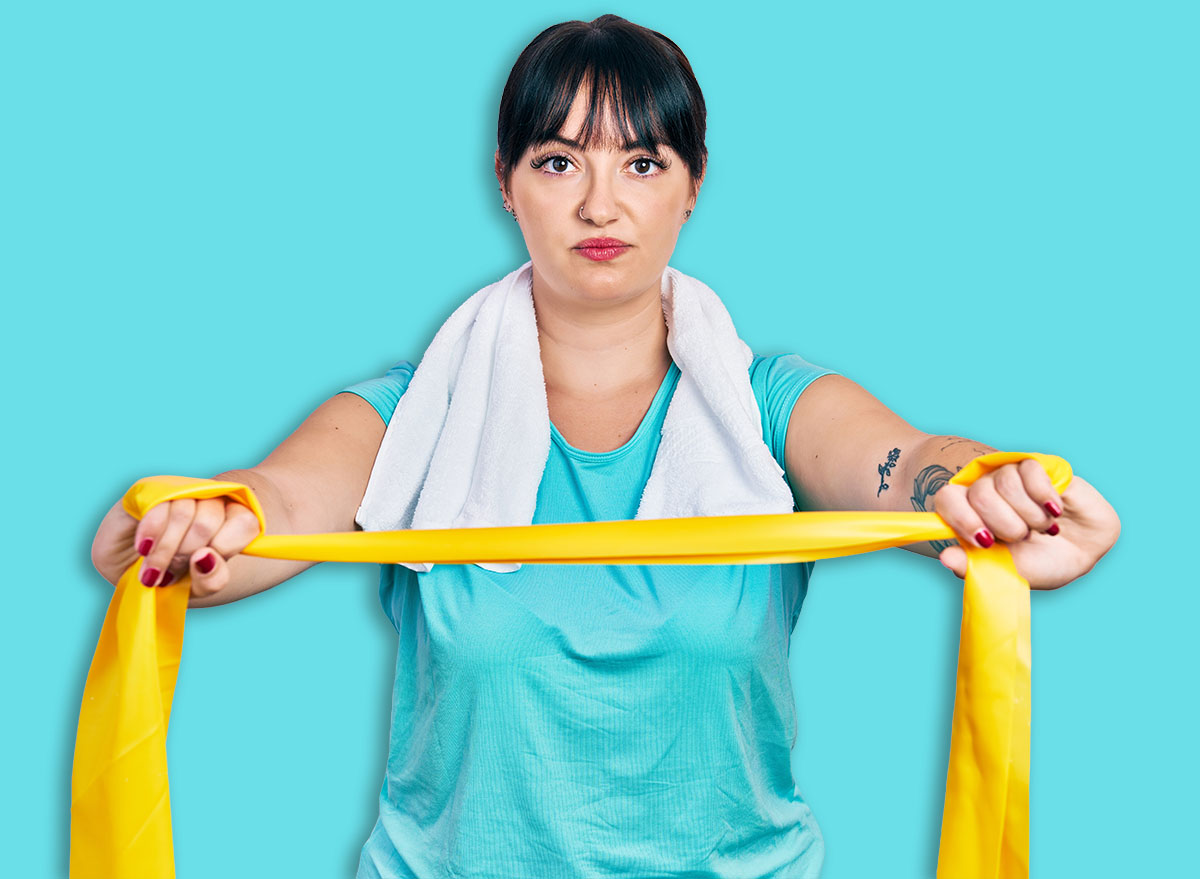
Band pull-aparts and standing band face pulls serve as the primary corrective forces. Band pull-aparts train the opposite pattern of daily "reaching and pressing," forcing the shoulder blades to come together. Face pulls combine this rowing motion with external rotation, which is essential for rotator cuff health.
The Farmer Carry serves as the functional application of this strength. By carrying weights at the sides, the body is forced to organize itself around a load. This reinforces the “tall” posture during ambulation, training the core and upper back to resist the downward pull of gravity. It is imperative to coordinate these loading exercises with a professional to determine safe weight thresholds.
Clinical Application and Protocol for Adults Over 60
To maximize efficacy and minimize the risk of injury, the following protocols are recommended:
| Exercise | Primary Target | Recommended Volume | Goal |
|---|---|---|---|
| Wall Angels | Rear delts, lower traps, middle traps, rotator cuff, upper back | 3 Sets of 8-10 Reps | Shoulder/Upper Back Range of Motion |
| Wall Pec Stretch | Chest, front shoulders, upper back, obliques | 2-3 Sets of 6-8 Reps | Anterior Opening |
| Band Pull-Aparts | Rear delts, rhomboids, middle traps, rotator cuff, upper back | 3 Sets of 12-15 Reps | Posterior Strength |
| Band Face Pulls | Rear delts, rhomboids, middle traps, lower traps, rotator cuff, biceps | 3 Sets of 10-12 Reps | External Rotation |
| Farmer Carry | Upper back, shoulders, forearms, grip, core, glutes, quadriceps, calves | 3 Sets of 20-40 Sec | Functional Stability |
The standard of care for postural correction emphasizes that these exercises must be paired with “posture resets.” This involves conscious cues—such as maintaining a tall chest and relaxed shoulders—during routine daily activities. This prevents the body from settling back into a rounded position between formal training sessions.

As the population ages, the intersection of mobility and strength becomes the primary defense against the physical manifestations of sedentary aging. The transition from simple stretching to a comprehensive strength-mobility hybrid is supported by evidence showing that muscle activation is the way to permanently shift the center of gravity back over the hips. Those seeking a comprehensive diagnostic assessment of their spinal alignment should consult a professional to establish a baseline before beginning a corrective regimen.
By utilizing tools like walls and resistance bands, adults over 60 can rebuild the neuromuscular pathways necessary for a healthy, upright carriage.
Disclaimer: The information provided in this article is for educational purposes only and does not constitute medical advice. Always consult with a qualified healthcare provider regarding any medical condition, diagnosis, or treatment plan.