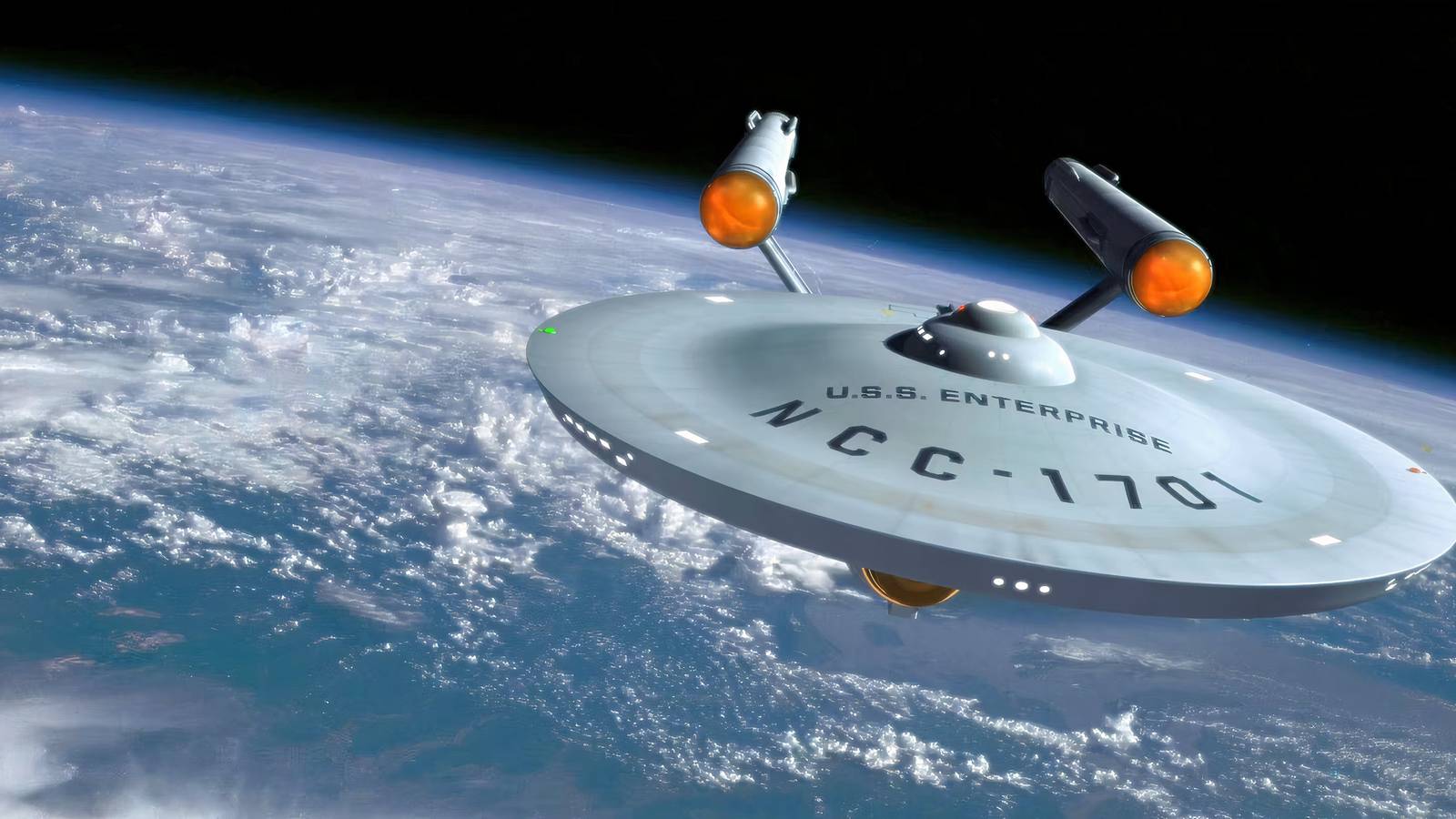
5 Greatest Star Trek Ships That Defined the Franchise
The USS Discovery, the USS Defiant, a Borg Cube, the USS Enterprise-D, and the Enterprise NX-01 are five iconic starships that fundamentally redefined the Star Trek franchise. Great science-fiction ships are never just transportation. Over time, they become characters in their own right, developing personalities, accumulating history, and becoming inseparable from the people who command them. Long after audiences forget technical specifications, they remember the adventures carried out aboard these vessels, the sacrifices made, and the moments defining the heroes standing on their bridges. Few franchises understand that dynamic better than Star Trek, where every era introduced a ship that expanded the universe in a different way. Some redefined exploration. Others changed Starfleet forever.
Thanks to the experimental spore drive, the vessel could instantly jump across the galaxy, fundamentally changing what a Star Trek ship could accomplish. Whether viewers embraced the concept or questioned why such technology disappeared from later Starfleet history, the spore drive forced the franchise to rethink the limits of exploration.
The USS Defiant as Starfleet’s First True Warship
The USS Defiant represented something entirely different. Commander Benjamin Sisko helped design the prototype himself, creating a ship whose mission was survival rather than exploration. Compact, heavily armed, and equipped with a rare Romulan cloaking device, it served as what Sisko described as an overpowered little warship. Throughout Deep Space Nine, the Defiant spearheaded the Dominion War, proving that sometimes humanity needs a ship capable of defending them.
The Borg Cube and the Arrival of Absolute Dread
When the Borg Cube first appeared in Star Trek: The Next Generation, it looked exactly like its name: a giant cube drifting silently through space. That simplicity became its greatest strength. It did not need to look intimidating; it simply was. The Cube completely changed the stakes of Star Trek. After Q introduced the Borg in the episode “Q Who,” Starfleet learned there were threats it could not negotiate with or outsmart. Unlike the Enterprise or the Defiant, the Borg Cube was never meant to inspire hope. It was designed to inspire dread, forcing Starfleet to rethink everything from ship design to military strategy.
The Enterprise-D and the Galaxy-Class Community
The original Enterprise boldly went where none had gone before, but the USS Enterprise-D showed what happened after everyone got there. When Star Trek: The Next Generation premiered in 1987, Gene Roddenberry’s vision of Starfleet had evolved. The Galaxy-class Enterprise served as the flagship of Starfleet throughout the series, commanded by Captain Jean-Luc Picard. This massive vessel accommodated over one thousand crew members and their civilian families, functioning as an airborne community where children attended school and civilians worked alongside Starfleet officers.
The Enterprise NX-01 and the Foundation of the Federation
The Enterprise NX-01 served as the primary setting of Star Trek: Enterprise. Commanded by Captain Jonathan Archer, it was Earth’s first starship capable of achieving Warp 5 speeds. The ship established initial diplomatic relations with dozens of alien species and survived the perilous Xindi conflict. Its historic deep-space missions laid the direct cultural and political foundations for the founding of the United Federation of Planets, cementing its legacy as a pivotal vessel in the overarching chronology.

Ultimately, these five vessels prove that the heart of Star Trek lies not just in the captains who command them, but in the engineering and imagination behind every hull design.