2,900-Year-Old Mountaintop Sanctuary Found on Greek Island May Honor Artemis
Archaeologists have uncovered a 2,900-year-old mountaintop sanctuary on the Greek island of Euboea, about 50 kilometers northeast of Athens, with evidence suggesting worship of the goddess Artemis, Live Science reported.
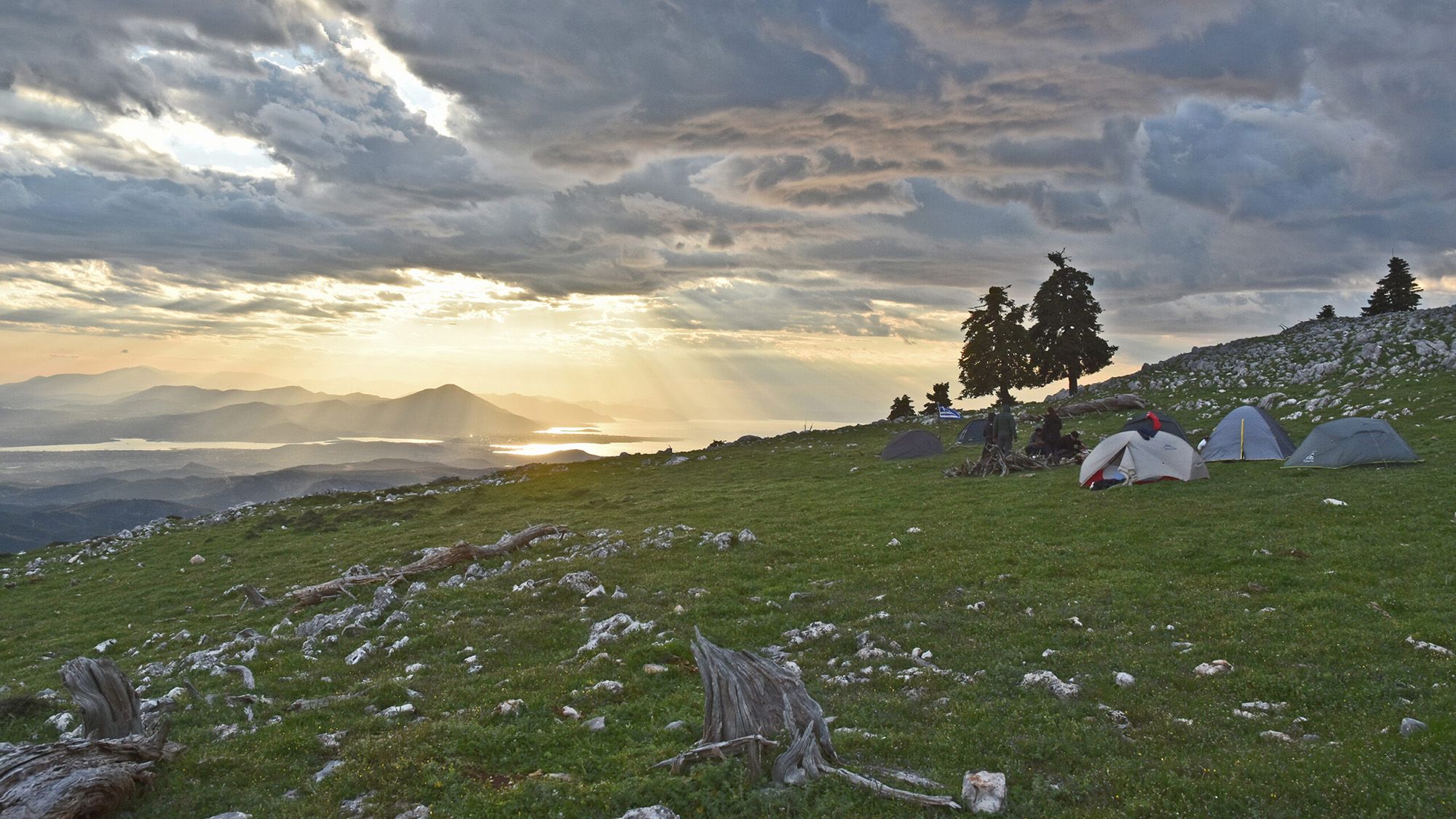
The site sits near the summit of Elatias, a peak on Mount Olympus on Euboea — not the mainland Olympus traditionally regarded as the home of the Greek gods. Excavation leader Chloé Chezeaux, an archaeologist at the Swiss School of Archaeology in Greece, told Live Science her team first identified the sanctuary during a survey in 2025 and excavated it in 2026.
The sanctuary lacks temples or other structures, but has yielded “an exceptional concentration of pottery” dating from the ninth century B.C. through the first or second century A.D., indicating continuous use for more than a millennium.
Remote location, sustained devotion
Reaching the summit remains a physical challenge. The final ascent covers roughly 3 kilometers with 650 meters of elevation gain, taking modern researchers about an hour from the nearest mountain pass. “People were willing to devote considerable time and energy to reaching these places, and in our case they seem to have done so over many generations,” Chezeaux told Live Science.
The sanctuary was used mainly by residents of nearby Eretria, where the Swiss School is based. “Mount Olympus dominates much of the surrounding region, and its prominent position probably played a role in the choice of this location.”, Chezeaux said. High mountains held particular significance for ancient Greeks, and the journey itself may have formed part of the religious experience.
Ancient names and modern confusion
Mount Olympus was a common name for high peaks across the Greek world, and the tradition of the northern mainland Olympus as the gods’ home dates from Homer and Hesiod in the eighth century B.C., Live Science reported. The Euboean Olympus rises to almost 3,800 feet, while the mainland summit exceeds 9,500 feet, and the Elatias peak sits about 100 feet below the island’s highest point.

Chezeaux told Live Science that the name Olympus was already widespread for high mountains before the epic poems fixed the divine residence on the Thessaly-Macedonia border. Modern Greece still has several mountains bearing the name, which has occasionally blurred the distinction between the island peak and its more famous mainland counterpart.
Difficult identification across Greece
Chezeaux told Live Science that mountaintop sanctuaries are not uncommon in Greek archaeology, yet they frequently leave very little trace, sometimes with no visible structures at all. “The problem is that these sanctuaries often left very little archaeological evidence, sometimes with no visible structures at all, which makes them particularly difficult to identify.”, Chezeaux said.
The Swiss School of Archaeology in Greece has directed continuous excavations at ancient Eretria on Euboea since 1964, establishing its primary field base there in a 19th-century neoclassical house at Odos Apostoli 15.
Over four decades (1964–2004), its work unfolded in three phases: early landmark finds included the Geometric Heroon necropolis, pre-temple structures beneath the 6th-century B.C. Temple of Apollo Daphnephoros, and the Classical-Hellenistic House of the Mosaics; a middle consolidation phase explored the West Quarter, North Gymnasium, acropolis, and the sacrificial area north of the Sanctuary of Apollo; and a renewed phase (1996–2009) uncovered an Industrial Quarter and remains reaching back to the second millennium B.C.
Evidence points to Artemis
No altar has been found, and Zeus is traditionally associated with mountaintops. However, an inscription at an ancient site in Eretria mentions “Artemis Olympia,” an epithet linking the wild nature goddess to the mountaintop sanctuary. Offering remains recovered from crevices include sheep and goat bones, several showing signs of burning at very high temperatures.
“These finds naturally suggest practices involving animal sacrifice and ritual meals, which played an important role in ancient Greek religion,” Chezeaux said.
Mountaintop sanctuaries are not uncommon in Greece, but often leave little archaeological trace. The Euboean site’s dense pottery deposit makes it unusually informative about rural worship practices spanning the Geometric period through Roman imperial times.