
Remarkable Find: Most Complete Homo habilis Skeleton Sheds Light on Human ancestry
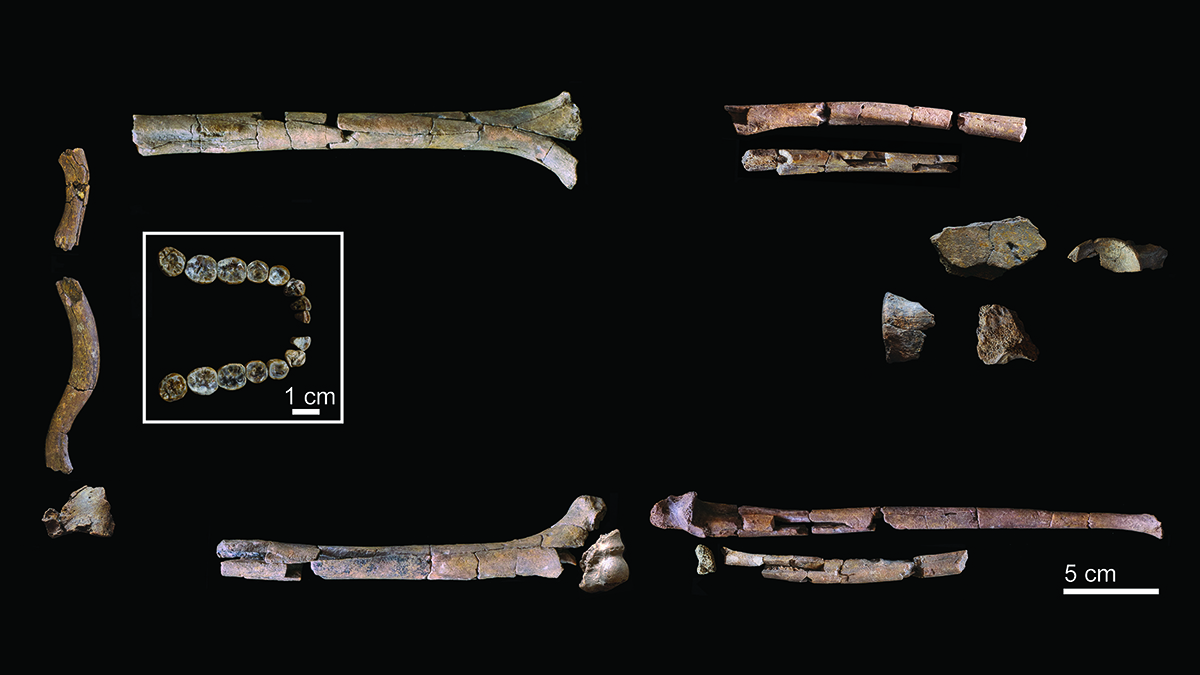
A groundbreaking finding in northern Kenya has yielded teh most complete skeleton of Homo habilis, a pivotal human ancestor that lived over 2 million years ago. This remarkably well-preserved fossil, designated KNM-ER 64061, is providing unprecedented insights into the anatomy adn lifestyle of this early hominin, notably highlighting unusually strong arms that set it apart from later human species.
The Discovery and initial Findings
The fossilized remains were initially unearthed in 2012 by a research team led by renowned paleoanthropologist Meave Leakey of the Turkana Basin Institute. The initial announcement of the find occurred in 2015 at a research conference, but a thorough analysis of the skeleton has only recently been published on January 13th in the prestigious journal The Anatomical Record.
The skeleton dates back between 2.02 and 2.06 million years ago, placing it among the oldest Homo habilis specimens discovered. A complete set of lower teeth definitively identified the remains as belonging to this species. The find includes crucial skeletal elements – collarbones, portions of the shoulder blades, complete upper and lower arm bones, and fragments of a vertebra, rib, upper leg bone, and pelvis – making it the most complete H. habilis skeleton ever recovered. While an even older H. habilis skeleton was previously discovered in Ethiopia, dating back 2.33 million years 1, this new discovery provides a far more comprehensive anatomical picture.
Importance of the Find: A Transitional Species
According to study lead author Fred Grine, a paleoanthropologist at Stony Brook University, “There are only three other very fragmentary and incomplete partial skeletons known for this significant species.” This completeness is what makes KNM-ER 64061 so significant, offering researchers an unparalleled possibility to understand the evolution of early Homo.
Homo habilis occupies a crucial position in human evolutionary history. It is considered the first species within our genus, Homo, to emerge after diverging from the australopithecines – the group that includes the famous “Lucy” fossil 2. Tho, H. habilis was distinct from the later and better-understood Homo erectus, which was the first hominin to migrate out of Africa. Therefore, studying H. habilis is key to unraveling the adaptations that allowed our ancestors to evolve and thrive.
Strong Arms and Arboreal Adaptations
A detailed analysis of the KNM-ER 64061 skeleton revealed that the arm bones of H.habilis shared characteristics with both other early Homo specimens and some australopithecines. Notably, H. habilis possessed longer forearms and heavier, thicker arm bones compared to the later Homo erectus. This suggests a potential for greater upper body strength and possibly even arboreal (tree-dwelling) capabilities.
However, researchers caution against definitively concluding that H. habilis was a proficient tree climber. As the study authors note, “The relatively long forearm of H. habilis may have enabled a greater degree of arboreal locomotion in this species than in H. erectus, but whether arboreality was indeed practiced by H. habilis must remain a matter of speculation.”
Physical Characteristics and Lifestyle
Based on the length of the humerus, researchers estimate that KNM-ER 64061 belonged to an individual approximately 5 feet, 3 inches (160 centimeters) tall. The estimated weight of this individual, based on a fragment of the leg bone, was a mere 67.7 pounds (30.7 kilograms). These measurements indicate that H. habilis was generally shorter and lighter than H. erectus, while retaining upper-limb proportions more similar to those of the australopithecines.
Study co-author ashley Hammond, a paleoanthropologist at the Catalan Institute of Paleontology Miquel Crusafont, emphasized that “the new skeleton confirms that the arms were fairly long and strong. What remains elusive is the lower limb build and proportions.” The limited pelvic fragments recovered suggest that this particular H. habilis individual may have walked more like H. erectus than earlier australopithecines, but further discoveries are needed to confirm this.
Implications for Understanding Early Hominin Diversity
The discovery of this complete H. habilis skeleton is poised to reshape our understanding of the complex interplay of hominin species that coexisted in eastern Africa between 2.2 and 1.8 million years ago. At this time,multiple hominin species – including Paranthropus boisei,H. habilis, Homo rudolfensis, and potentially H. erectus – inhabited the same region.
The relationship between these species remains a subject of intense debate. Given that H. erectus appeared roughly 500,000 years before H. habilis disappeared from the fossil record, it is currently unclear whether H.habilis was a direct ancestor of H. erectus or a closely related, but separate, lineage. Further fossil discoveries, particularly of lower limb remains of H.habilis, are crucial to resolving this question.
Looking Ahead
The KNM-ER 64061 skeleton represents a monumental step forward in paleoanthropological research. It provides a wealth of anatomical data that will undoubtedly fuel further investigations into the evolution of our genus. As Hammond aptly stated, “Going forward, we need lower limb fossils of Homo habilis, which may further change our perspective on this key species.” This remarkable find underscores the importance of continued fossil exploration in eastern africa, a region that continues to yield invaluable clues about our origins.
- 1 Rightmire, G. P. (1997). Homo habilis: A review of the species. American Journal of Physical Anthropology, 103(2), 235–258.
- 2 Strickland,A.(2023, August 22). Ancient human ancestor ‘Lucy’ was not alone: She lived alongside at least 4 other proto-human species, emerging research suggests.LiveScience.
