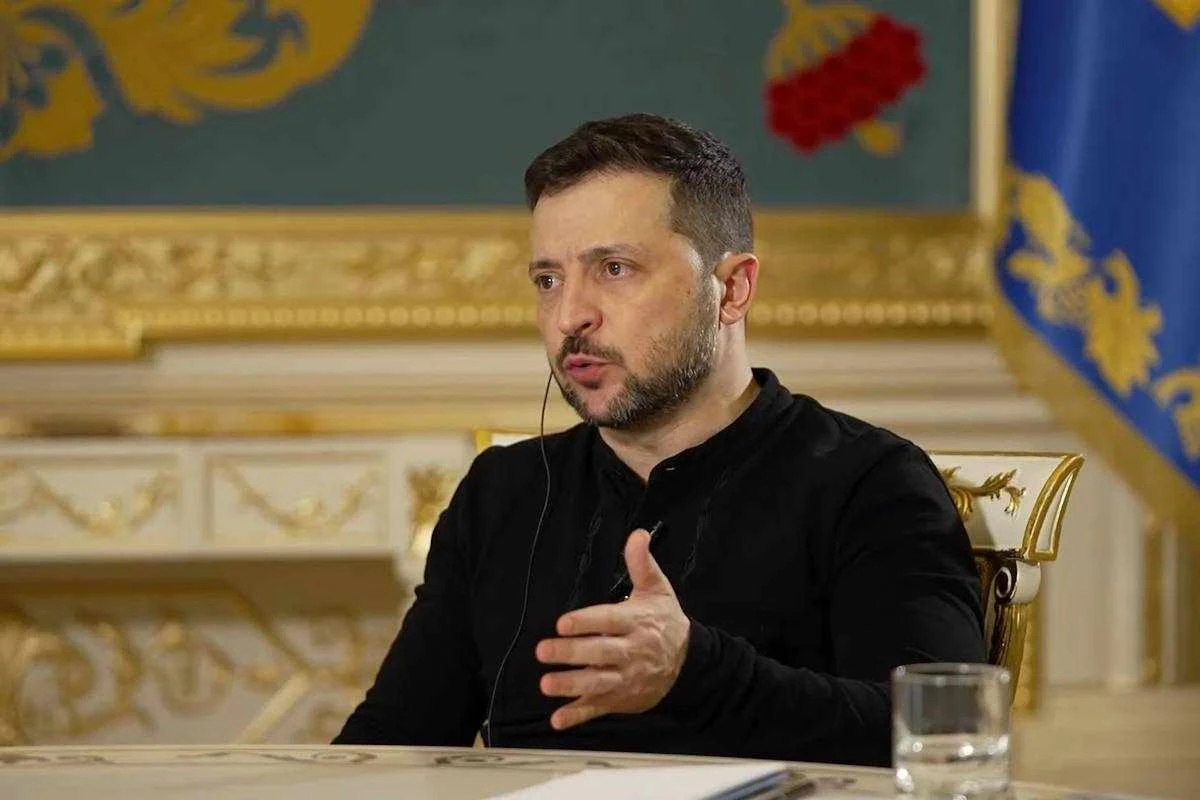
Zelensky Warns Europe of Russian Threat Amid Deadly Attacks on Ukraine
Ukrainian President Volodymyr Zelenskyy has issued a stark warning to the international community, asserting that if the Russian military machine is not decisively dismantled, the next wave of kinetic strikes will target the European continent. Following a devastating night of aerial attacks across Kyiv, Kharkiv, Sumy, and Kryvyi Rih, the geopolitical stakes have shifted from regional containment to continental security.
The recent escalation represents more than a localized intensification of hostilities; This proves a fundamental challenge to the post-war security architecture of Europe. As Russian forces continue to demonstrate an ability to penetrate deep into Ukrainian territory—resulting in a day of mourning in Kyiv for 24 citizens killed in a single strike—the “problem” facing global stakeholders is no longer just the preservation of Ukrainian sovereignty, but the mitigation of systemic risk to the European Union and NATO’s eastern flank. For multinational corporations and sovereign wealth funds, this development signals a transition from managing “border volatility” to preparing for “structural security shifts.”
The Anatomy of a Night of Destruction
The scale of the recent Russian offensive has sent shockwaves through the diplomatic corridors of Europe. The coordinated strikes were not limited to a single front; instead, they targeted a wide geographic swath of Ukraine, including the industrial and residential hubs of Kharkiv, Sumy, and Kryvyi Rih. The psychological and physical impact of these nocturnal explosions underscores a persistent capability within the Russian military to bypass current defensive postures.
In Kyiv, the human cost has been particularly acute. The declaration of a day of mourning follows the confirmed deaths of 24 individuals during the Russian onslaught. This loss of life is not merely a humanitarian tragedy but a strategic signal. Zelenskyy has utilized this moment to demand a decisive shift in international policy, stating emphatically that “Russia must be punished.” The core of his argument rests on the concept of deterrence: if the current kinetic actions do not meet a proportional and devastating response, the “machine” will continue to expand its reach.
Divergent Realities: The Diplomatic Fault Line
While Zelenskyy calls for a harder line of punishment, the international perception of the conflict’s momentum remains fractured. This divergence is most visible in the contrasting assessments from Western leaders. Former U.S. President Donald Trump noted the sudden shift in the conflict’s trajectory, observing that while things had appeared to be progressing positively, the Ukrainians have “taken a big blow” in the most recent developments.
This tension highlights a critical “security gap” that global firms must navigate. On one hand, there is the Ukrainian imperative for total military degradation of the adversary; on the other, there is a growing debate in Western capitals regarding the sustainability of support and the risk of uncontrolled escalation. For companies involved in defense logistics and procurement, this political volatility creates a complex environment where long-term contracts must be balanced against the immediate unpredictability of frontline shifts.
“The failure to achieve a decisive break in the adversary’s offensive capacity does not merely prolong a local war; it invites a re-evaluation of the entire European security perimeter.”
The Macro-Economic Ripple: From Kinetic War to Market Volatility
The warning that strikes could move toward Europe has immediate implications for the global macro-economy. We are no longer discussing a conflict contained within a single state’s borders; we are discussing a potential disruption to the European single market and the stability of the Eurozone. The threat of “strikes against Europe” translates directly into increased risk premiums for several key sectors.
- Energy Security: Any expansion of the conflict toward European borders threatens to destabilize existing energy transit corridors, necessitating a rapid pivot by energy market analysts and infrastructure providers.
- Insurance and Risk: The increased probability of regional instability is driving up maritime and industrial insurance premiums across the Black Sea and Eastern Europe.
- Supply Chain Integrity: As kinetic actions threaten industrial hubs like Kryvyi Rih, the disruption of raw material flows requires immediate intervention from supply chain logistics specialists to reroute critical components.
To understand the scale of the economic transition required, one must look at the projected shifts in state-level resource allocation:
| Risk Category | Immediate Market Impact | Long-Term Macro Trend |
|---|---|---|
| Defense Spending | Surge in procurement orders | Permanent expansion of the European defense industrial base |
| Capital Flows | Flight to “safe haven” assets | Redistribution of FDI toward more stable Western corridors |
| Trade Compliance | Rapidly evolving sanctions regimes | Increased demand for international trade lawyers |
The Strategic Imperative: Breaking the Machine
Zelenskyy’s “dark forecast” is a call to action based on the principle of deterrence through denial. If the Russian military machine is allowed to function with impunity, the cost of containment rises exponentially with every successful strike. The transition from defending Ukraine to defending Europe is a threshold that the international community is currently teetering upon.

For the global business community, the strategy is clear: move from reactive crisis management to proactive risk architecture. This involves hardening digital and physical infrastructures and engaging with global risk management consultants to model “what-if” scenarios involving broader European instability. The era of viewing this conflict as a “contained regional event” has officially ended.
As the geopolitical chessboard shifts, the ability to navigate these overlapping crises of security, economy, and law will define the winners of the next decade. Whether the international community chooses to “break the machine” or face its westward expansion remains the defining question of the 2026 security landscape. To prepare for the fallout, organizations must seek the specialized expertise found within the World Today News Directory, ensuring they are equipped to handle a world where the lines between regional conflict and continental security have permanently blurred.