Zambia’s Hakainde Hichilema Wins Re-election with 60% of Vote
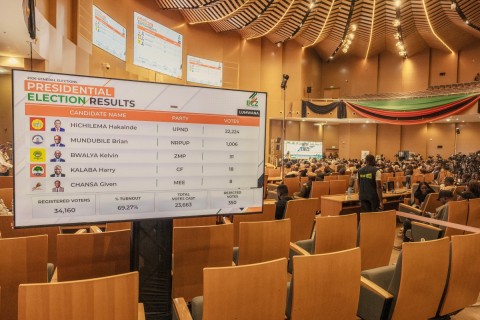
Zambian President Hakainde Hichilema won re-election to a second term with approximately 60% of the vote, according to the Electoral Commission of Zambia on August 18, 2026. The election followed a campaign period marked by a brief vote-tallying suspension and intense political tensions involving opposition candidates.
The Electoral Outcome and Final Tally
The Electoral Commission of Zambia announced Tuesday that incumbent President Hakainde Hichilema secured about 60% of the ballots cast in the August 13, 2026 poll. Electoral Commission chairperson Mwangala Zaloumis stated that his primary challenger, former provincial minister Brian Mundubile, captured nearly 38% of the vote. Although five of the country’s 226 constituencies remained untallied, election officials confirmed that the outstanding numbers would not materially influence the overall outcome.
The election in the copper-rich southern African nation served as a referendum on Hichilema’s first term in office. Since taking power in 2021, his administration has steered the economy back to growth following years of fiscal distress. Market analysts and foreign observers noted that the pro-business agenda championed by Hichilema influenced investor sentiment leading into the vote.
Controversy, Delays, and Security Clashes
Despite the tally, the electoral process faced hurdles. On the day following the polling, the electoral commission briefly suspended counting and the public announcement of results. Officials cited reports of violence targeting polling staff and the theft of marked ballot papers in some areas. The suspension was lifted later the same day, but it drew criticism from international and domestic monitors regarding voter confidence and process transparency.

Tensions boiled over when authorities executed a raid involving an exchange of gunfire, arresting nearly a dozen people, including senior opposition figures. Brian Mundubile described an assault on his home in Lusaka on Friday, where armed personnel reportedly broke doors and windows and breached gates with an armored vehicle. Mulambo Haimbe, Hichilema’s election agent and a senior United Party for National Development (UPND) member, disputed Mundubile’s account on the BBC’s Newsday programme, confirming that criminal charges were being prepared against those detained.
The government maintained that the individuals arrested during the security sweep were connected to militia or insurgent activities surrounding the election. Conversely, Mundubile’s party denied those allegations, asserting that the administration used state security apparatus to stifle legitimate political opposition.
International Observer Findings and Regional Context
International and domestic observer missions released assessments noting that while election day itself remained largely peaceful, the broader pre-election environment suffered from an uneven playing field. Samuel Tembenu, a former minister from Malawi who led the observer mission from the Southern African Development Community (Sadc), reported that his team recorded unverified accounts of intimidation, assaults, abductions, and property damage across five provinces.

Similarly, the European Union observation mission warned that limitations placed on opposition campaigning restricted political space. Regional bodies urged all political factions to remain calm and utilize official legal channels to address grievances. Zambia maintains a record of peaceful transfers of power since returning to a multiparty democracy in 1991, leaving it uncertain whether opposition figures will formally challenge the final results in court.