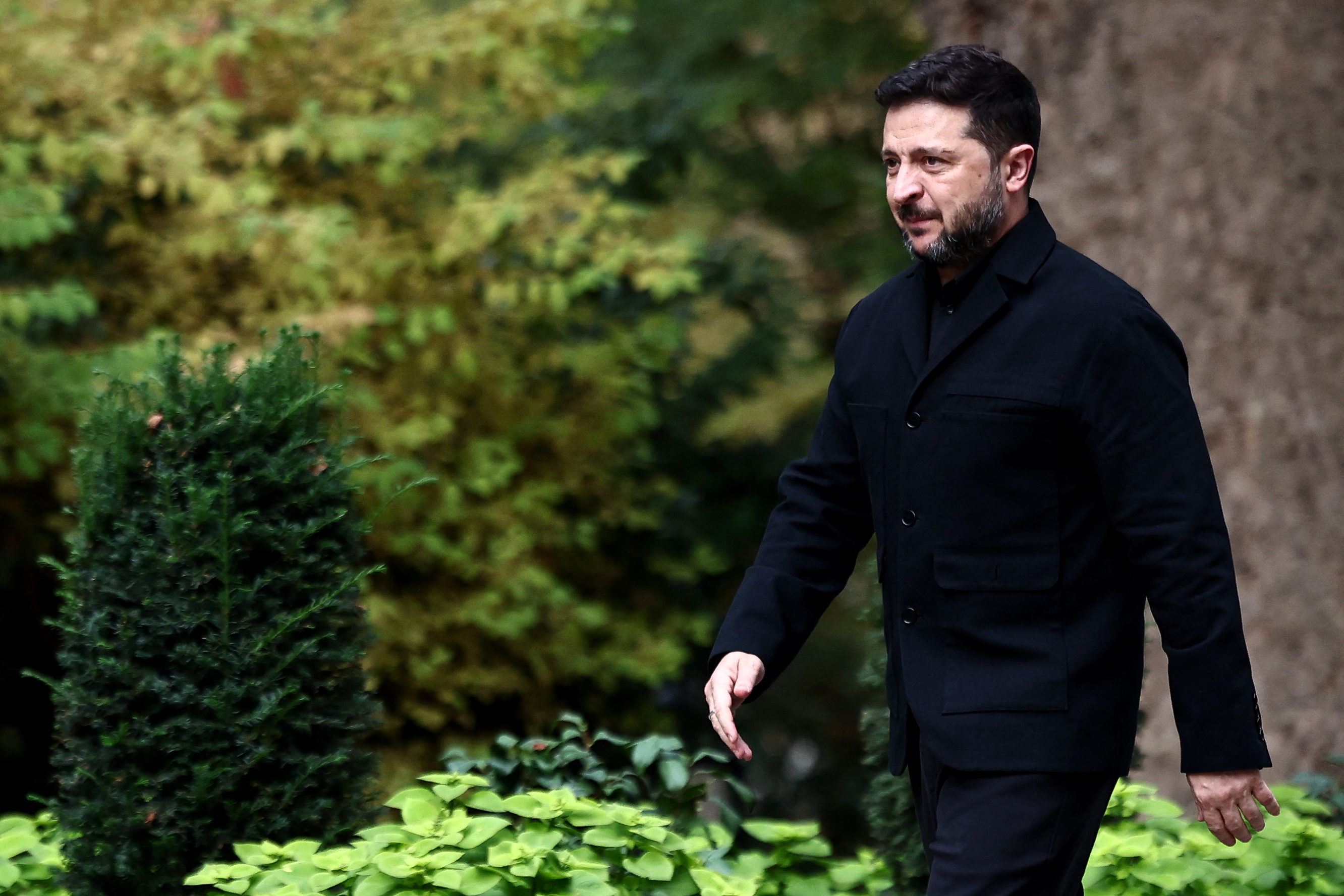
Zakharova Accuses Zelensky of Seeking Escalation to Derail Peace Talks
Russian Foreign Ministry spokeswoman Maria Zakharova alleged that Ukrainian President Volodymyr Zelensky was attempting to provoke uncontrolled escalation and a direct confrontation between Russia and NATO to undermine peace talks.
The comments came after Belarusian President Alexander Lukashenko stated in public that he would fly with Zelensky to Moscow and serve as his security guarantor for discussions with Russian President Vladimir Putin — an offer Zelensky deemed not serious and instead proposed that Lukashenko bring Putin to Kyiv.
Speaking at a press briefing in Moscow on November 26, Zakharova asserted that through his actions, Zelensky was attempting to “trigger uncontrolled escalation” and permanently derail the negotiation process. The spokeswoman asserted that the Ukrainian president is indifferent to the fate of millions of people across Europe, adding that he was pushing NATO into direct conflict with Russia and could no longer rely on his Western allies.
The comments conform to a recurring theme in Russia’s diplomatic communications throughout the conflict. Whenever negotiations between Russia, Ukraine and the United States seem to be making headway, Moscow has raised new allegations — drone attacks, assassination plots, sabotage operations — that risk halting progress. Western analysts and Ukrainian officials have consistently refuted such claims, contending it is Moscow, not Kyiv, that has blocked substantive peace initiatives.
Kyiv has frequently highlighted Russia’s refusal of every phased ceasefire proposal put forward during 2026. Moscow rejected even limited arrangements, such as a mutual cessation of strikes on energy infrastructure and a maritime truce in the Black Sea.
Speaking after the November 19 Coalition of the Willing meeting in Berlin, Zelensky said that Russia had dismissed every de-escalation proposal presented throughout the year, including provisions for energy infrastructure and the Black Sea. The coalition’s joint statement then urged Moscow to consent to a winter energy ceasefire and a distinct ceasefire to safeguard food shipments via the Black Sea.

During the November 10–11 negotiations in Abu Dhabi, Russian delegates informed their Ukrainian counterparts that they did not have the power to approve an energy infrastructure ceasefire or other de-escalation steps. According to Zelensky, the delegation indicated that such determinations would have to be escalated directly to Putin.
The Ukrainian leader later said Putin himself was against a ceasefire. US envoys who traveled to both capitals in September indicated that Moscow’s public stance had not shifted, with Russia persisting in its demand that Ukraine relinquish the eastern Donbas region as a mandatory condition for any resolution.
In U.S.-hosted peace talks this week, Russia reverted to uncompromising demands that would overhaul Europe’s security framework by compelling NATO to reduce its troop levels to those of 1997 — prior to the alliance’s eastward expansion beyond Germany.
Belarusian President Alexander Lukashenko put forward a proposal on November 24 to join Zelensky on a flight to Moscow, offering to act as his security guarantor for talks with Putin.
There is no established evidence that Lukashenko’s offer directly triggered Zakharova’s subsequent comments.

Zelensky has also emphasized that neither Moscow nor Kyiv is a suitable location for negotiations.