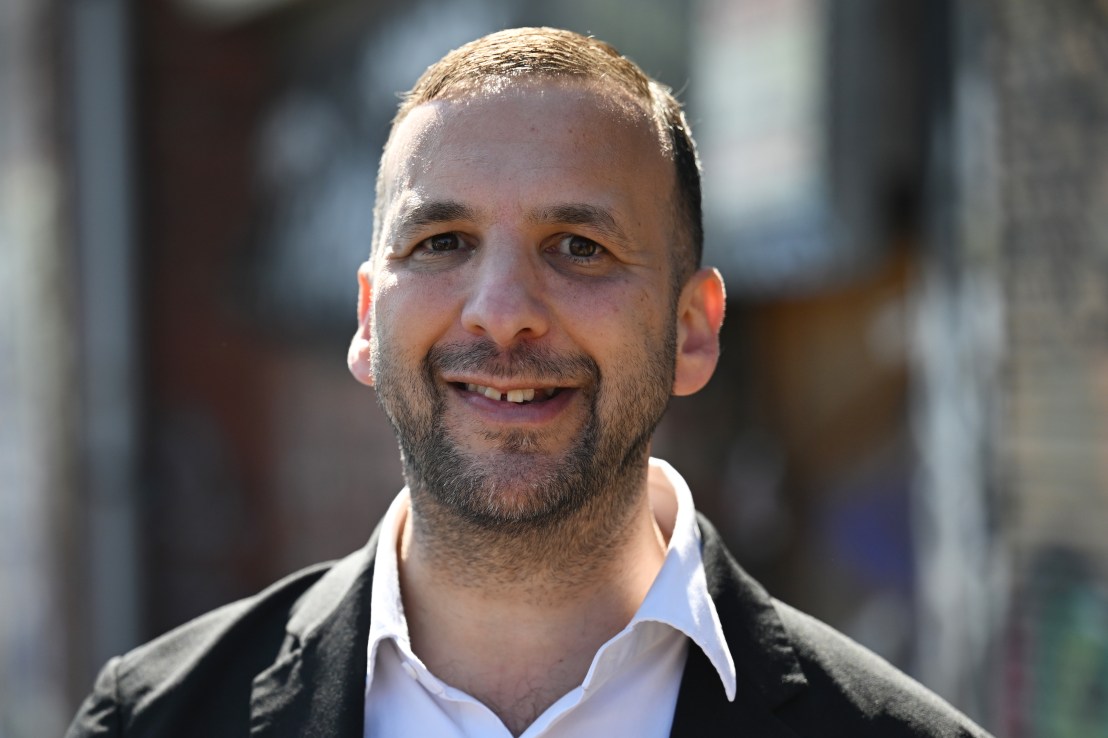
Zack Polanski and the Green Party’s Rise: Why Their Success Demands Serious Scrutiny of Wishful Politics and Fantasy Economics
On April 25, 2026, Zack Polanski’s surge within the Green Party of England and Wales reflects a broader trend of progressive movements gaining traction through emotionally resonant but economically untested platforms, raising urgent questions about fiscal sustainability and policy feasibility in urban centers like London and New York.
The Green Party’s recent electoral breakthrough—tripling its vote share to 6.4% and electing four MPs—has been fueled by figures like Zack Polanski, who secured 84% of the vote in his internal party contest, a level of support unseen in British politics since the early 20th century. This surge coincided with the election of Zohran Mamdani as mayor of New York City, whose victory on a platform of rent controls, universal childcare, and free public transport has become a reference point for progressive movements across the Atlantic. Yet beneath the rhetoric lies a growing concern among economists and policymakers: many of these proposals rely on assumptions that ignore decades of empirical evidence about market behavior, fiscal limits, and unintended consequences.
Take, for example, the proposal to nationalize water, energy, and rail sectors—a cornerstone of Polanski’s platform. While framed as a step toward democratic control and environmental justice, such measures have historically led to underinvestment, service degradation, and bureaucratic inefficiency. The UK’s own experience with rail nationalization under British Rail in the mid-20th century showed declining performance and rising subsidies, ultimately leading to privatization in the 1990s. More recently, Venezuela’s nationalization of its oil sector resulted in a 75% drop in output over two decades, according to data from the U.S. Energy Information Administration. Even in cases where public ownership succeeded—such as in Norway’s hydroelectric sector—success depended on strong institutions, low corruption, and hydrocarbon wealth, conditions not replicable in the UK’s current fiscal context.
Similarly, wealth taxes—another pillar of the Green agenda—have been repealed or weakened in nine OECD countries since 1990 due to capital flight, valuation difficulties, and minimal revenue yield. The French wealth tax, abolished in 2017, collected just 0.2% of GDP while prompting an estimated 10,000 high-net-worth individuals to leave the country annually, per a study by the Paris School of Economics. In the UK, the Office for Budget Responsibility has estimated that a 2% annual wealth tax on assets over £10 million would raise only £1.3 billion per year—far short of the tens of billions needed to fund universal childcare or nationalized utilities.
These fiscal realities are not lost on local officials grappling with mounting pressures. In an interview, Councillor Sarah Jennings of the London Borough of Camden warned that “rent control policies, while popular in theory, have repeatedly reduced housing supply and discouraged maintenance investment in cities from San Francisco to Berlin.” She added, “What we need are incentives for ethical landlords and streamlined approvals for social housing—not blanket caps that freeze markets and hurt the very tenants they aim to protect.” Her comments echo findings from the UK’s Ministry of Housing, Communities and Local Government, which reported in 2024 that areas with strict rent controls saw a 15% drop in new rental listings over two years.
The danger isn’t that these ideas are poorly intentioned—it’s that they’re poorly grounded. When policy ignores price signals and behavioral responses, it doesn’t help the vulnerable; it creates new dependencies and hidden shortages.
Meanwhile, foreign policy proposals like negotiating nuclear disarmament with Vladimir Putin overlook both geopolitical realities and historical precedent. Since 2014, Russia has violated multiple arms control treaties, including the Intermediate-Range Nuclear Forces Treaty, and has deployed tactical nuclear weapons in Belarus. The Stockholm International Peace Research Institute confirms that Russia’s nuclear arsenal remains modernizing, with no indication of voluntary reduction absent credible deterrence. As former NATO Secretary General Anders Fogh Rasmussen noted in a 2023 address to the Chatham House forum, “Disarmament without verification and enforcement is not peace—it’s wishful thinking dressed as morality.”
These tensions are already manifesting in municipal planning. In New York City, Mayor Mamdani’s push for municipally owned bodegas has sparked legal challenges from small business associations, who argue it violates state commerce laws and unfairly competes with existing retailers. The New York State Department of State has received over 200 formal comments on the proposal, with the majority expressing concern over municipal overreach. Similarly, in London, Transport for London has begun assessing the fiscal impact of fare-free public transit—a policy estimated to cost £4.5 billion annually in lost revenue, equivalent to nearly 30% of its current operating budget.
For residents and businesses navigating this shifting landscape, the need for expert guidance has never been greater. Property owners facing potential rent regulation changes are turning to housing law specialists to understand their rights under the upcoming Renters’ Reform Bill. Meanwhile, entrepreneurs concerned about proposed municipal enterprises are consulting local economic development consultants to assess competitive risks and explore public-private partnership models. And as debates over energy nationalization intensify, households are seeking advice from energy rights advocates to ensure fair pricing and service reliability regardless of ownership structure.
The real test of any political movement is not its ability to inspire hope, but its capacity to deliver sustainable solutions without eroding the systems that support prosperity. As history shows, the most enduring reforms—from the postwar welfare state to the Clean Air Act—were built not on utopian visions, but on incremental, evidence-based progress that respected both human dignity and economic reality. Those seeking to navigate this complex terrain with clarity and integrity can find vetted professionals through the World Today News Directory, where expertise meets accountability in service of informed civic engagement.