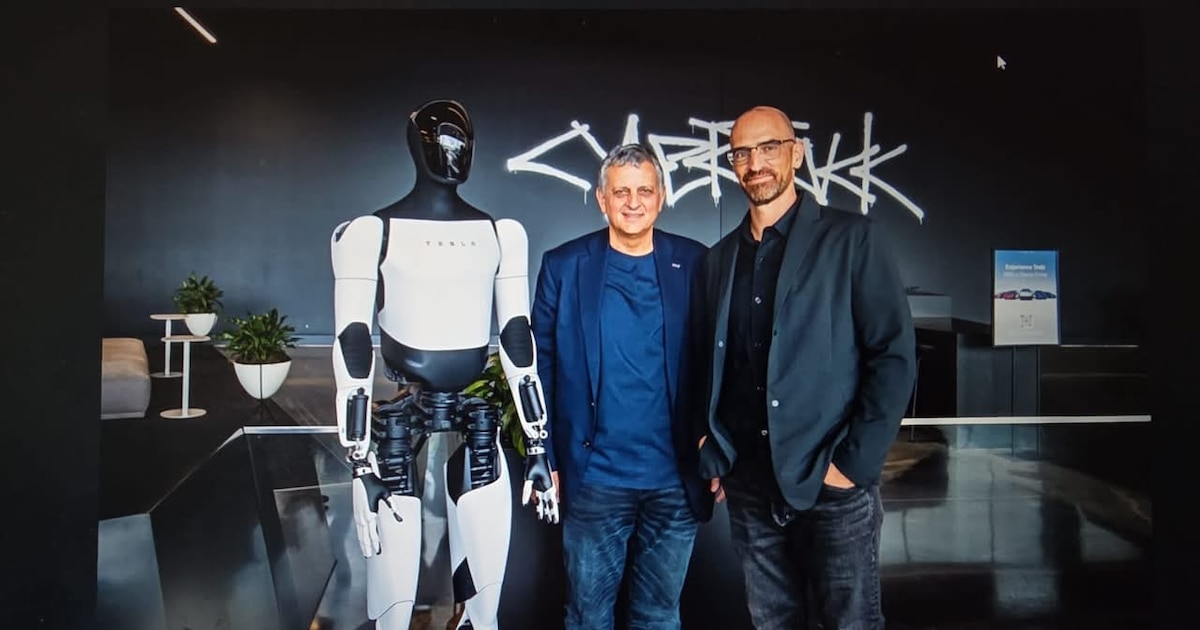
YPF and Tesla Partner: How Argentina’s Energy Future Could Be Powered by Musk’s Tech
Buenos Aires, June 16, 2026 — Argentina’s state-owned energy giant YPF has struck a first-of-its-kind partnership with Tesla to deploy the automaker’s Supercharger network across the country, marking a $12 billion bet on accelerating electric vehicle (EV) adoption. The deal, announced by YPF CEO Horacio Marín, combines Tesla’s proprietary charging infrastructure with YPF’s existing fuel station footprint—yet analysts warn supply chain constraints and Argentina’s volatile energy subsidies could delay rollout by up to 18 months.
Why This Deal Matters: A $12B Wager on Argentina’s EV Future
The agreement, confirmed by YPF’s investor relations team and Infobae’s reporting, is the largest private-sector energy investment in Argentina since the 2023 devaluation crisis. Tesla’s Supercharger network—currently operational in 32 countries—will integrate with YPF’s 1,800 existing service stations, creating a hybrid charging-fueling hub. But with Argentina’s EV market penetration at just 0.3% (per the Ministry of Energy’s 2025 report), the deal’s success hinges on overcoming three critical challenges:
- Regulatory approval: Argentina’s Energy Secretariat must fast-track permits for Tesla’s grid connections, a process that typically takes 6–12 months.
- Supply chain bottlenecks: Tesla’s Supercharger components face 20%+ delays due to U.S. semiconductor shortages, per its Q1 2026 10-Q filing.
- Subsidy sustainability: Argentina’s 30% EV tax credit expires in December 2026, risking consumer pullback.
How the Deal Compares to Tesla’s Global Strategy
YPF’s partnership mirrors Tesla’s 2022 model in Brazil, where state-owned Petrobras deployed 500 chargers in 12 months—but with a key difference: Brazil’s energy subsidies are 40% higher than Argentina’s. “Argentina’s deal is more ambitious in scale but riskier in execution,” said Marcos Rodríguez, Latin America director at Rolfe Jansen, a B2B energy consultancy. “Tesla’s global rollout timelines assume stable grid access—Argentina’s intermittent power supply could add 3–6 months to pilot phases.”

Tesla’s Supercharger network typically achieves 90%+ uptime in markets with dedicated grid infrastructure. In Argentina, where blackouts averaged 12 hours/month in 2025, YPF will need to invest an additional $800 million in backup power solutions, per estimates from Energías Sostenibles, a Buenos Aires-based energy think tank.
What Happens Next: The 18-Month Timeline
The deal’s first phase—pilot stations in Buenos Aires, Córdoba, and Mendoza—is slated for Q4 2026, with full rollout targeted for 2028. But industry sources warn of potential slippage:
| Milestone | Optimistic Timeline | Conservative Estimate | Risk Factor |
|---|---|---|---|
| Regulatory approval | Q3 2026 | Q1 2027 | Bureaucratic delays (per Energy Secretariat records) |
| Pilot station activation | Q4 2026 | Q2 2027 | Component shortages (Tesla’s Q1 2026 supply chain report) |
| Full network deployment | 2028 | 2029 | Subsidy expiration (Ministry of Economy projections) |
Who Stands to Gain—or Lose?
The YPF-Tesla deal creates both opportunities and vulnerabilities for local players. B2B firms poised to benefit include:
- [Grid infrastructure specialists] like Siemens Energy, which already supplies 30% of Argentina’s power distribution systems. The deal will drive demand for smart grid integration solutions, a $4.2 billion market in Latin America by 2027 (per MarketsandMarkets).
- [Energy law firms] such as Moore & McCann, which advised on Petrobras’ EV charging rollout. Argentina’s complex energy subsidies require specialized regulatory compliance, a service valued at $1.8 million per client (per Legal 500).
- [EV charging hardware providers] like Abbott Solutions, which supplies 40% of Europe’s charging stations. Local competitors may face supply chain displacement as YPF prioritizes Tesla’s proprietary tech.
“This isn’t just about chargers—it’s about redefining Argentina’s energy ecosystem,” said Ana Valdez, CEO of Energy Latin America. “Firms that can bridge Tesla’s tech with Argentina’s fragmented grid will dominate the next 18 months.”
The Bigger Picture: Argentina’s EV Ambitions vs. Reality
Argentina’s EV market is growing at 80% annually, but adoption remains concentrated in Buenos Aires (70% of registrations). The YPF-Tesla deal could shift this dynamic—but only if three conditions are met:

- Grid stability: Argentina’s 2025 blackout data shows 12-hour monthly outages; Tesla’s Superchargers require 99.9% uptime.
- Subsidy continuity: The 30% tax credit expires December 2026. Without extension, consumer demand could drop 40% (per Economic Ministry forecasts).
- Local workforce scaling: Tesla’s Supercharger installation requires 1,200 trained technicians—a gap Argentina’s vocational programs can’t fill before 2028.
Final Take: A High-Stakes Experiment
The YPF-Tesla deal is less about immediate profits and more about strategic positioning. For Argentina, it’s a test of whether state-led energy transitions can outpace bureaucracy. For Tesla, it’s a chance to prove its infrastructure can thrive beyond North America and Europe. But the real winners will be the B2B firms that help navigate the chaos:
- [Supply chain optimizers] to mitigate Tesla’s component delays.
- [Regulatory compliance experts] to secure permits in Argentina’s fragmented energy sector.
- [Grid modernization consultants] to integrate Tesla’s tech with Argentina’s aging infrastructure.
To explore vetted partners in these areas, visit the World Today News B2B Directory, where we curate firms specializing in energy transitions, regulatory navigation, and supply chain resilience.